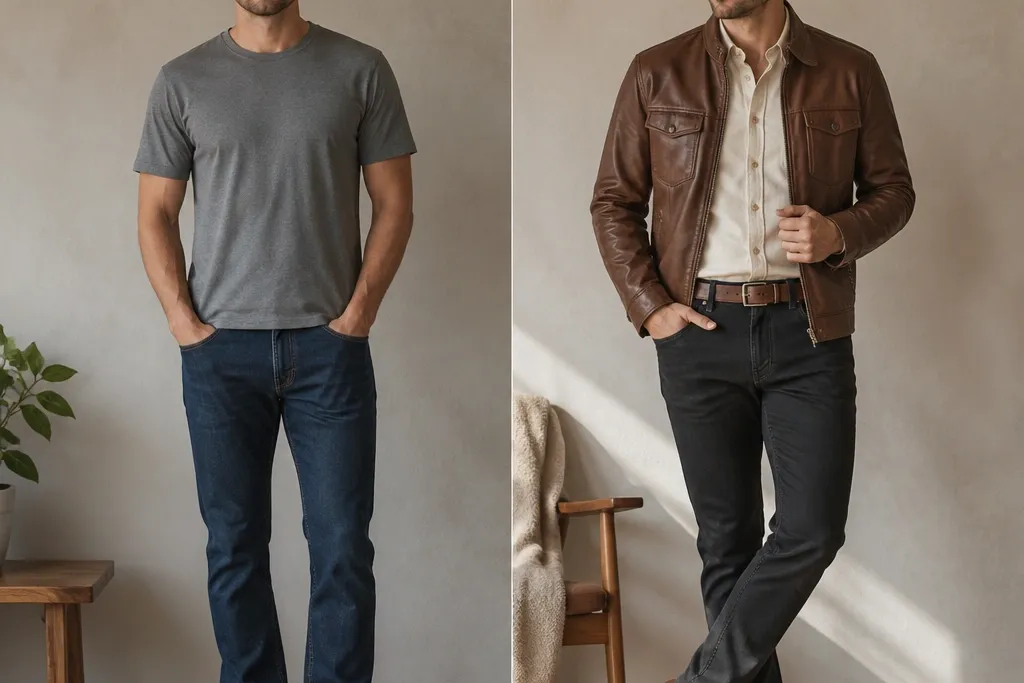
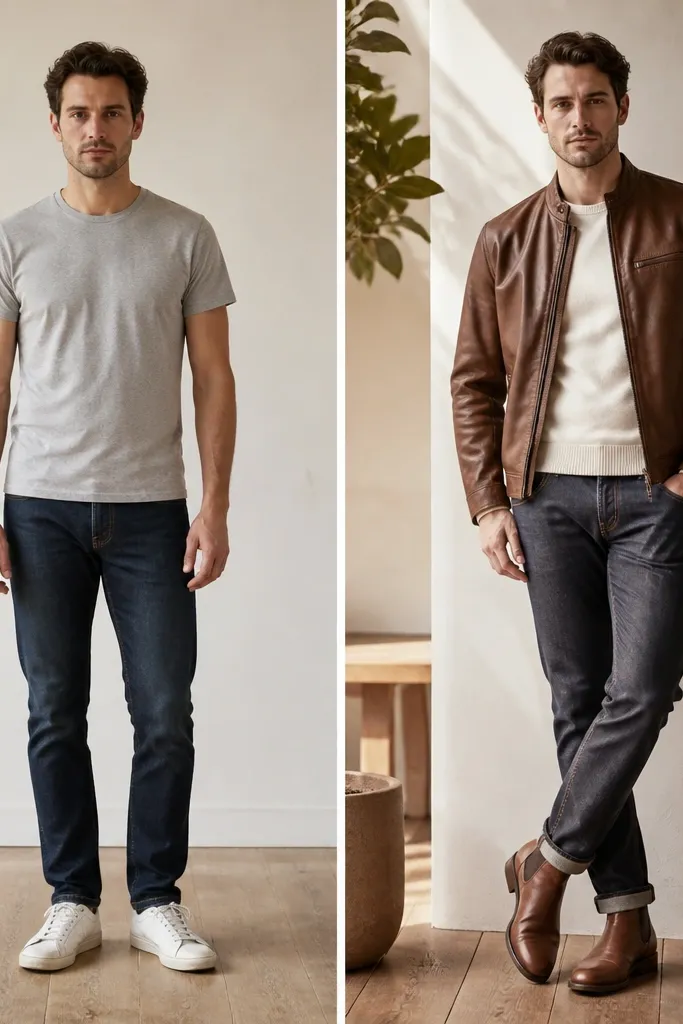
1. Denim + White Tee Upgrade (Same Jacket, Cleaner Lines)
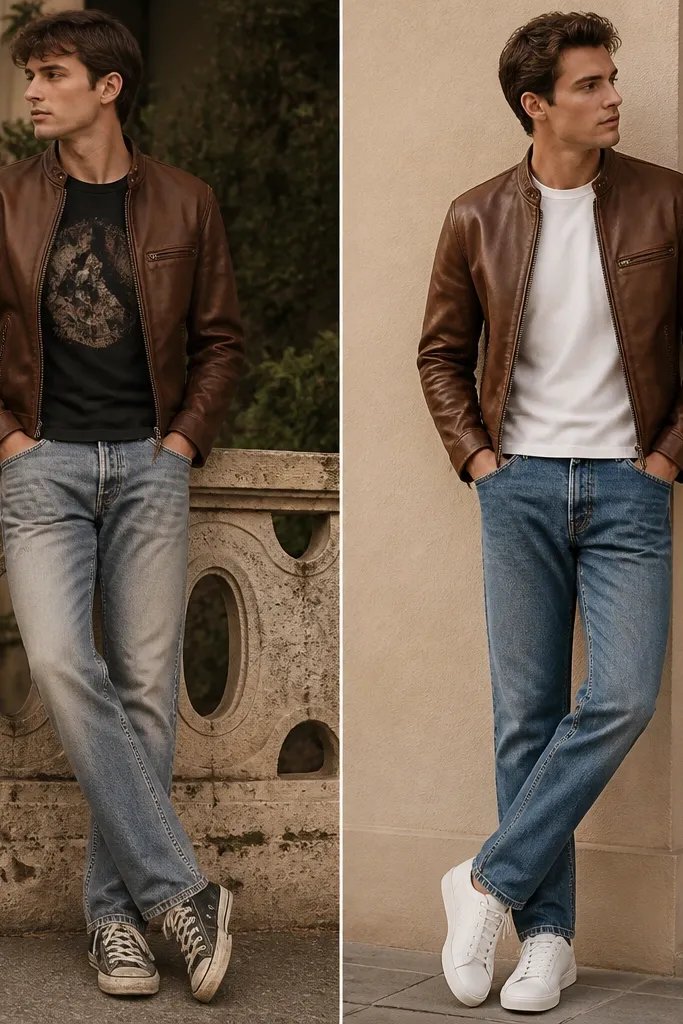
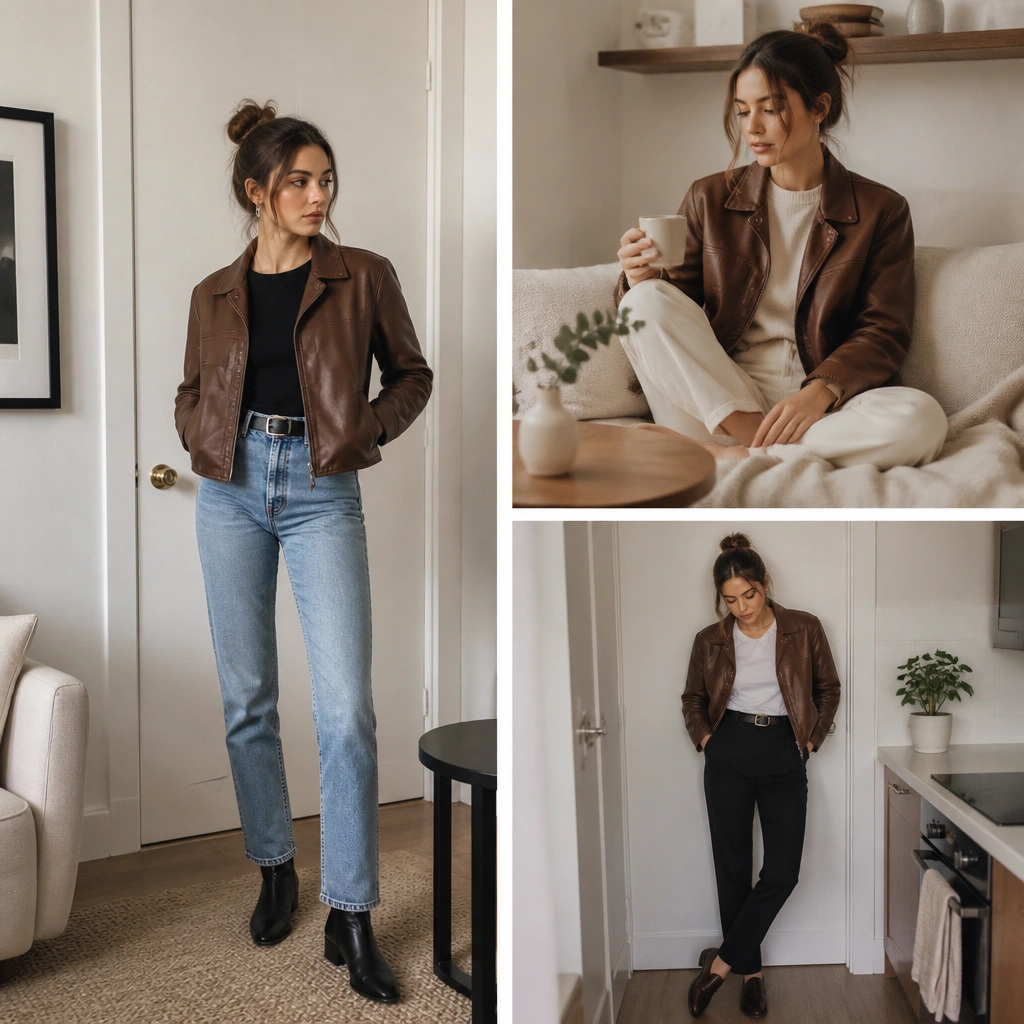
The before outfit looks heavy because the graphic tee competes with the jacket’s warm brown. The after keeps the jacket as the focal point by using a plain white tee and medium-wash denim that sits cleanly at the ankle. This works because brown leather reads richer when paired with high-contrast basics and footwear that isn’t worn-out at the toe.
Pro tipSwap a graphic tee for a plain white crewneck and switch to sneakers with a clean toe cap — you’ll see the difference in photos instantly.
2. Black Boots to Chestnut Boots (Warm-Tone Consistency)
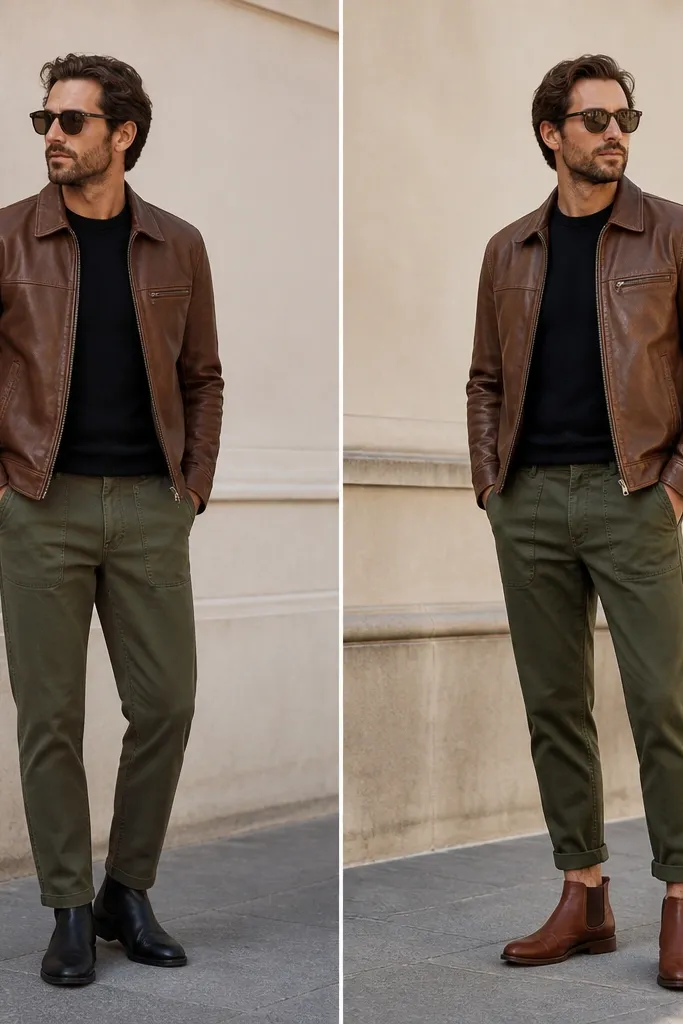
Black boots make the outfit feel split because the jacket is warm while black adds a cool, harsh contrast. The after version ties everything together by repeating warm brown tones in the footwear. Chestnut boots also add texture — leather grain and a slightly lighter shade — which makes the jacket look intentional instead of accidental.
Pro tipIf your jacket is medium to dark brown, choose boots in chestnut, cognac, or espresso instead of jet black.
3. Charcoal Hoodie Layer (Street-Ready Without Looking Messy)
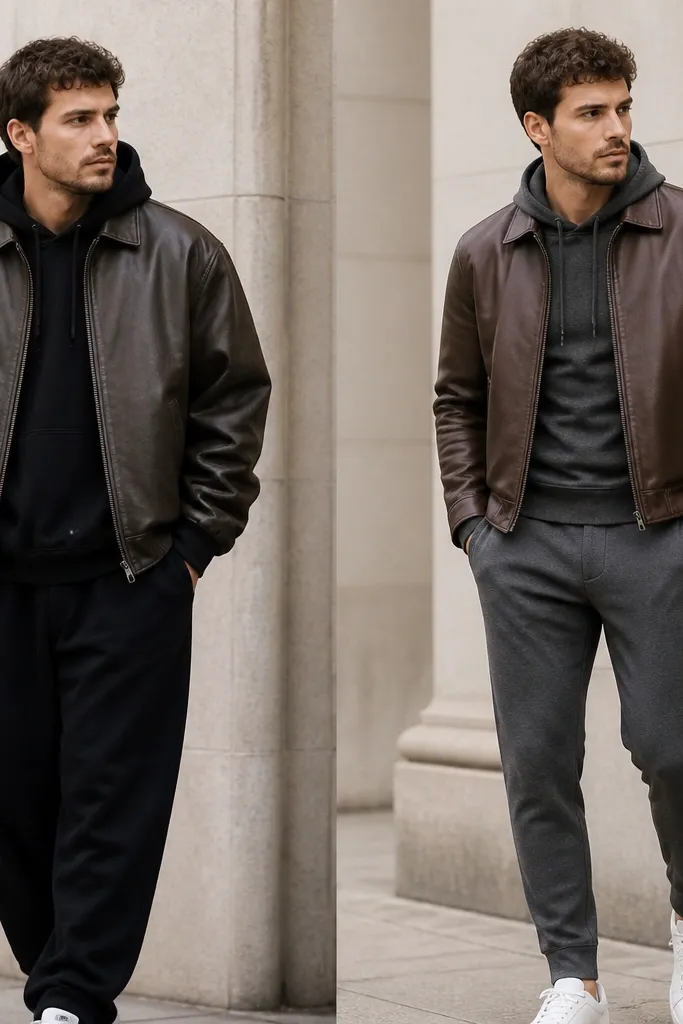
The before looks bulky because the hoodie is oversized and the sleeves bunch under the jacket. The after keeps the silhouette cleaner by using a fitted charcoal hoodie and tapering the pants so the jacket doesn’t fight the shape. Charcoal also complements brown without being too bright, so the whole outfit looks grounded.
Layer with one “clean” piece — fitted hoodie or fitted tee — and keep pants tapered to balance the jacket’s structure.
4. Cream Sweater + Camel Chinos (Soft, Premium Contrast)
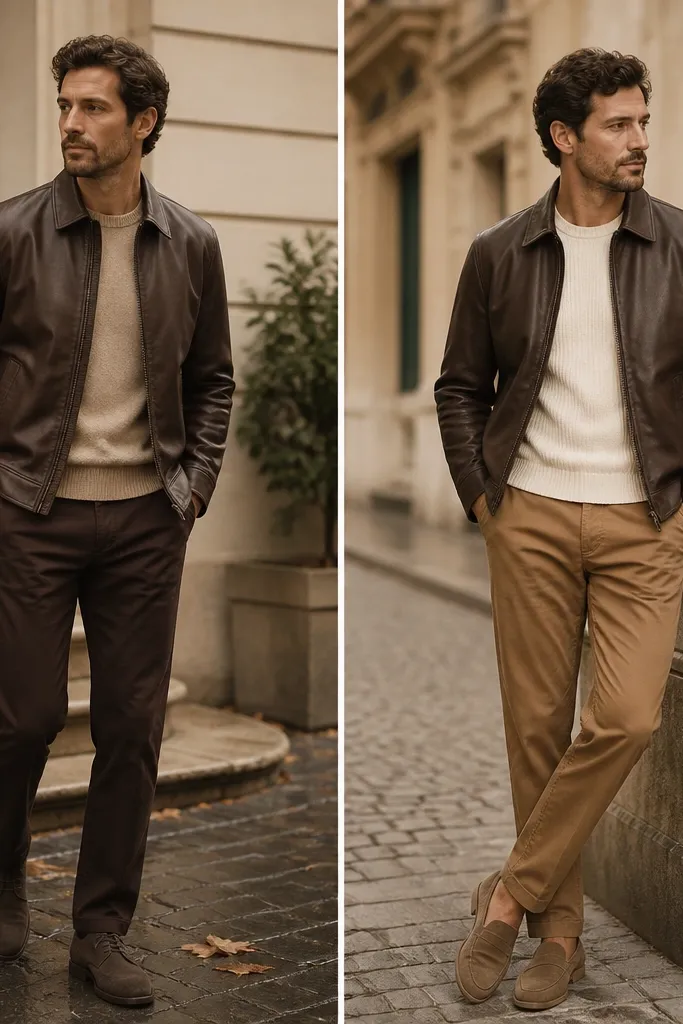
In the before, the tones are too close and too dark, so the jacket blends into the outfit. The after uses a brighter cream sweater and camel chinos, creating a gentle gradient that makes the jacket pop. Tan loafers finish the warm palette and add a polished “going out” feel without switching jackets.
Pro tipChoose one lighter neutral (cream or oatmeal) and one warm neutral bottom (camel) to create contrast without looking loud.
5. Green Overshirt Trick (Earthy Color Pairing That Works)
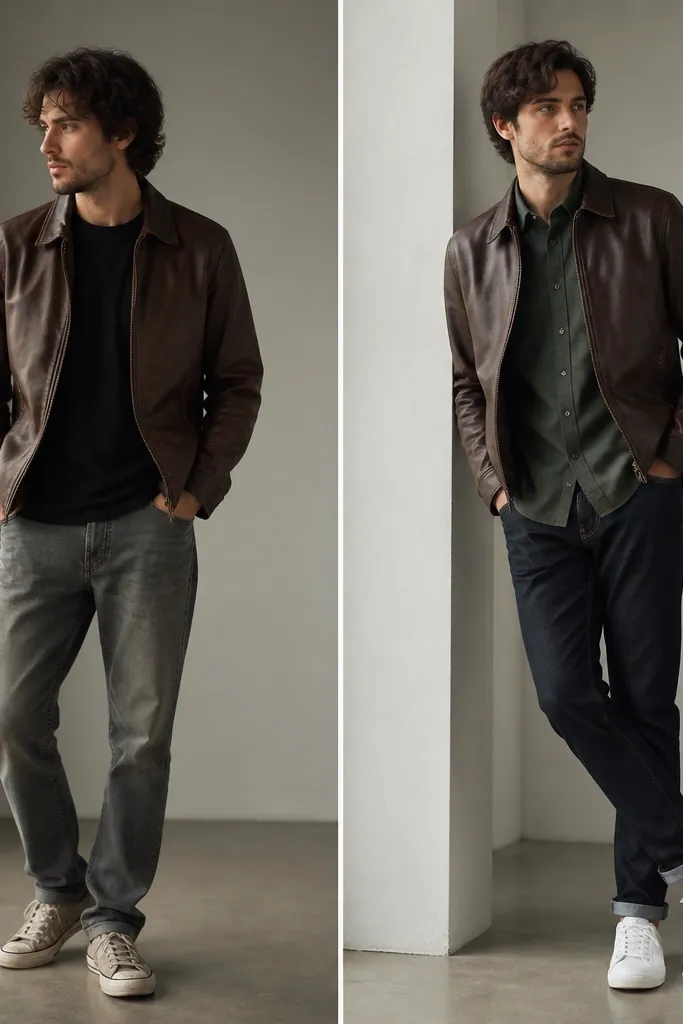
Black makes brown look flat and can create a “severe” contrast. Muted forest green adds an earthy undertone that harmonizes with the jacket’s warmth. The after also improves texture — overshirt fabric under leather adds depth, while dark indigo denim keeps the outfit crisp.
Try a muted green overshirt (not neon) and keep denim darker than your jacket for a balanced look.
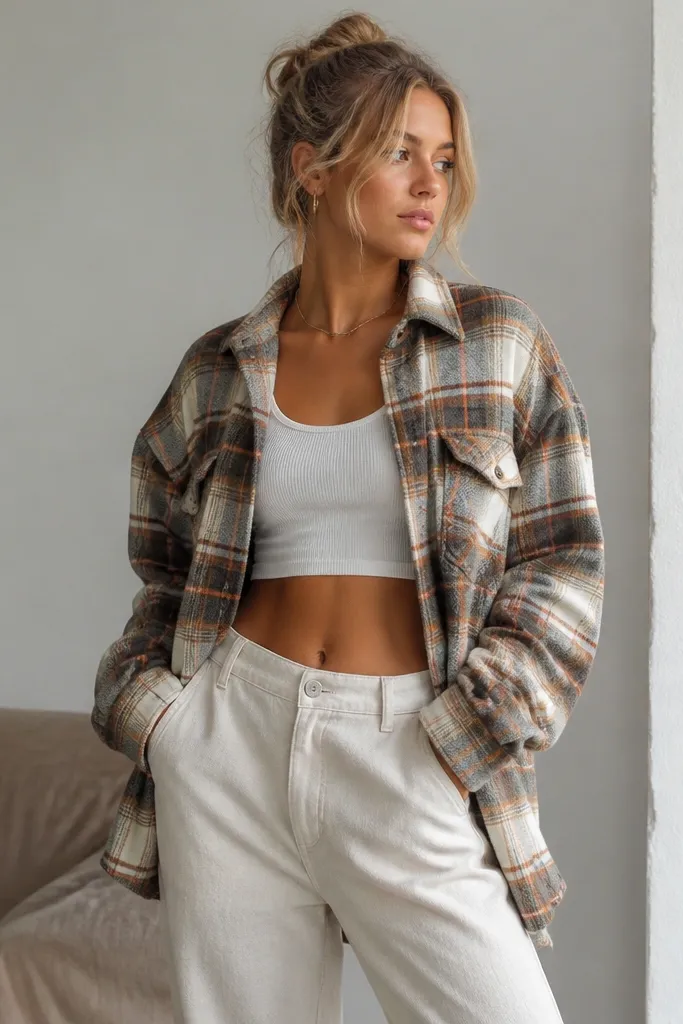
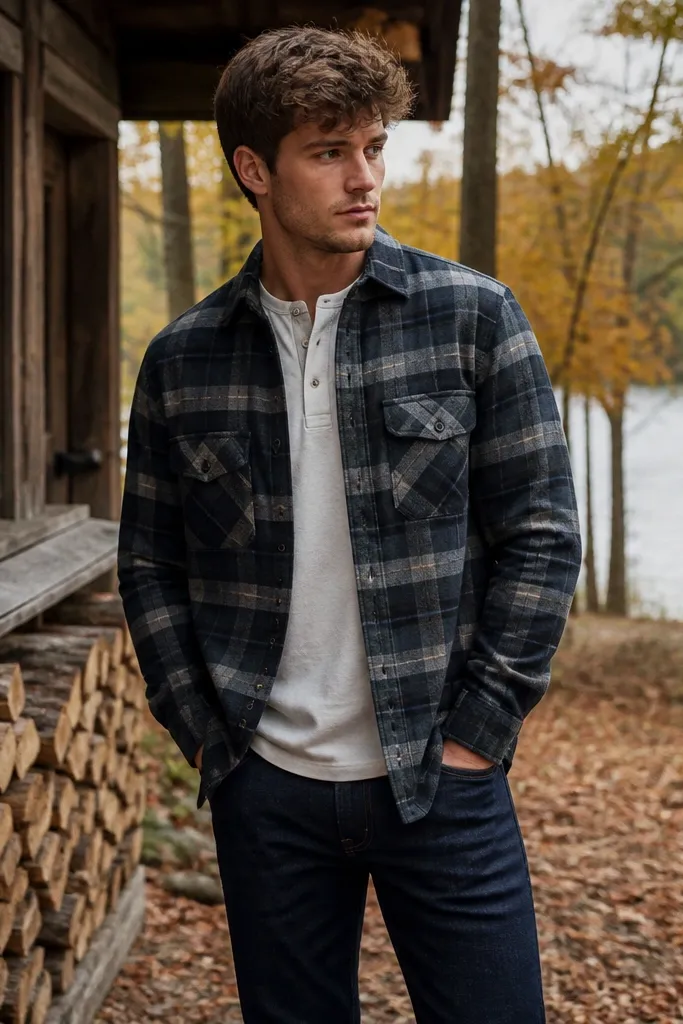
6. Plaid Flannel Under Leather (Instant Weekend Layering)
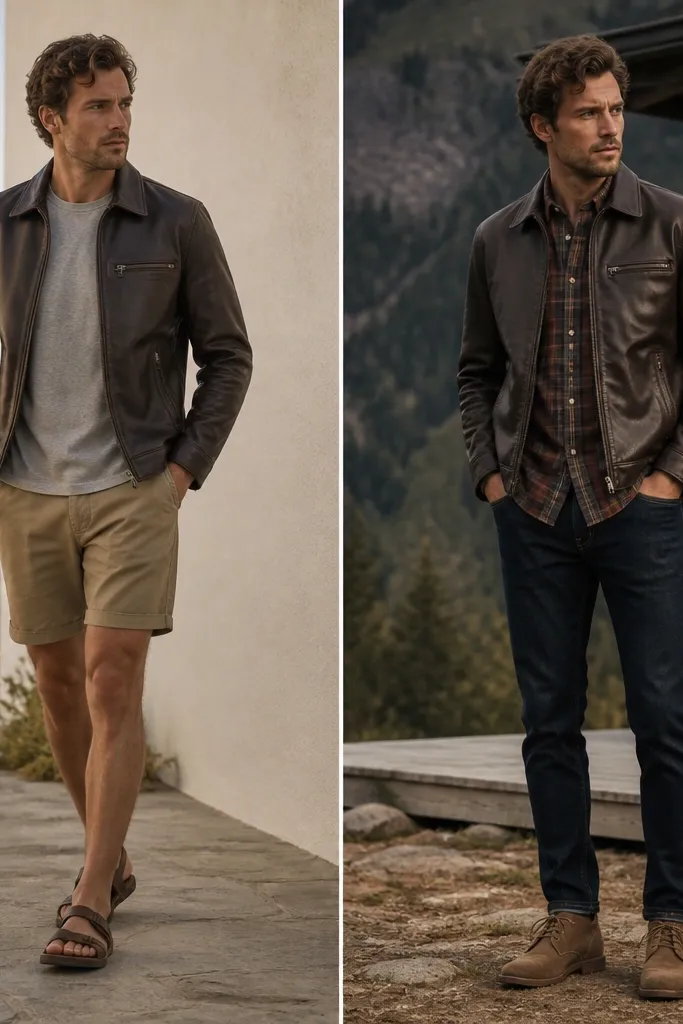
The before outfit feels unfinished because the top layer is too plain and the bottom is too casual (shorts + sandals). The after adds pattern — plaid brings warmth and movement — and swaps to suede boots for a rugged finish. Leather + flannel is a classic combo because both materials hold structure and look better with natural creases.
Roll the flannel sleeves slightly and swap sandals for suede or leather boots to make it look styled, not thrown on.
7. White Denim + Brown Belt (The “Match the Hardware” Method)
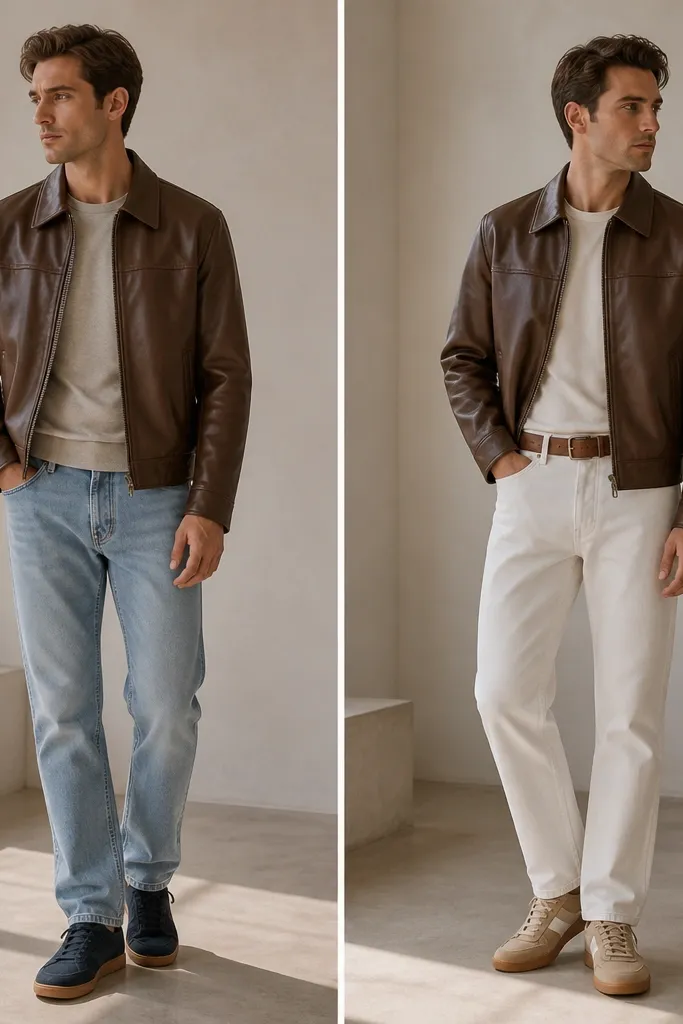
The before lacks a visual anchor, so the jacket’s color doesn’t connect to the rest of the outfit. The after uses a brown belt to echo the jacket and switches to white denim, which brightens the whole look. This matters because brown leather hardware (buckles, zippers) looks best when repeated in at least one other accessory.
Add one matching brown accessory — belt, bag, or shoes — to repeat the jacket’s tone.
8. Monochrome Tan Base (Jacket Stays the Focus)
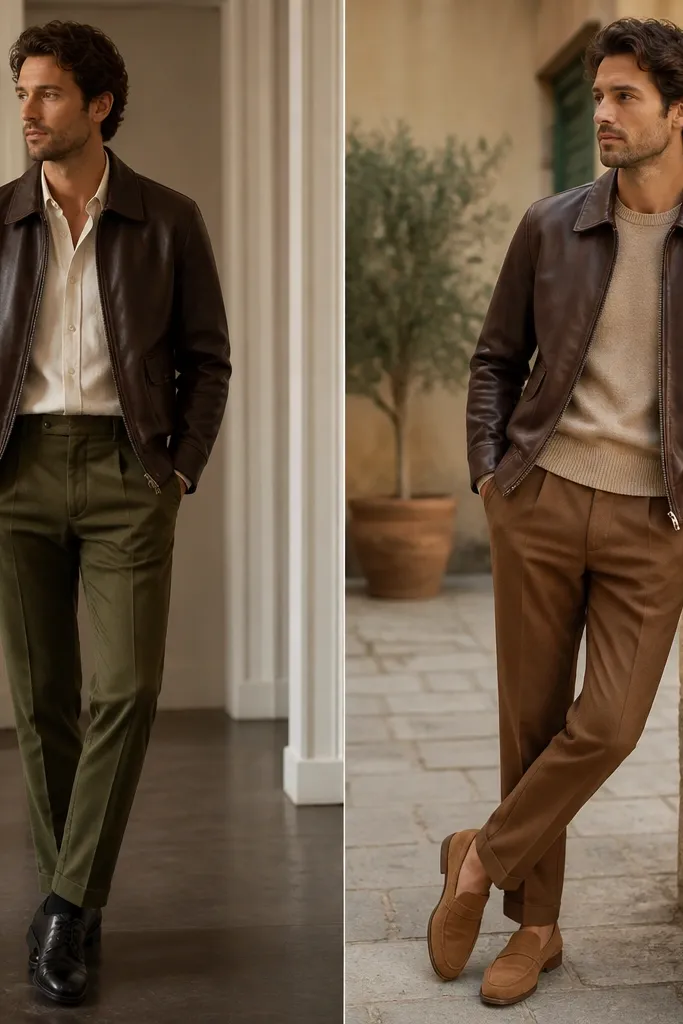
The before has too many different undertones: olive + black shoes pull focus away from the jacket. The after builds a warm monochrome base where every piece sits in the same family. When everything is warm and close in value, the jacket becomes the texture hero instead of a color clash.
Pick three warm shades only (tan, caramel, espresso) and avoid black shoes for this exact vibe.
9. Midi Dress + Leather Jacket (For Women: Shape + Balance)
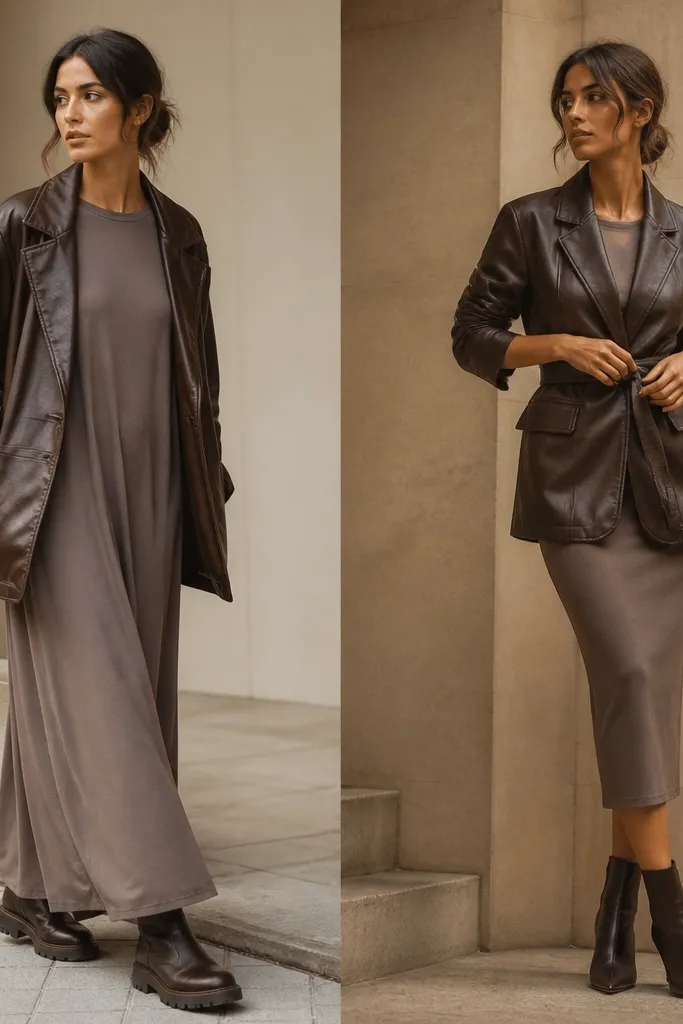
The before looks shapeless because the maxi dress hides your waist and the boots are too bulky for the jacket’s line. The after adds waist definition with a belt and uses a fitted midi length that shows the jacket’s structure. This works because leather jackets look best when they meet the body at a clear proportion point — waist or hip — not swallowed by long fabric.
If your jacket is open, add a belt at the waist or choose a fitted midi so the outfit has one strong shape line.
10. Turtleneck + Straight Leg Jeans (Clean Neckline Framing)
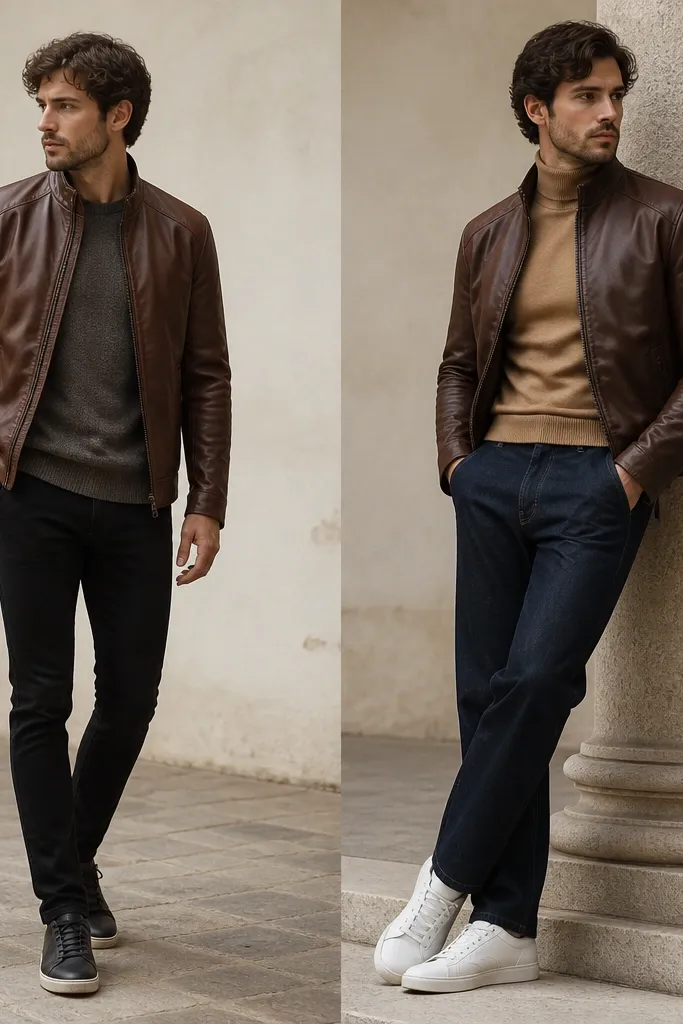
The before feels crowded at the collar area because a crewneck sits loosely under the jacket. The after uses a fitted turtleneck to frame the face and keep the neck area neat. Straight-leg jeans also balance the jacket’s bulk better than skinny black, especially when the sneakers are clean and light.
Pro tipChoose a fitted turtleneck or mock neck and go for straight or relaxed denim to keep the jacket from overwhelming the outfit.
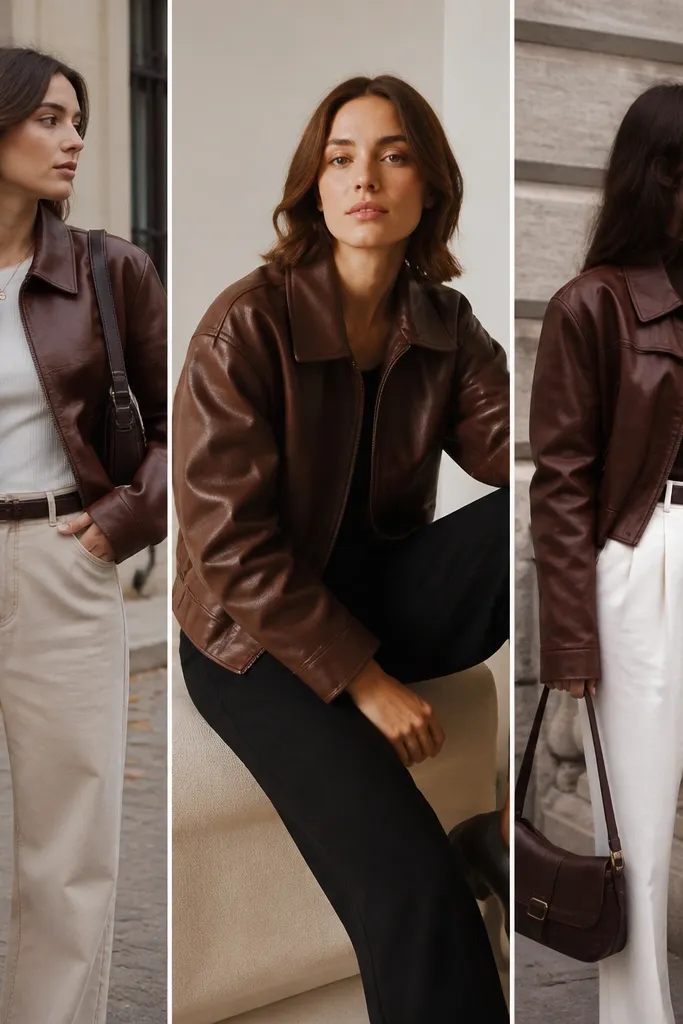
11. Black and Brown Mix (Done Right With One Repeat Color)
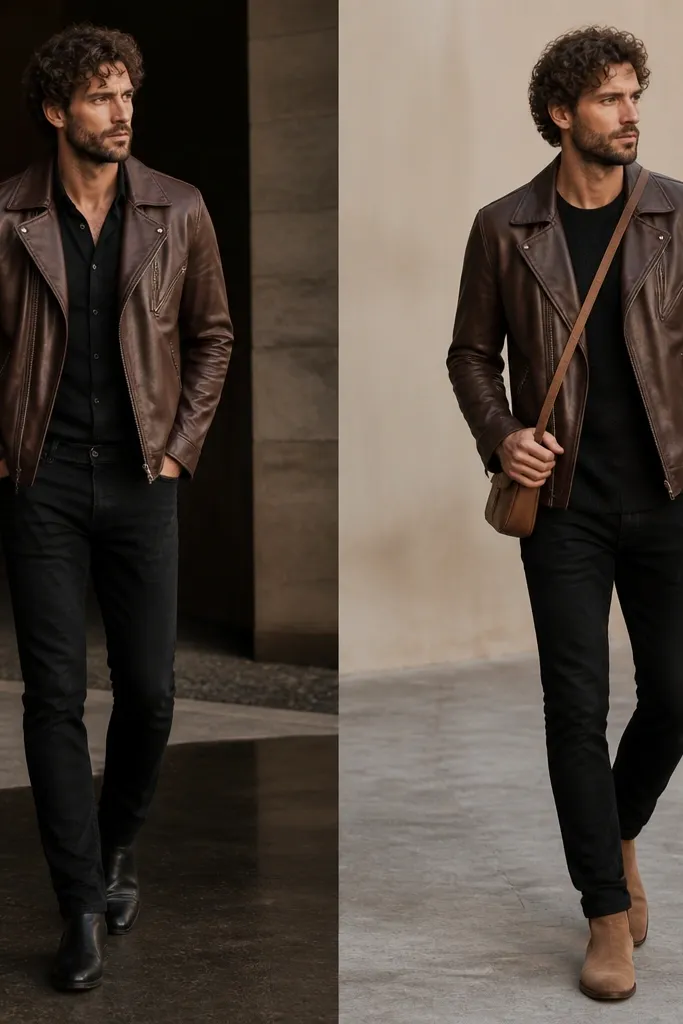
Pure black-from-head-to-toe can make the brown jacket look “out of place.” The after keeps black for the base but repeats brown in two spots — boots and bag — so the palette feels intentional. This is the easiest way to wear black without losing the warmth of the leather.
If you want black jeans, add one warm-brown repeat item like boots or a bag to reconnect the jacket color.
12. Light Blue Shirt + Brown Jacket + Navy Pants (Classic Color Logic)
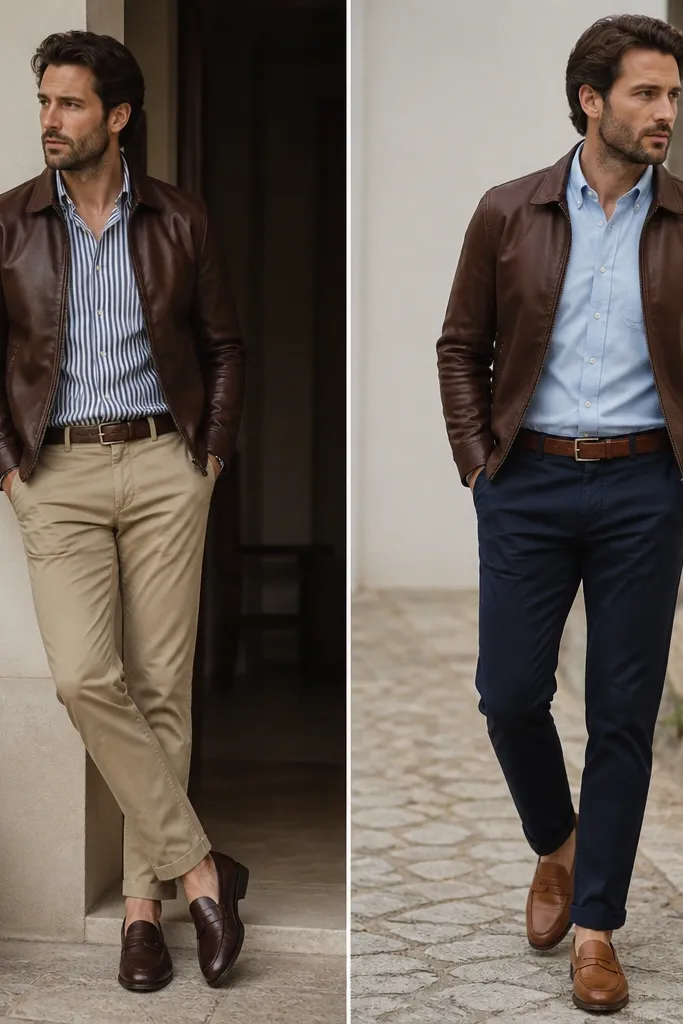
The before has mixed pattern and mismatched shades, so the outfit feels busy. The after simplifies the top and uses navy for a dependable contrast that still feels “soft” next to brown. Cognac loafers lighten the foot area and keep the jacket from looking too heavy overall.
Use solid colors when styling leather — pair light blue with navy for an easy, elevated combo.