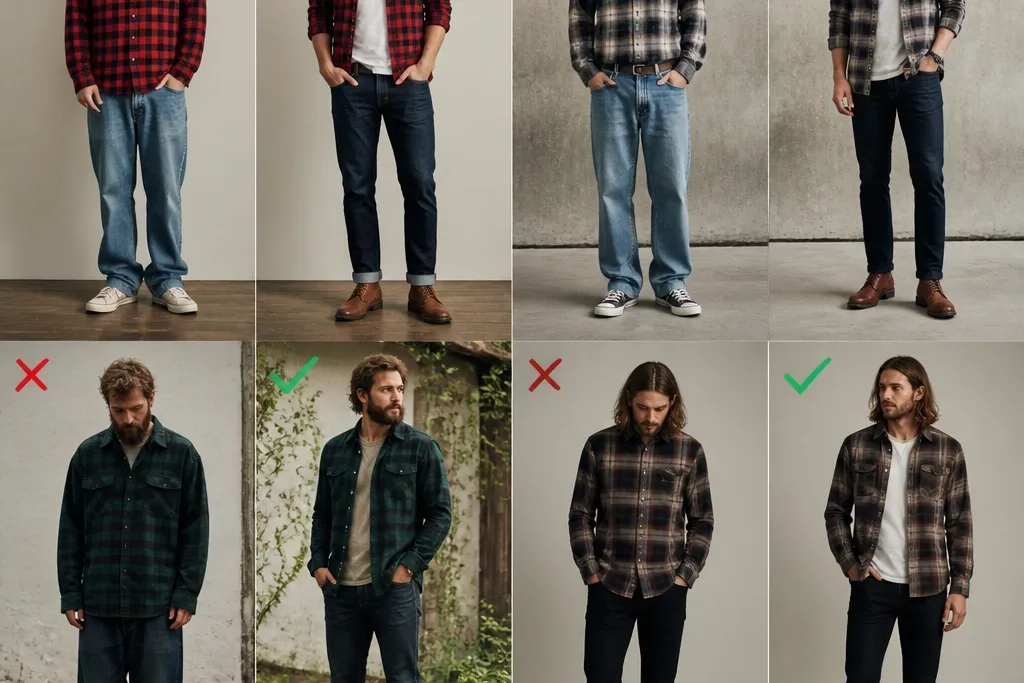
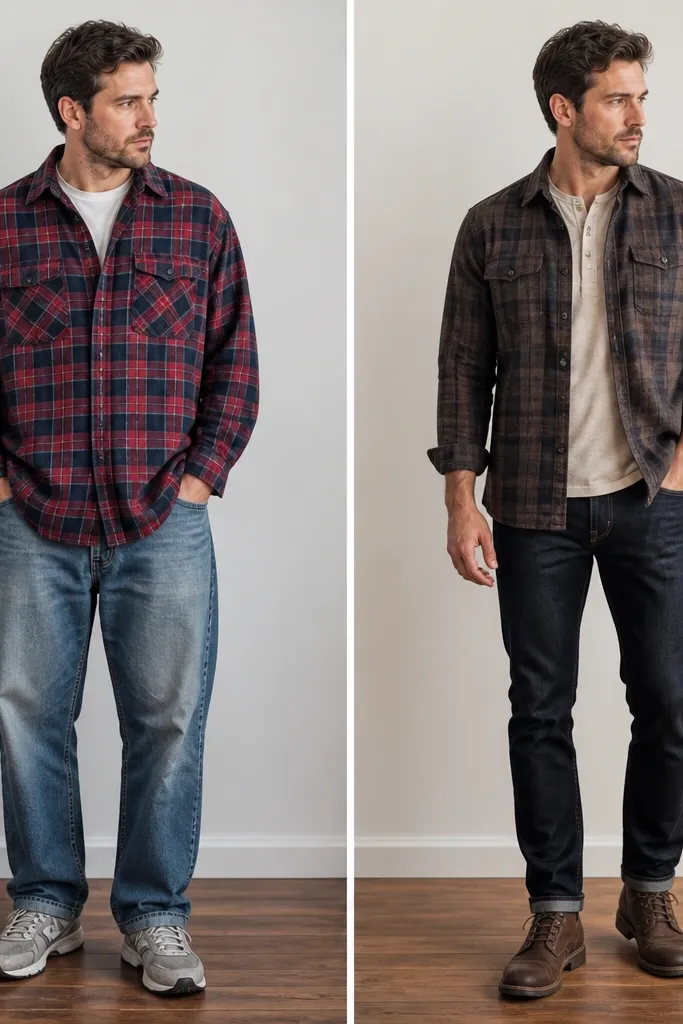
1. The Too-Small Flannel That Pulls at the Buttons
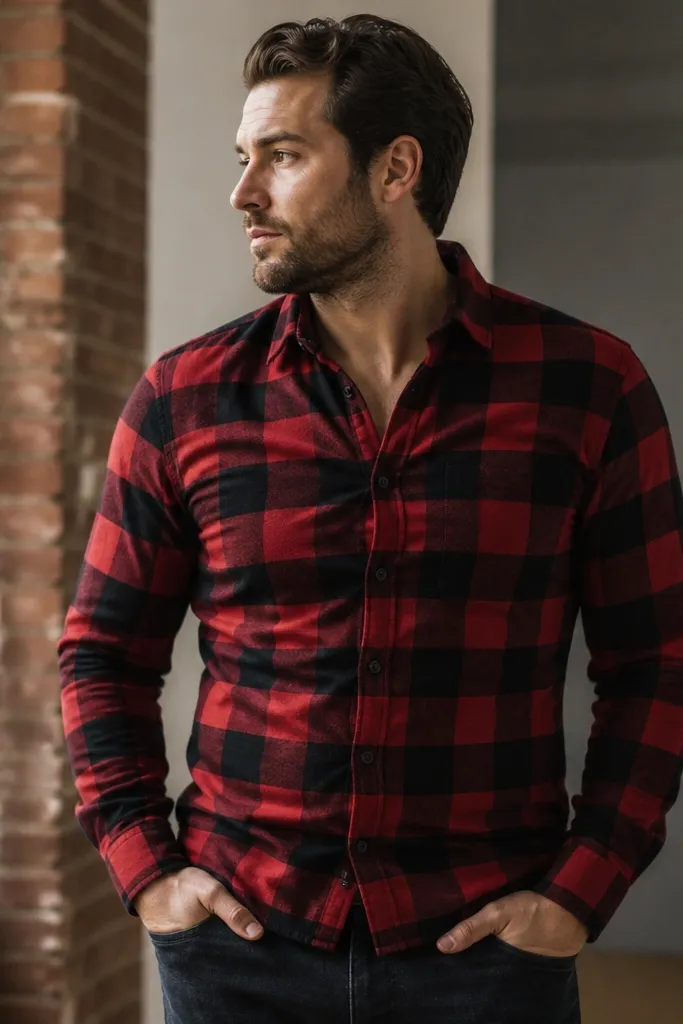
When a flannel is too small, the front panel pulls and the seams fight your posture, which makes the whole outfit look unstructured. The fix is not “wear it tighter” — it’s choosing a size where you can move your arms without the button line looking stressed.
Pro tipChoose a flannel that lets you comfortably button it while keeping the shoulder seams sitting right at the edge of your shoulder. If it pulls, size up and take the waist in only if needed.
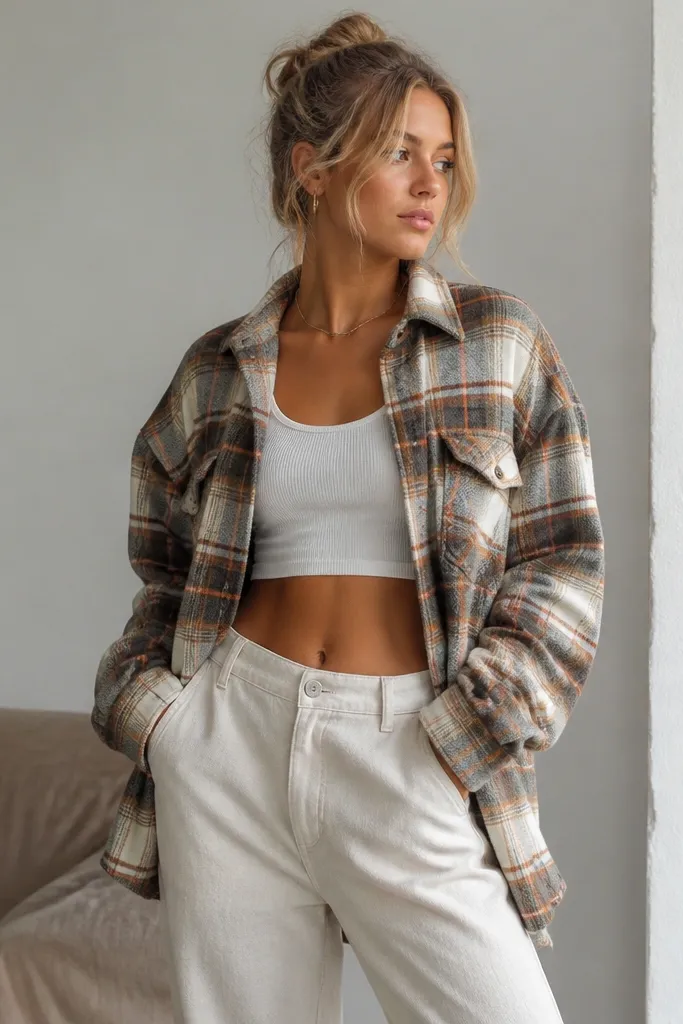
2. The Oversized Flannel That Swallows Your Frame
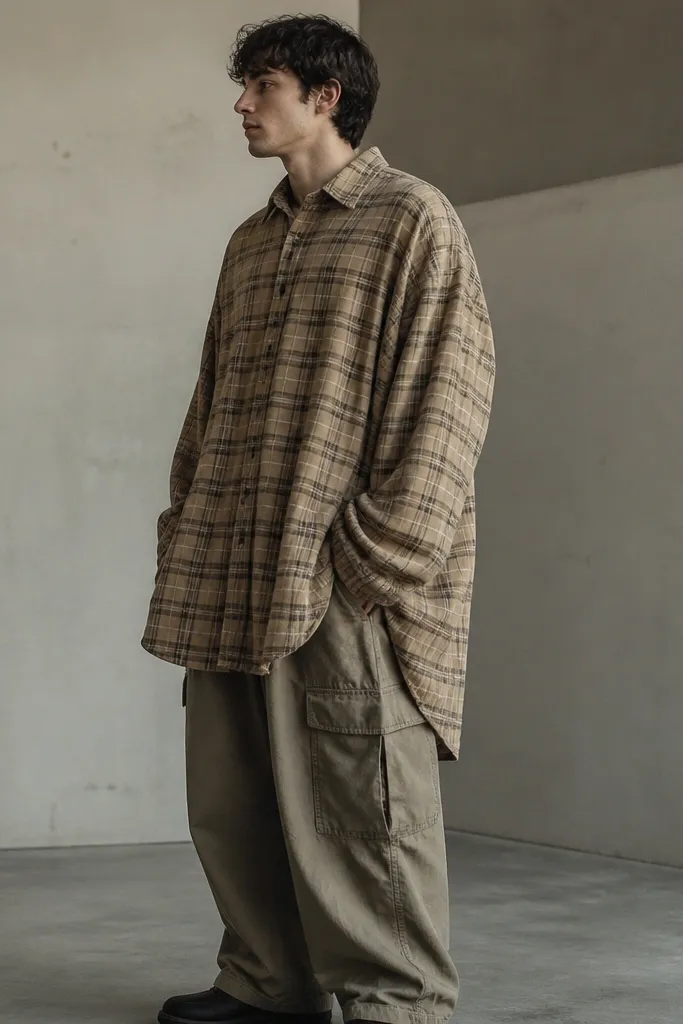
Oversized flannels can look cool, but when the length and sleeve coverage are extreme, you lose shape and proportions. Balance matters: if the flannel is long and roomy, your pants should be more streamlined and your sleeves should show a bit of forearm.
If the flannel hangs past mid-zipper area, roll or cuff the sleeves and keep the hem either tucked at the front or worn with a slimmer jean.
3. The Wrong Hem Length for Tucking
A common mistake is trying to half-tuck a flannel with a hem that’s too short in front or too long in back. The result looks uneven and sloppy instead of “effortless.” The goal is a clean front tuck or a full tuck that sits flat.
For a half-tuck, aim for the hem to land around the top of the jeans/belt line. If your flannel is too short, don’t tuck — wear it untucked with a structured layer underneath.
4. Untucked Flannel + Baggy Pants = The Square Shape Problem
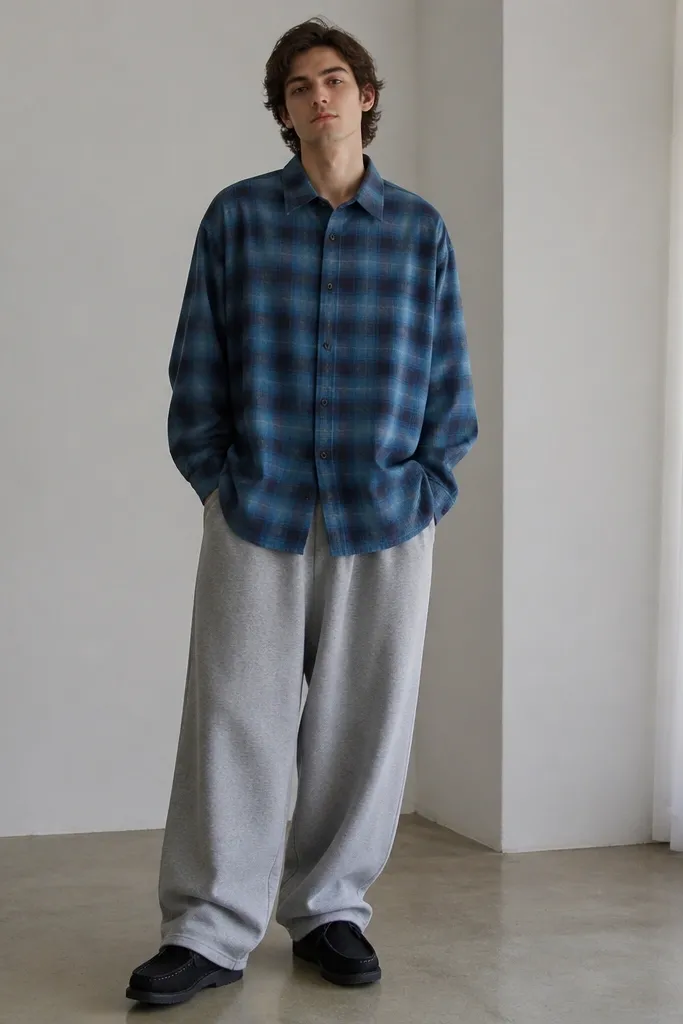
Untucked flannel is easy, but pairing it with very loose bottoms creates a blocky silhouette. Flannel drapes, so the fabric adds visual volume — you need a bit of waist definition somewhere.
Pro tipKeep the pants either straight or slightly tapered. If you love relaxed pants, try a flannel that’s cut closer through the torso or add a belt to visually anchor the waist.
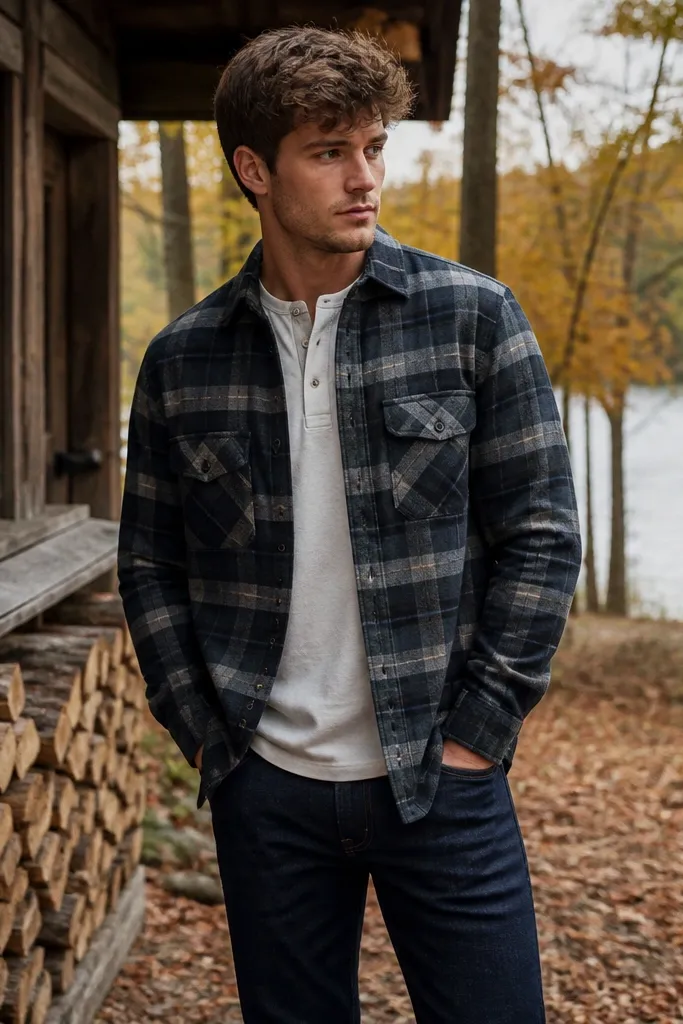
5. Denim-on-Denim That Looks Like a Costume
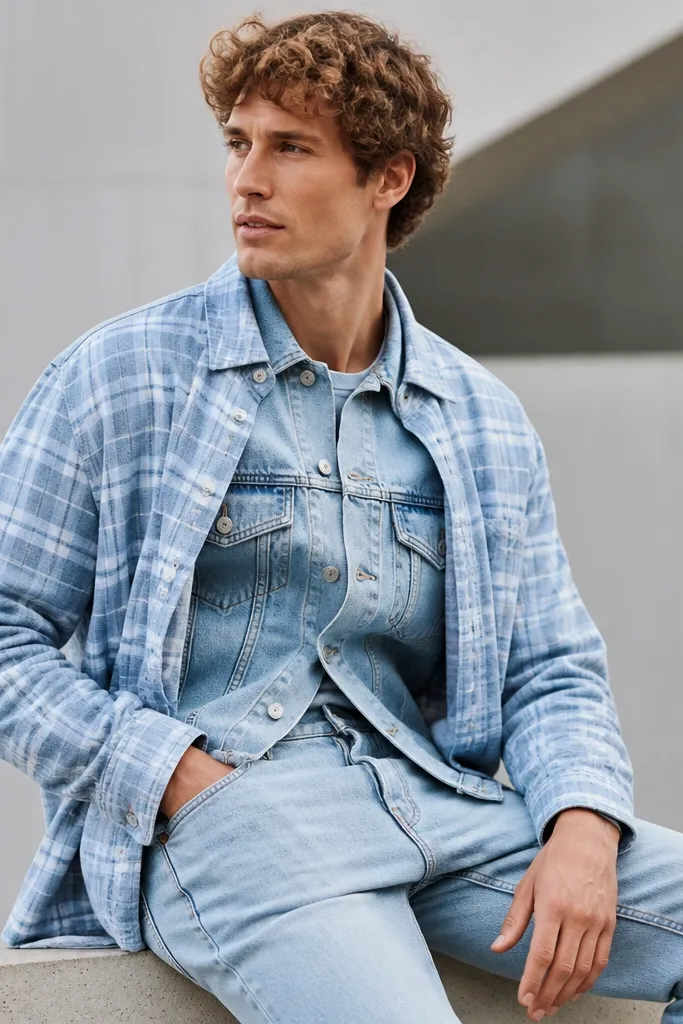
Denim-on-denim can work, but when the wash and the flannel colors are too close, it blends into one flat block. Contrast is what makes it look intentional — either darker denim, a different texture, or a distinct plaid color story.
Pro tipPick one item to be the “hero” and keep the other denim in a darker wash (or go chambray/black denim for contrast).
6. Black Boots + Brown Flannel = The Mixed-Metal Clash
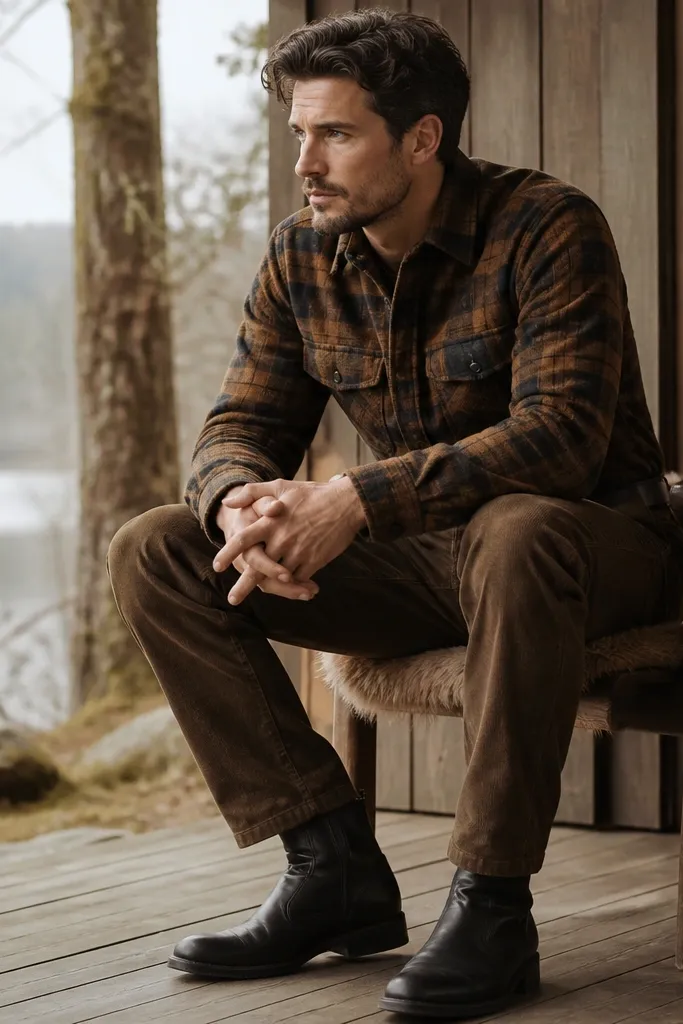
Even if the fit is perfect, mismatched undertones can make an outfit feel off. Brown flannel and warm plaid patterns usually look best with brown leather or at least a matching warm-toned accessory set.
Match boot and belt undertones: if your flannel reads warm (brown, rust, tan), choose brown or cognac footwear. If you want black boots, swap to a cooler plaid (charcoal/blue).
7. Socks That Vanish at the Ankle
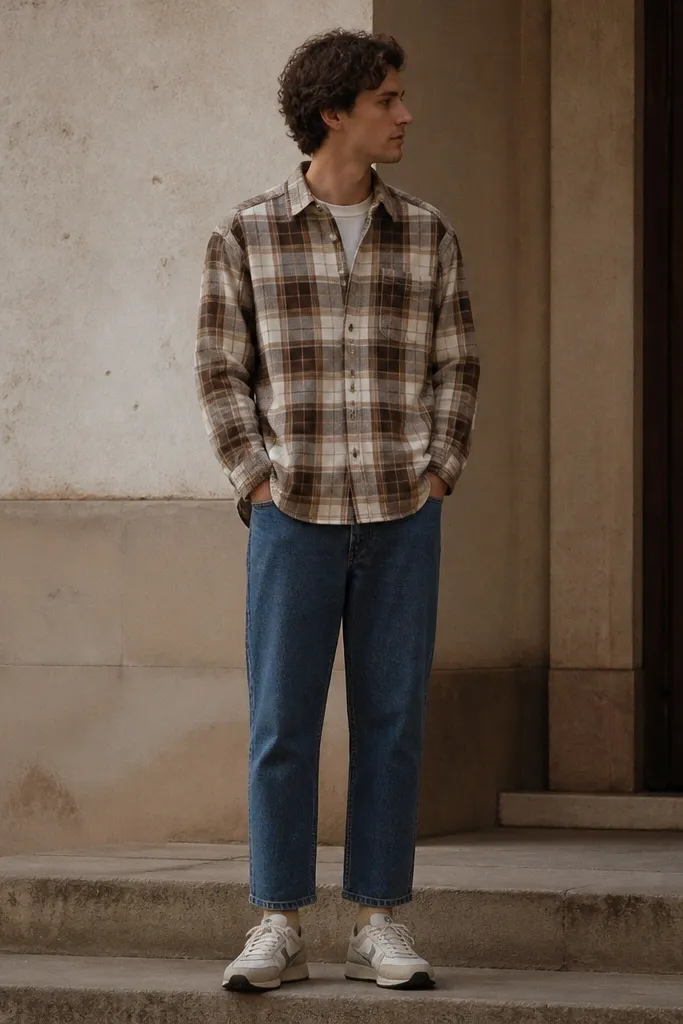
Tiny details make flannel outfits look more “put together.” If the socks disappear, your outfit can look like you forgot to style it — especially with cuffed pants or boots. A visible sock cuff adds a clean line and ties the color story together.
Aim for crew socks that peek 1-2 inches above the shoe. Choose a color that matches either the flannel’s primary stripe or your belt.
8. Over-Layering: Too Many Bulky Pieces
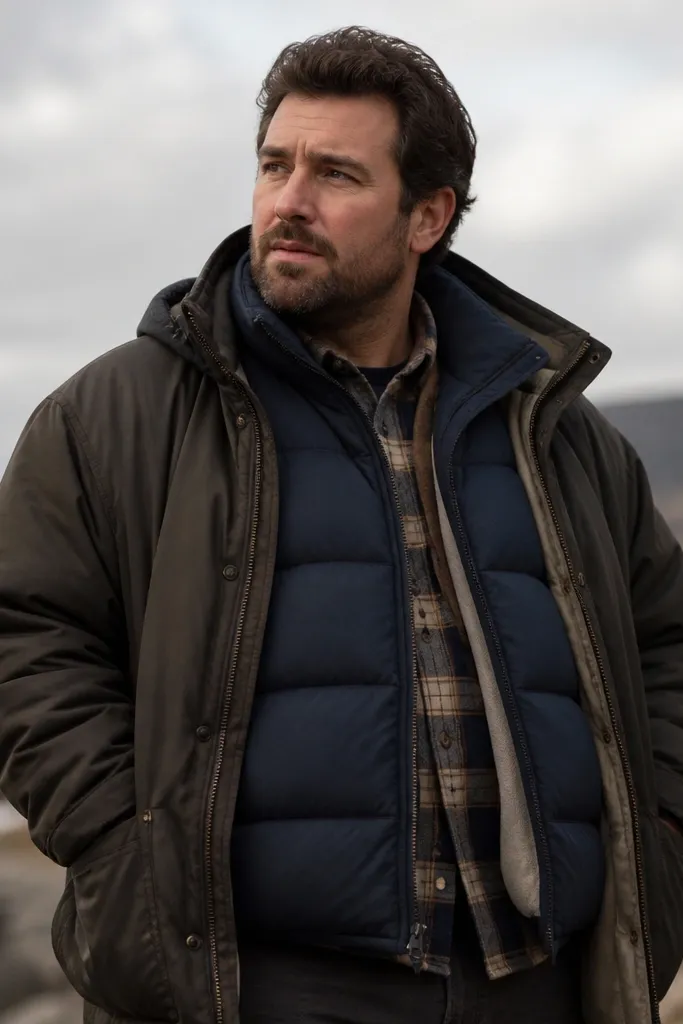
Flannel is already a mid-weight layer. When you stack multiple heavy outer layers, the outfit loses shape and the collar area gets messy. The fix is to use one warm statement layer and keep the other layers lighter or more fitted.
Pro tipUse flannel with a single outer layer: a lightweight jacket (cotton or nylon) or a long-sleeve tee underneath, not two thick tops.
9. The Wrong Underlayer: White Tee That Blinds the Plaid
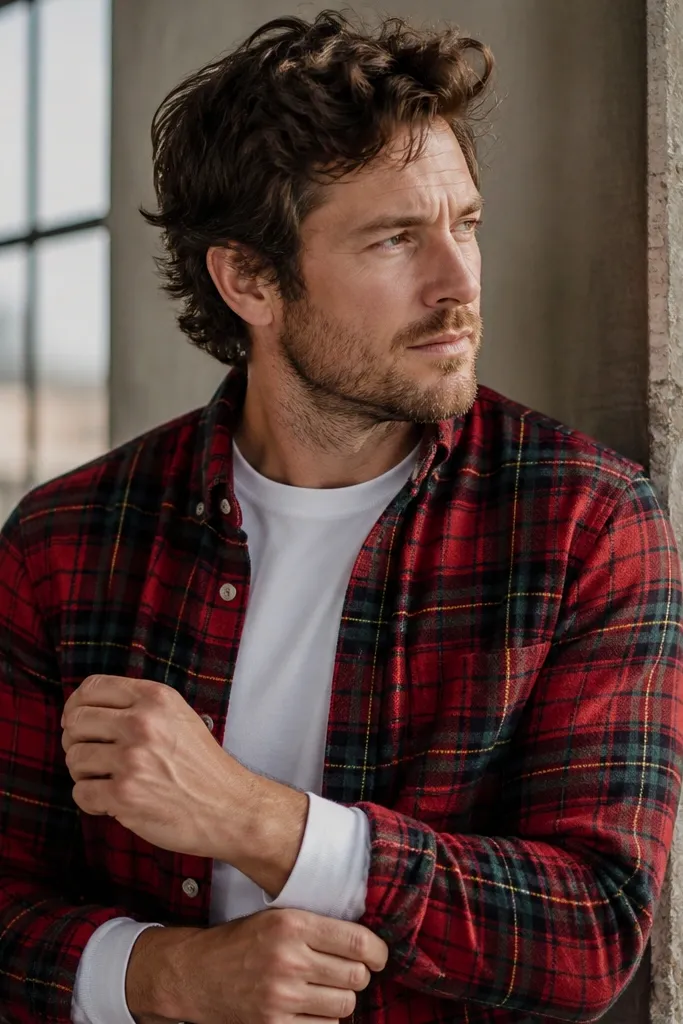
A bright underlayer can overpower the plaid and make the neckline look harsh. If your flannel has strong colors, the underlayer should be calmer or in a matching neutral shade so the pattern stays the focus.
Pro tipSwap to heather gray, washed black, or a tee color pulled from the flannel (like deep green or muted navy).
10. Pilling Flannel Because It’s Washed Too Hot
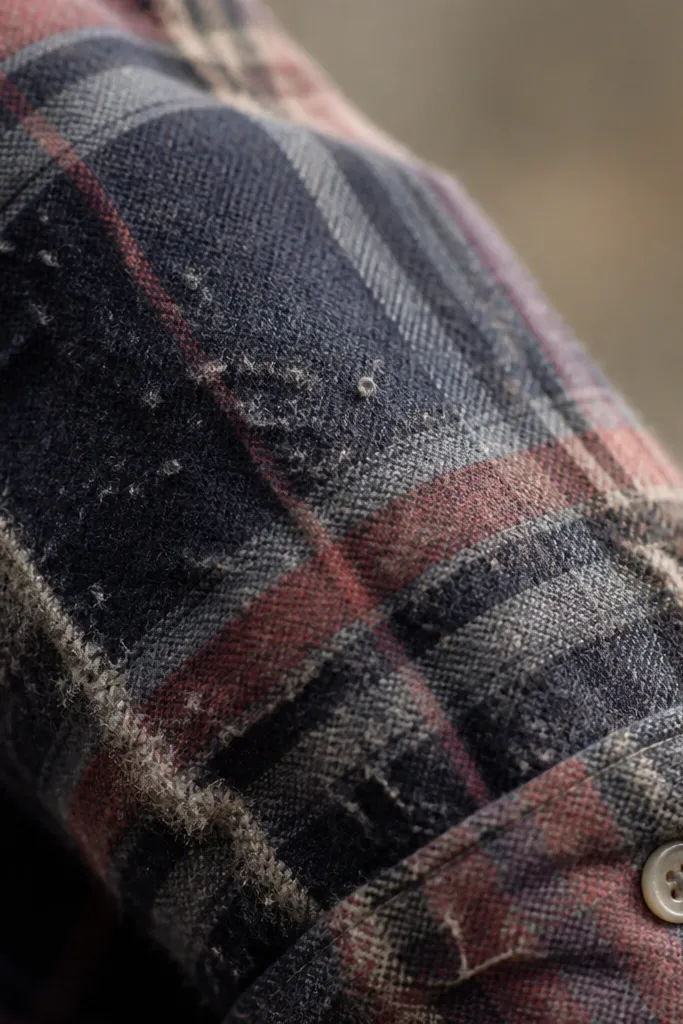
Pilling usually comes from heat, friction, and rough drying cycles. Flannel is cotton, so it responds well to gentle care — cold water and low tumble or air drying keep the surface smoother.
Wash cold on a gentle cycle, skip fabric softener, and air dry or use low heat. Use a fabric shaver on pills before they spread.
11. Ironing the Wrong Way and Flattening the Texture
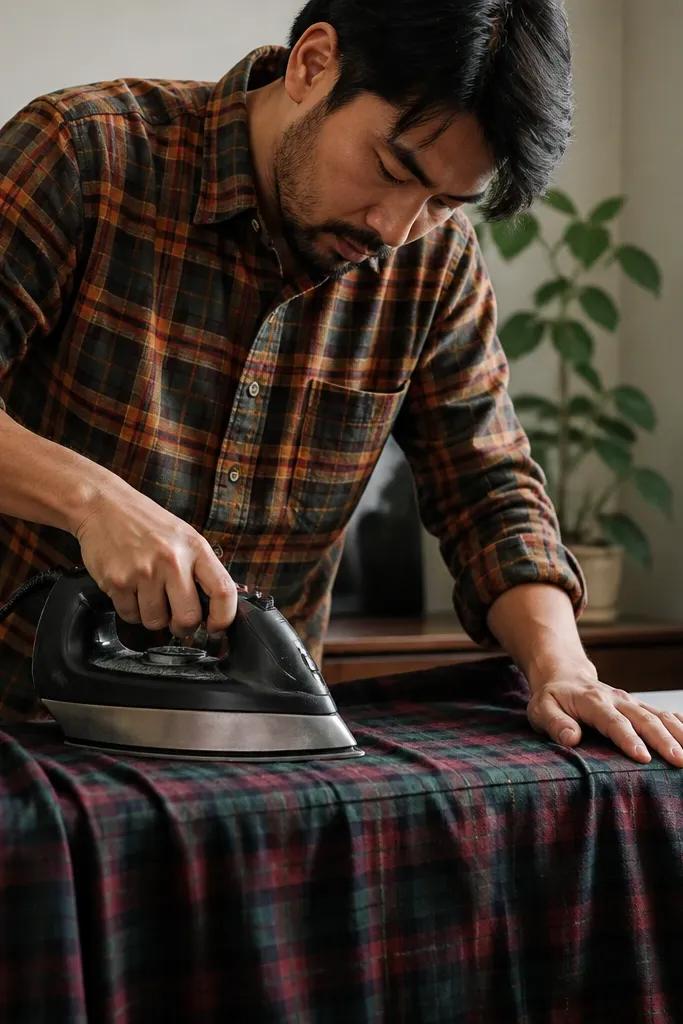
High heat can change flannel’s feel and make it look shiny. Also, ironing directly can flatten the nap in a way that makes the shirt look uneven. You want a crisp collar and clean seams without killing the cozy texture.
Use medium heat with steam and iron inside-out or over a thin cotton cloth. Test a hidden seam first.
12. Using the Same Flannel Every Time Without a Color System
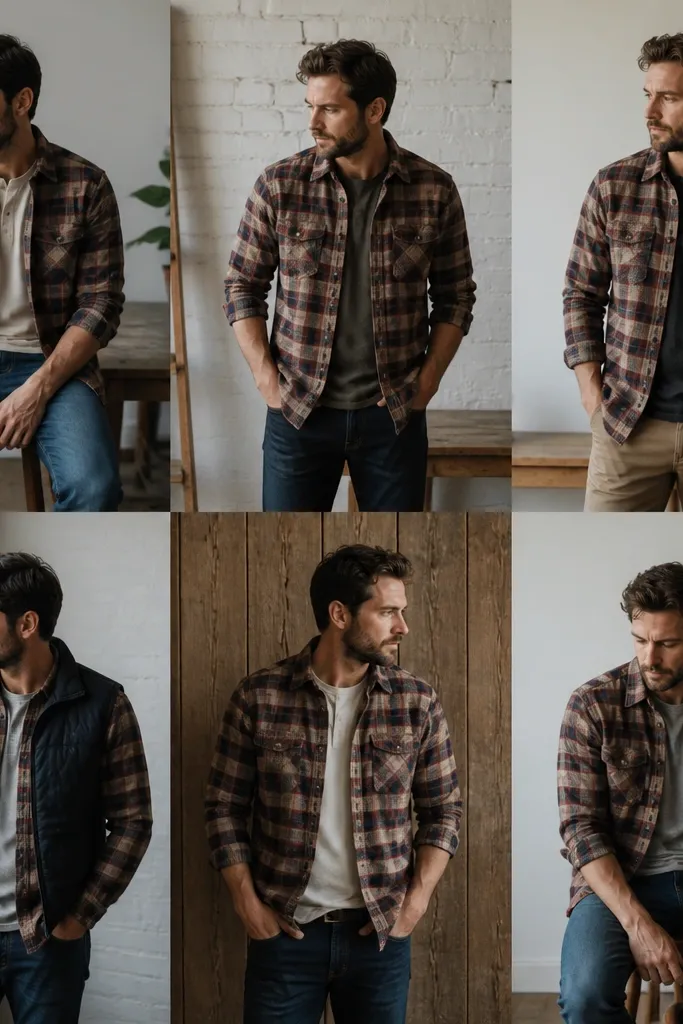
Flannel is versatile, but if you always pair it with the same jean wash and shoe color, the look stops feeling intentional. A simple color system makes it easier: match undertones, then repeat neutrals that ground the pattern.
Pro tipPick two anchor neutrals (dark indigo + black or tan + charcoal) and rotate everything else by undertone.