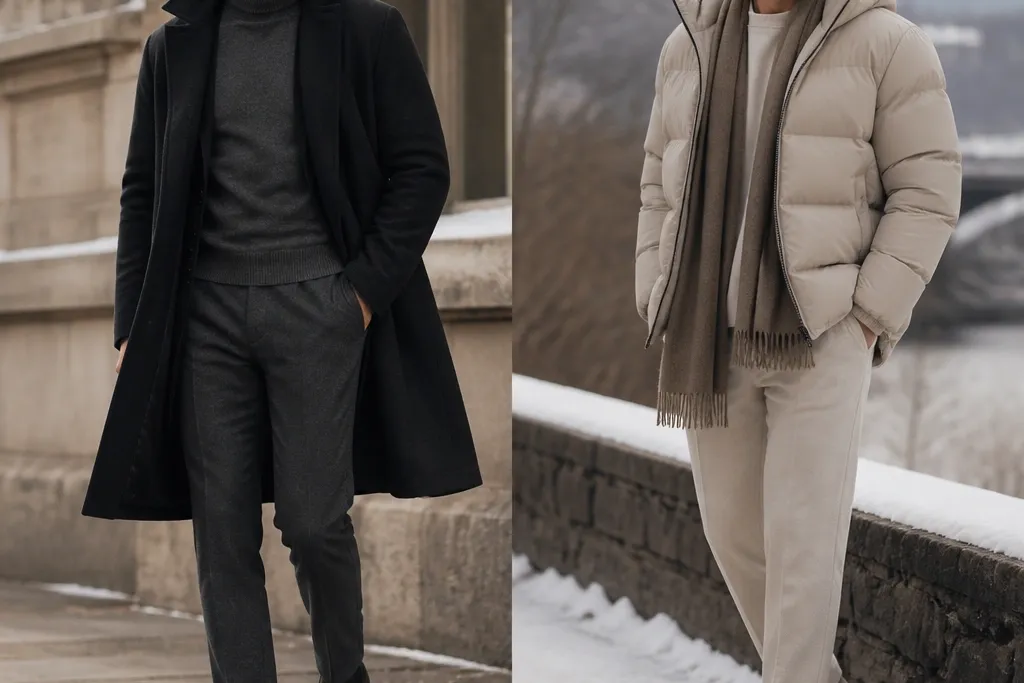
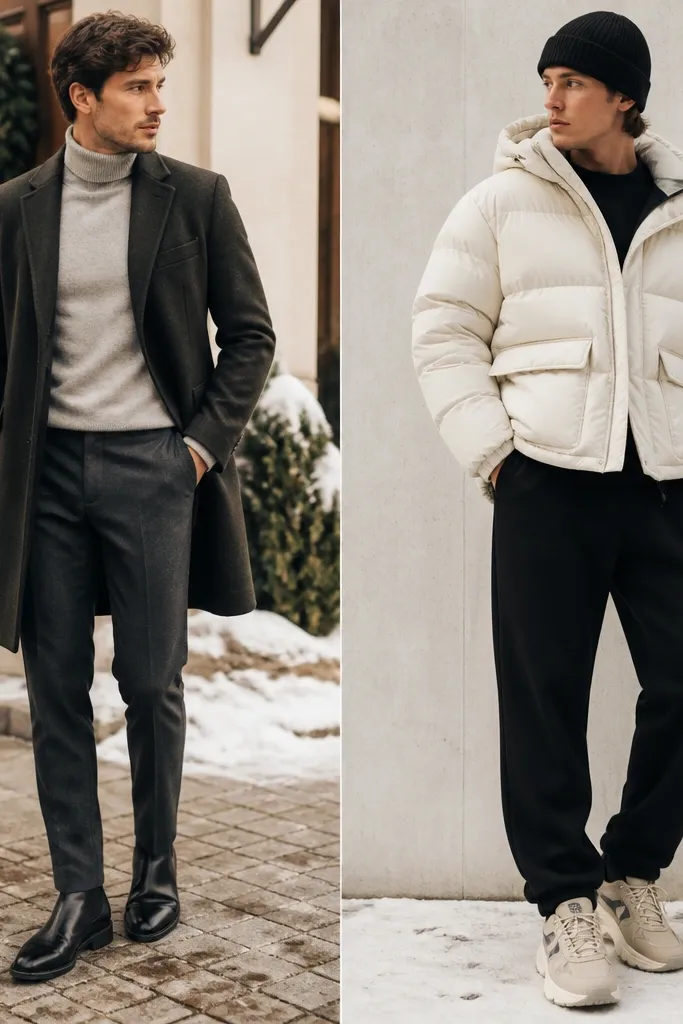
1. Navy wool overcoat + cream merino crew + dark denim
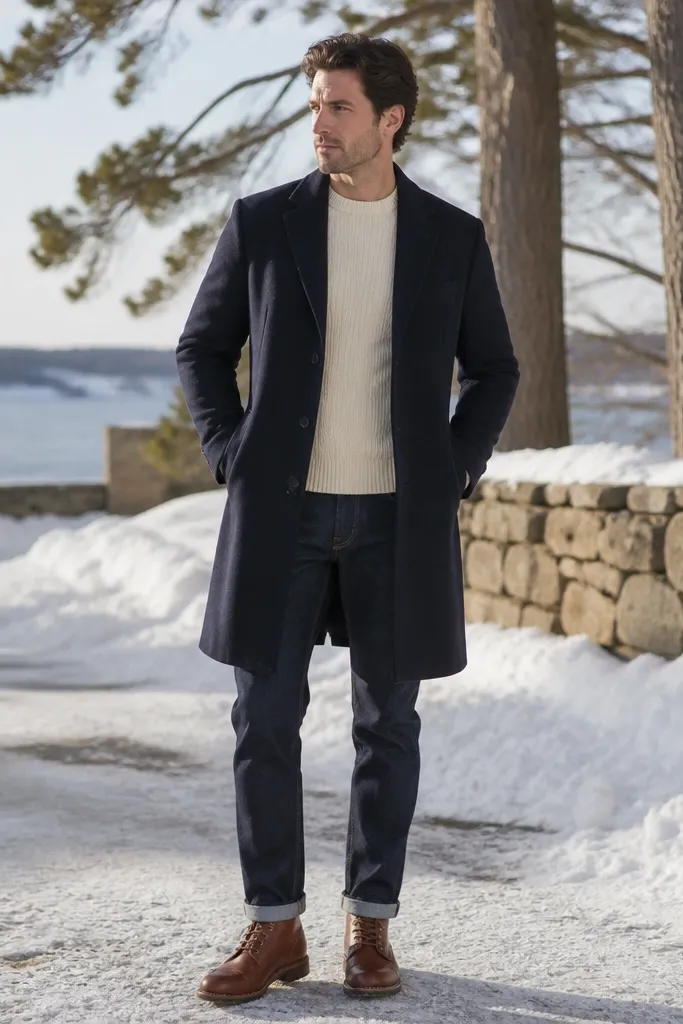
This combo works because wool overcoats slow wind and merino adds warmth without bulk. The cream top brightens the face against the navy, and dark denim keeps the outfit grounded for a real “winter office to dinner” vibe. Choose a midweight merino (around 200-250 gsm) so it still breathes when you’re indoors.
Pro tipIf you run cold, add a thin thermal long-sleeve under the merino and keep the overcoat unbuttoned only when you’re indoors.
2. Black puffer + charcoal hoodie + straight-leg jeans
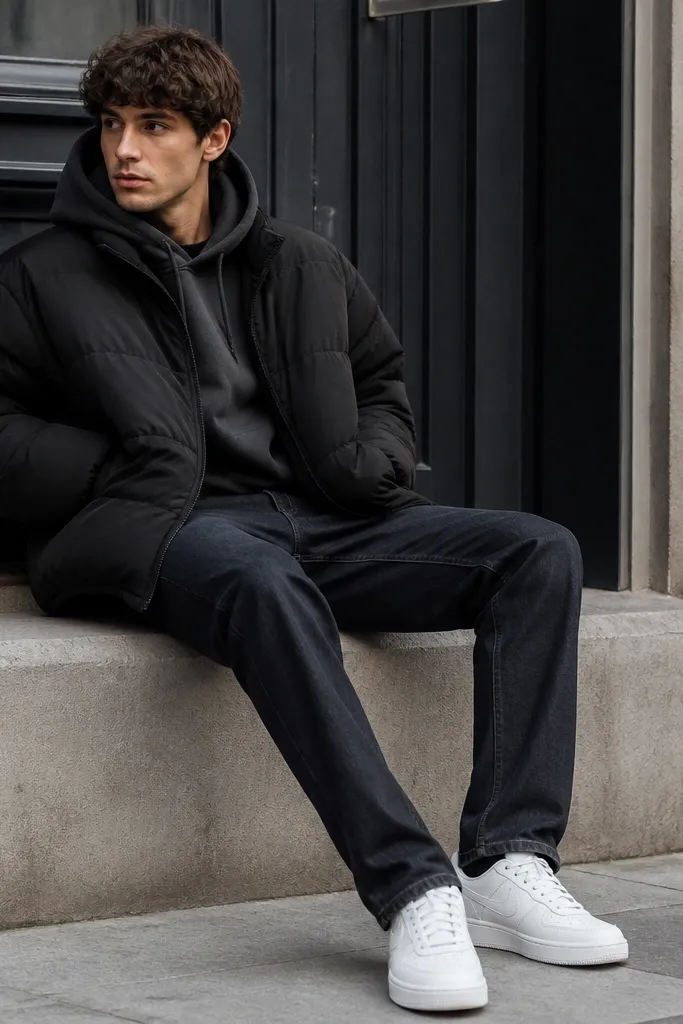
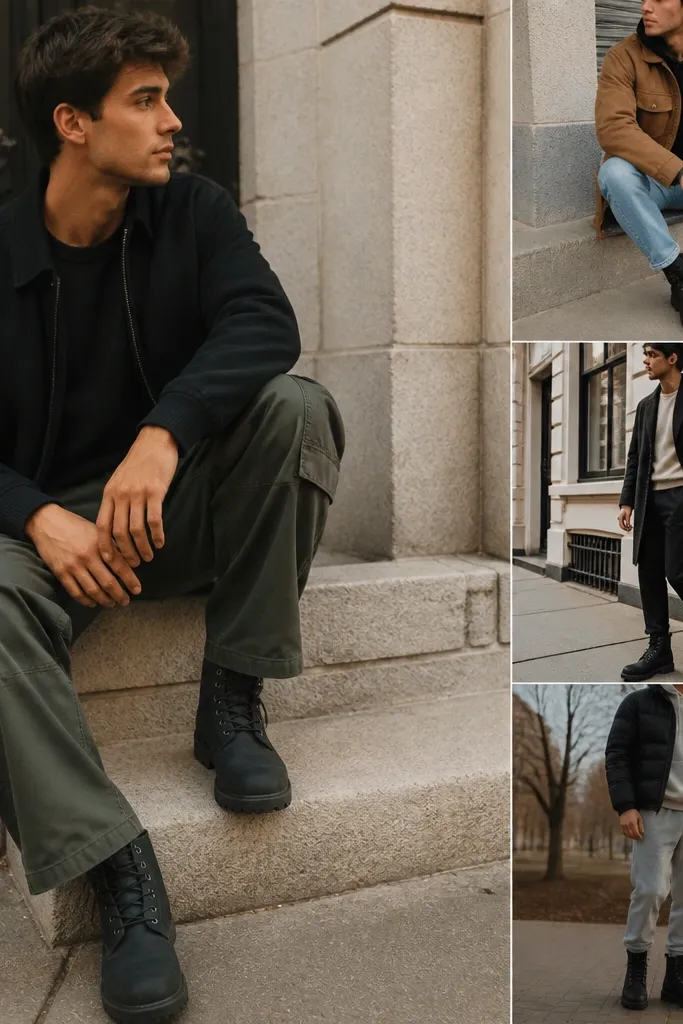
Matte puffers trap heat well while still looking modern, and the hoodie fills the “warmth gap” between a base layer and the outer shell. Straight-leg jeans avoid the bunching that happens with skinny cuts under a bulky jacket. Keep the hoodie cotton-heavy or fleece-lined for better insulation.
Use a slightly longer hoodie hem that covers your waistband when you move — it makes a noticeable difference in wind chill.
3. Camel overcoat + plaid flannel button-down + dark chinos
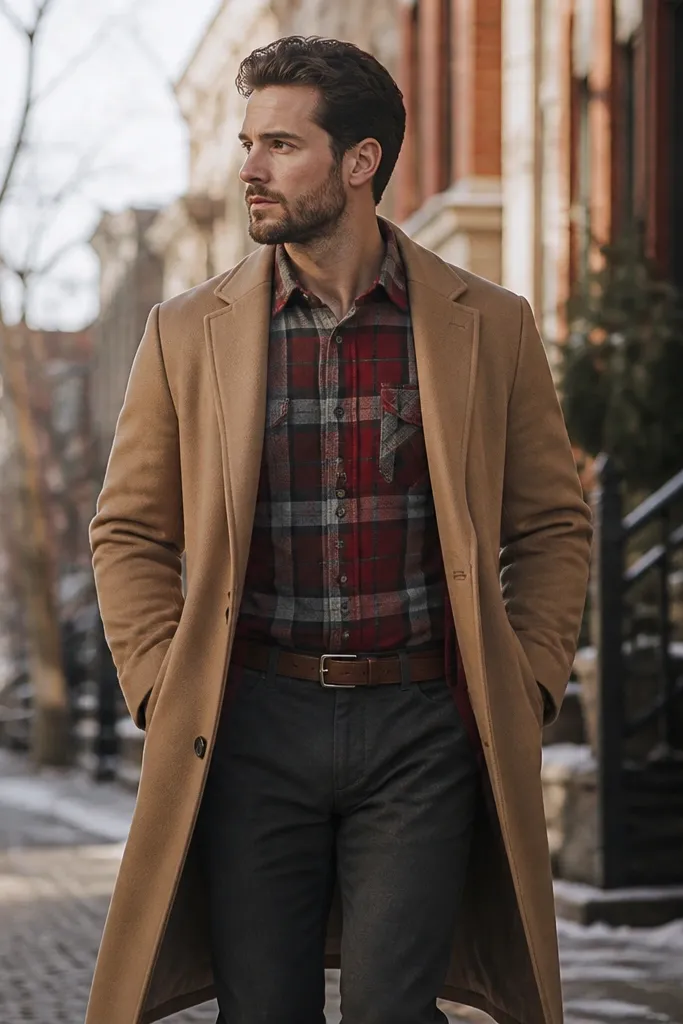
Camel overcoats look expensive and soften winter, but they only deliver if the inner layer has real texture. Plaid flannel adds warmth and visual depth, while dark chinos keep the look sharp without denim’s casual looseness. Aim for flannel that feels substantial (not thin poplin).
Roll the flannel sleeves slightly higher than the overcoat cuff for a clean layered look that still feels warm.
4. Quilted jacket + henley + wool-blend trousers
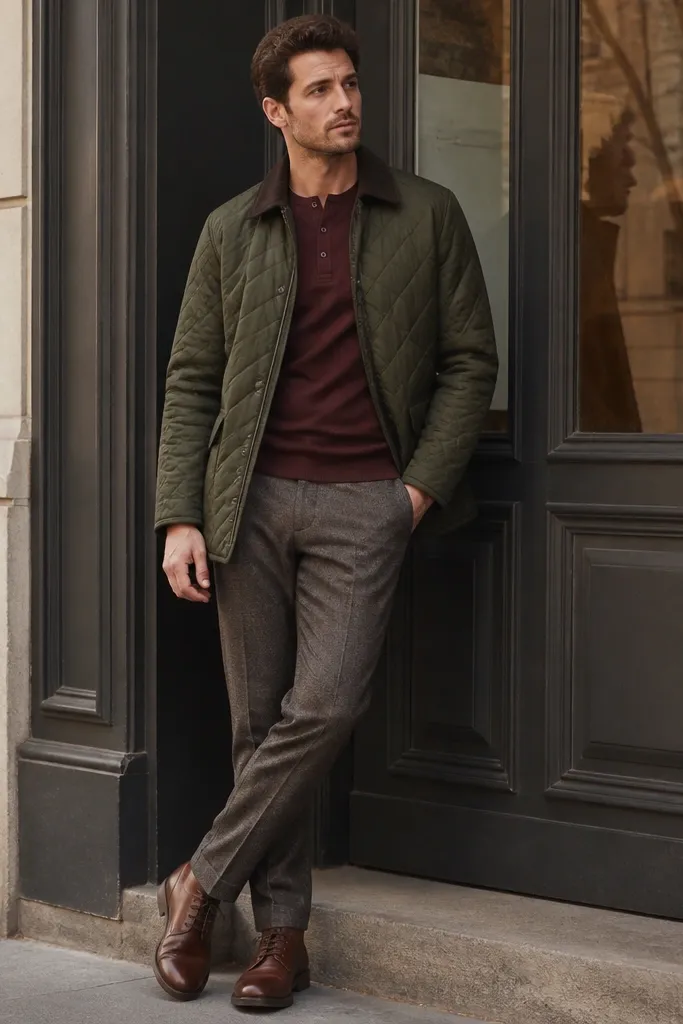
Quilted jackets are underrated for early winter because they’re warmer than a shirt jacket but less bulky than a puffer. A henley (preferably with a brushed interior or thermal base) prevents cold air from sneaking in at the neck. Wool-blend trousers elevate the outfit for dinners without needing a full overcoat.
Choose a henley with a slightly higher neckline so wind doesn’t hit your throat when you step outside.
5. Faux shearling jacket + thermal tee + black jeans
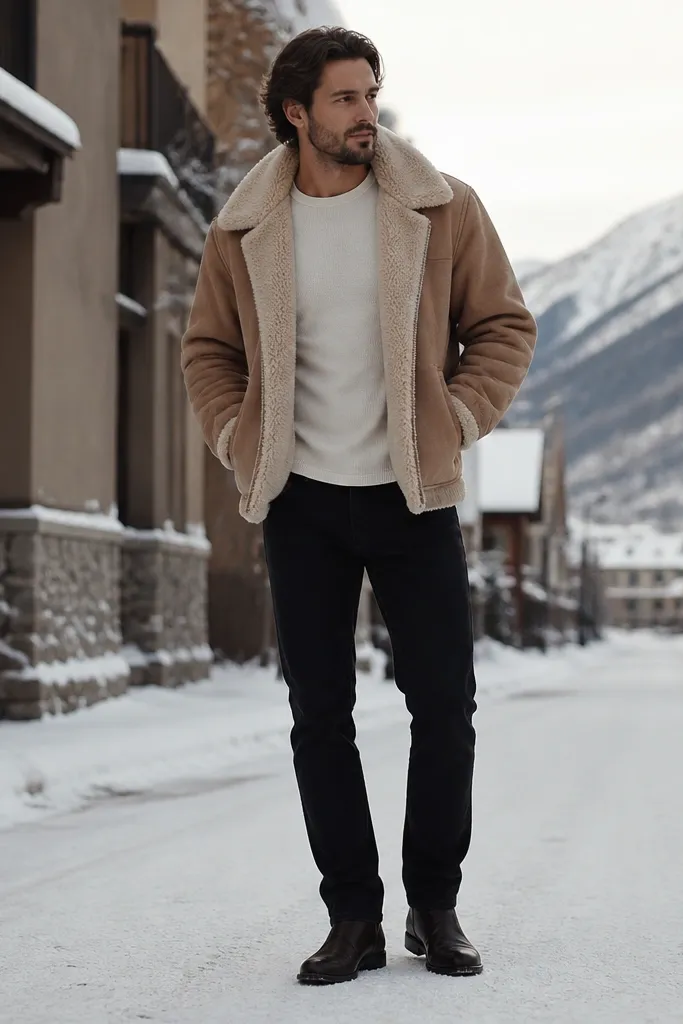
Shearling-style jackets trap heat at the collar and shoulders, which is where winter discomfort starts. Pair it with a fitted thermal tee to keep warmth close to your body without adding bulk under the jacket. Black jeans keep the tan jacket from looking too “light” in low winter light.
Match your boots to the jacket tone (tan + brown, black + dark) for a more intentional winter palette.
6. Long parka + insulated vest + knit beanie (no bulky layers)
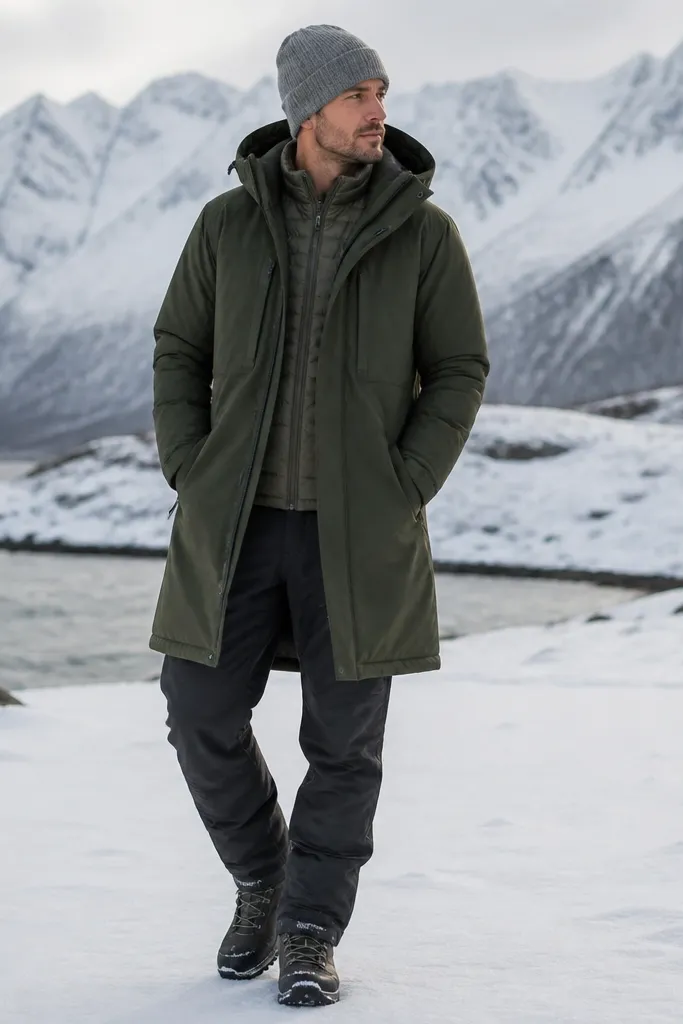
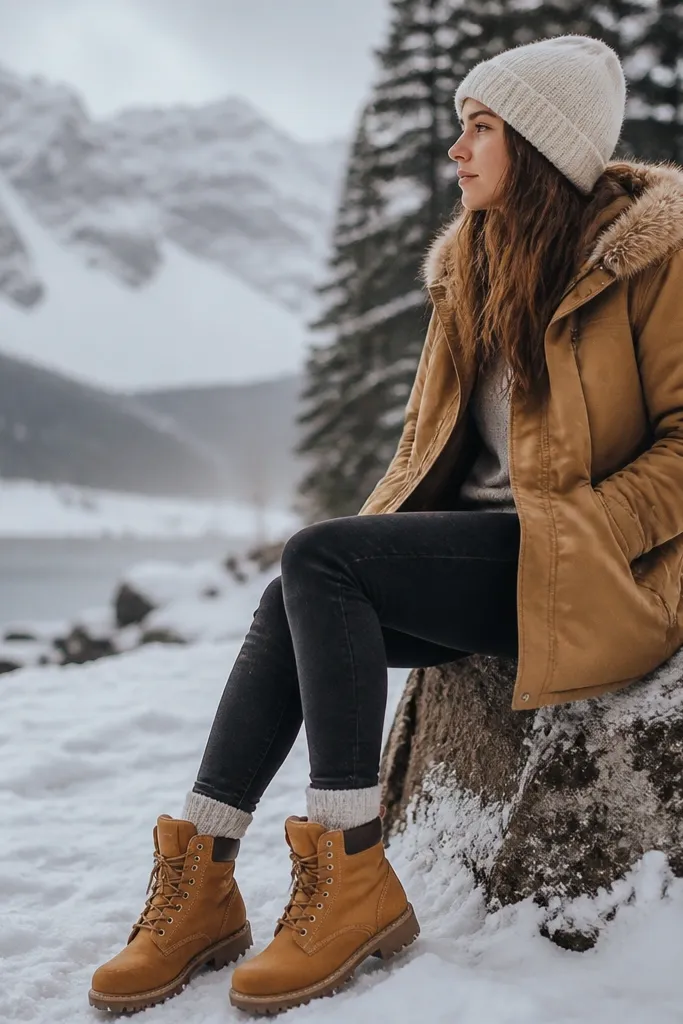
A long parka is one of the few “worth it” outer layers for real snow days because it covers more of your core and upper legs. Adding an insulated vest gives warmth without doubling the bulk of sleeves. This is the setup that works when you’ll be outside for 60+ minutes and the temperature drops.
Pro tipLook for a parka with a storm flap and adjustable cuffs — those details stop wind from stealing your heat.
7. Peacoat + knit turtleneck + wool socks (the classic winter upgrade)
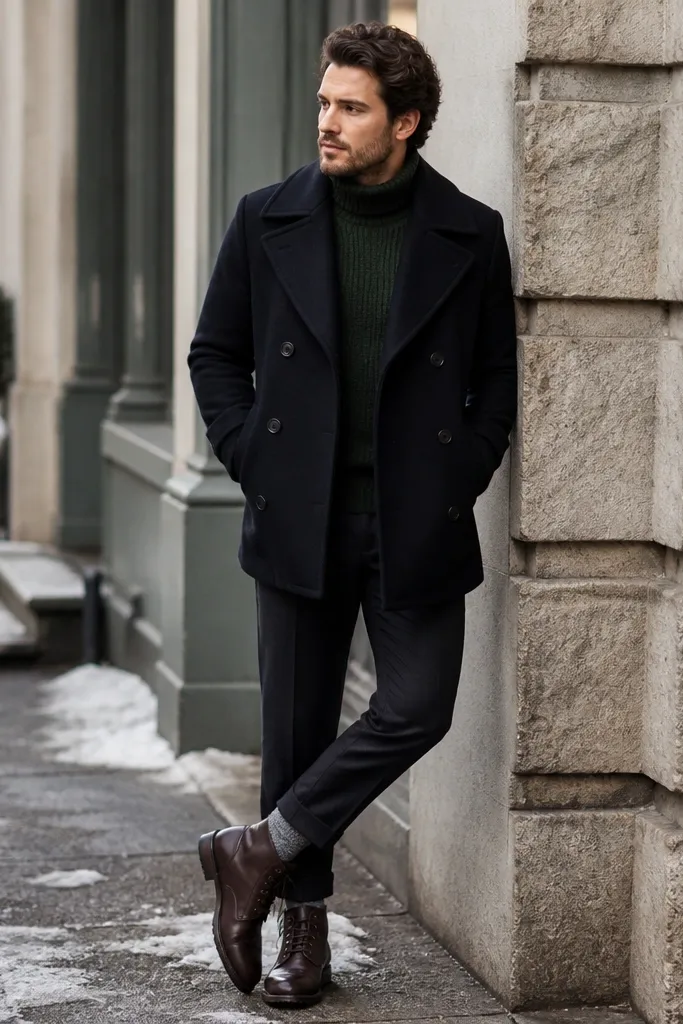
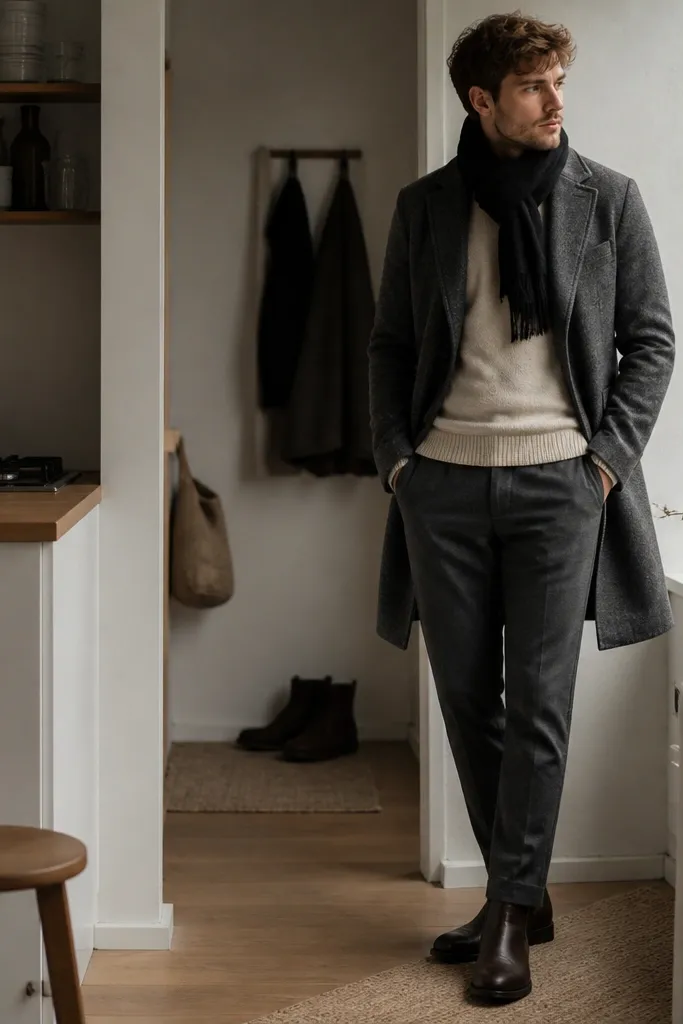
A peacoat looks timeless, but it’s often overhyped when people skip the neck and base warmth. A knit turtleneck adds insulation and blocks drafts, while wool socks prevent the “cold feet” problem that makes the whole outfit feel colder. This is a clean, date-friendly winter look.
If your peacoat feels thin, add a thermal layer under the turtleneck rather than switching to a bigger coat.
8. Sherpa-lined trucker jacket + sweatshirt + cuffed jeans
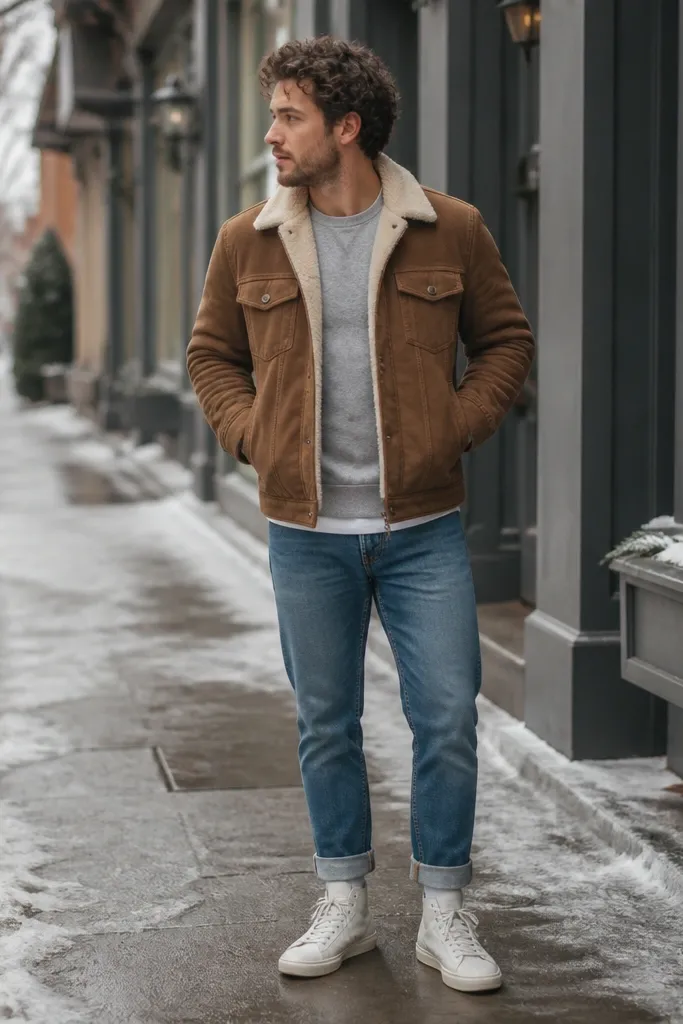
Sherpa-lined trucker jackets are warm enough for many “winter outfit” days without the heavy puffer look. The key is pairing with a sweatshirt that has enough thickness to fill the space under the lining. Cuffing jeans shows socks and keeps the hem from dragging in slush.
Pro tipUse a lint roller before you wear it — sherpa lining shows fuzz and can look messy fast.
9. Light puffer vest + insulated long-sleeve + overcoat (layering trick)
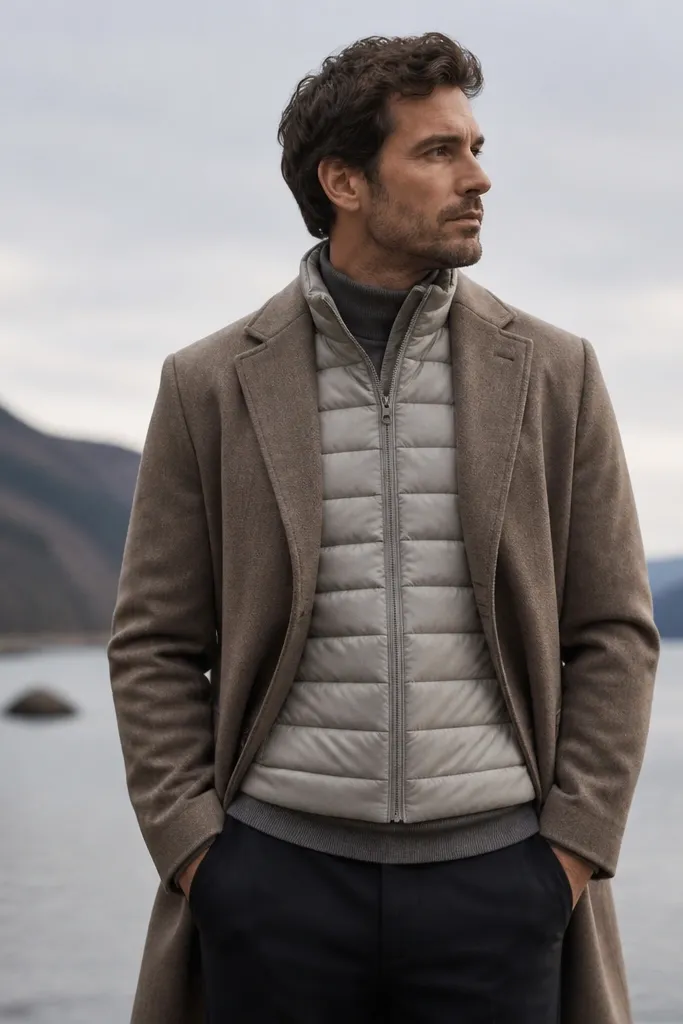
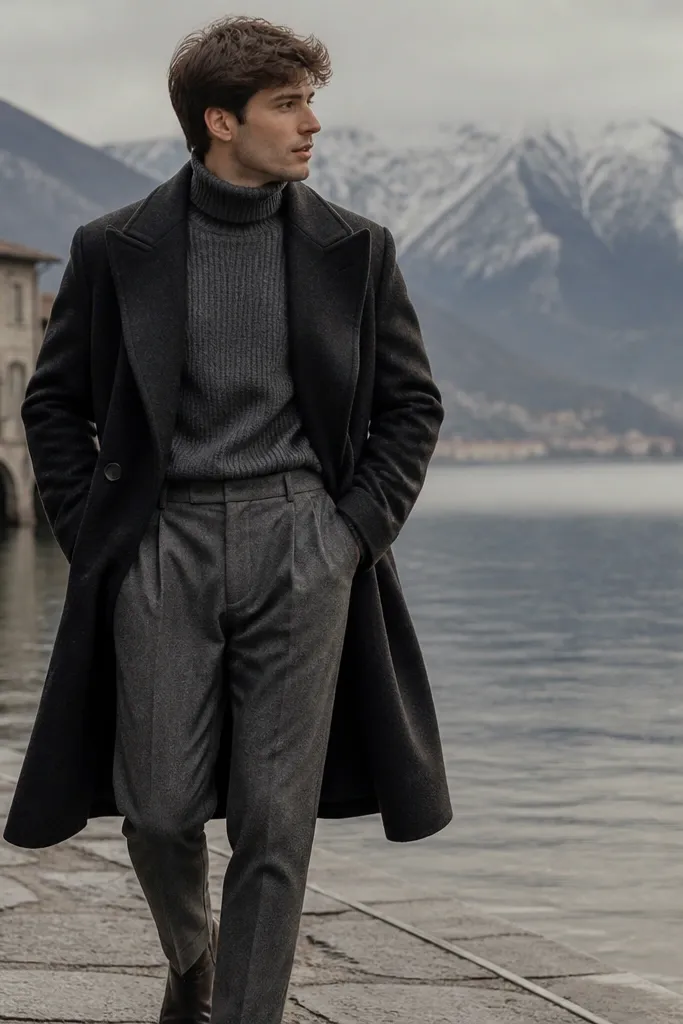
This is a “best winter outfits men vs” cheat code because it adds warmth where you need it (torso) without making your arms bulky. The insulated long-sleeve acts as a base layer, so the overcoat can stay stylish instead of becoming your only heat source. It’s also easier to adjust when you go from outdoors to a warm building.
Choose a vest with a smooth outer shell so it slides under an overcoat without bunching.
10. Corduroy overshirt + thermal henley + Chelsea boots
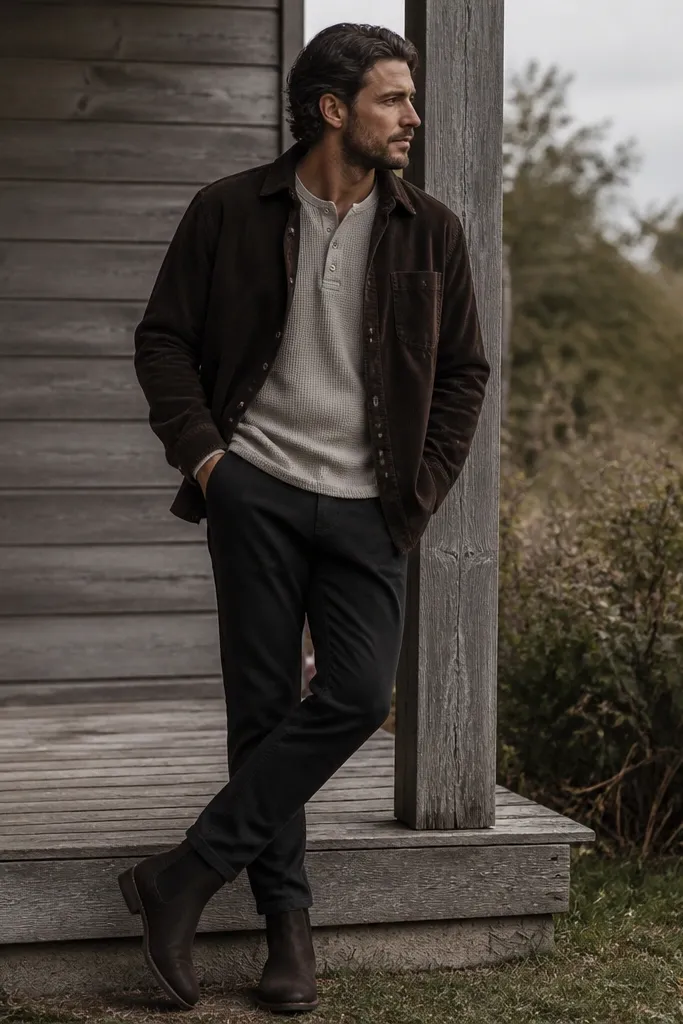
Corduroy has real insulating texture and makes winter outfits look richer than plain denim or twill. A thermal henley keeps the chest and neck warm without adding bulk, which is important under an overshirt. Chelsea boots finish the look with clean lines that work for casual events and dinners.
Pick corduroy with a medium wale (not too thin) so it actually holds warmth.
11. Overhyped thin coat correction: bomber + fleece base + beanie
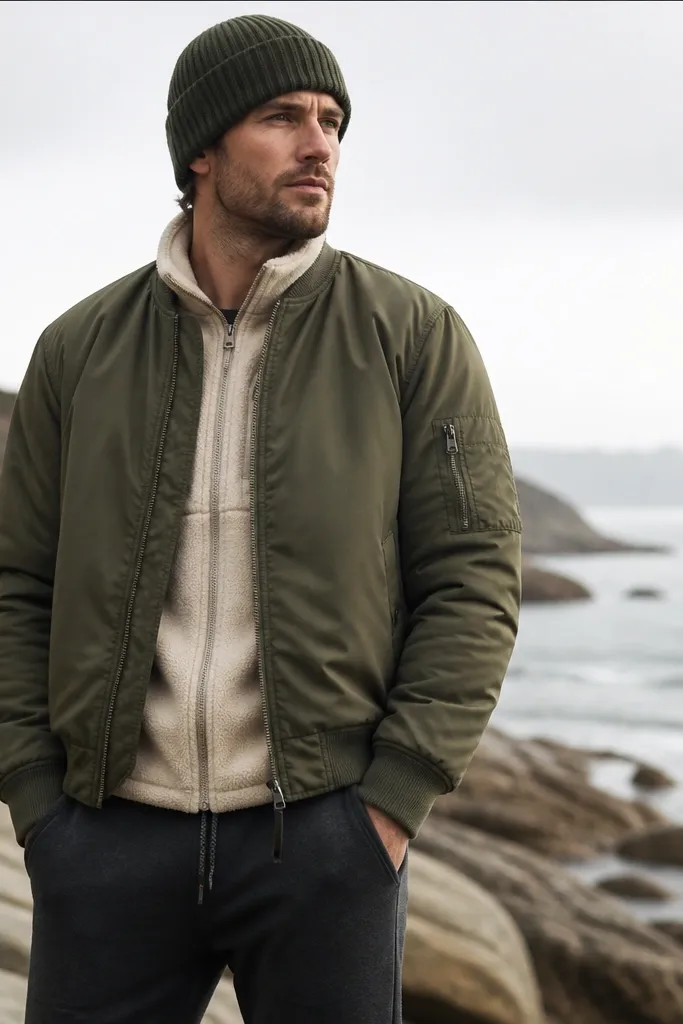
Thin “fashion coats” look sleek but often fail because they don’t block wind. Swapping to a bomber (or any wind-resistant jacket) plus a fleece base layer keeps warmth consistent, even when the temperature drops suddenly. The beanie matters because heat loss at the head can make you feel colder than the actual number.
If you already own a thin coat, add a windproof layer under it instead of buying a new coat immediately.