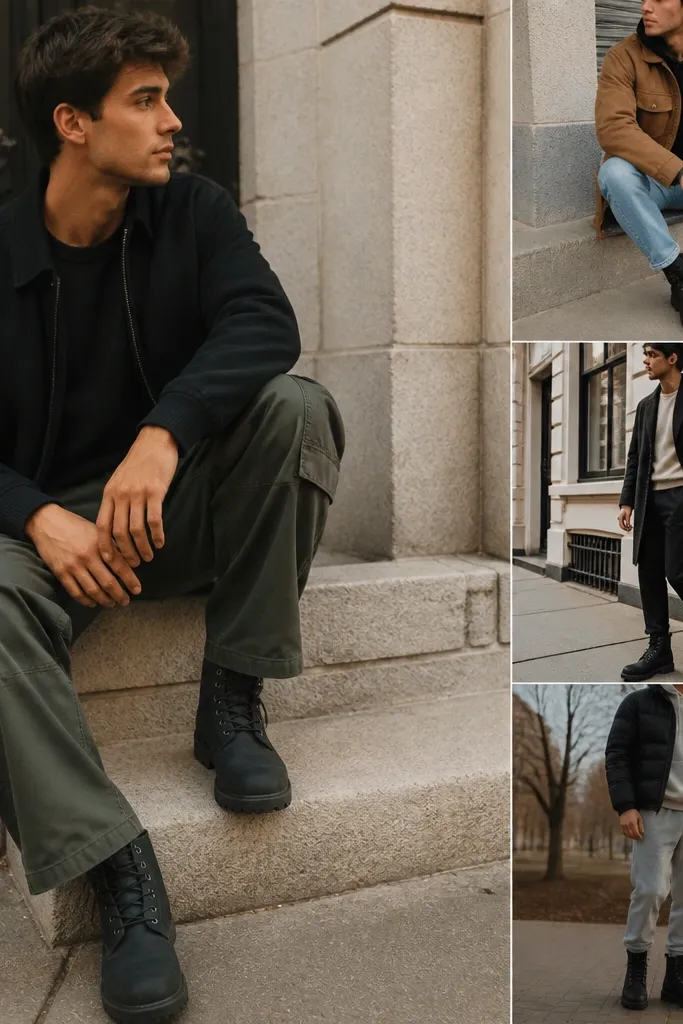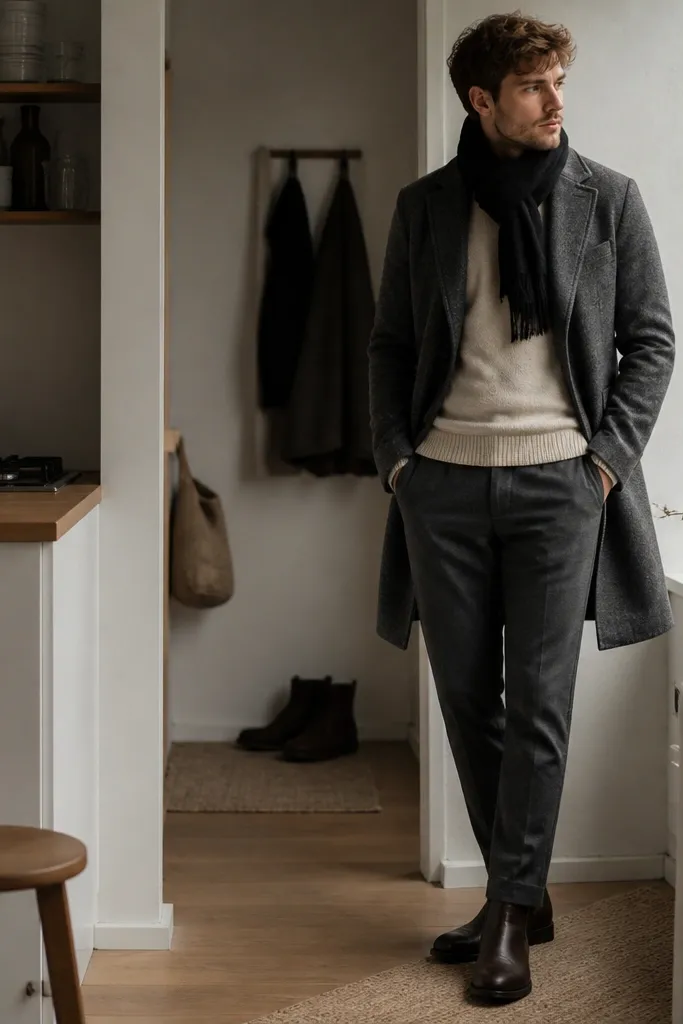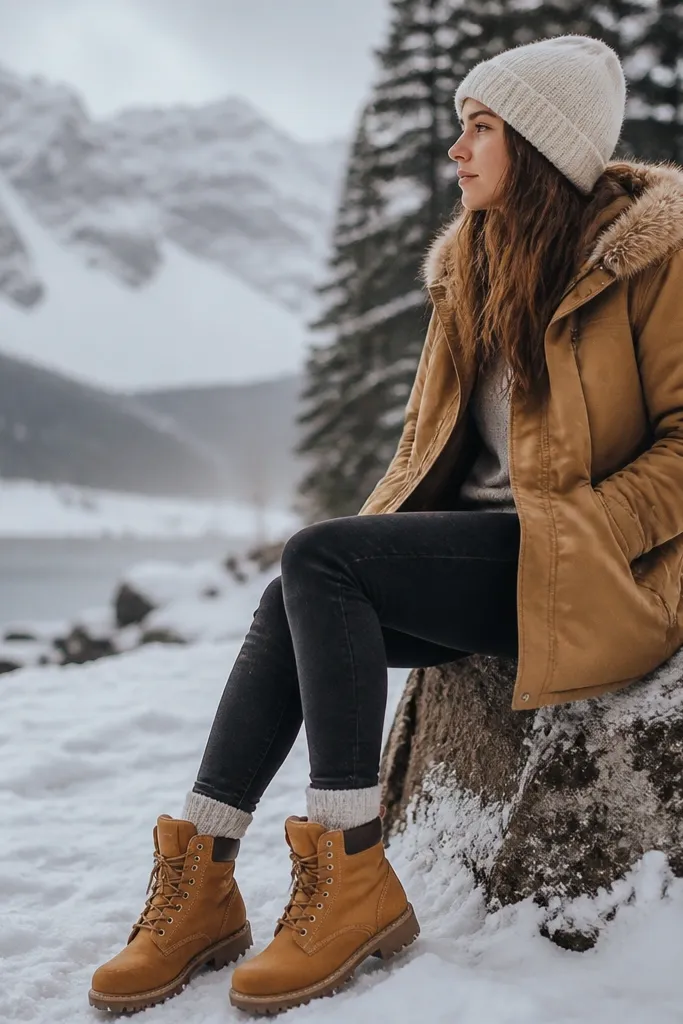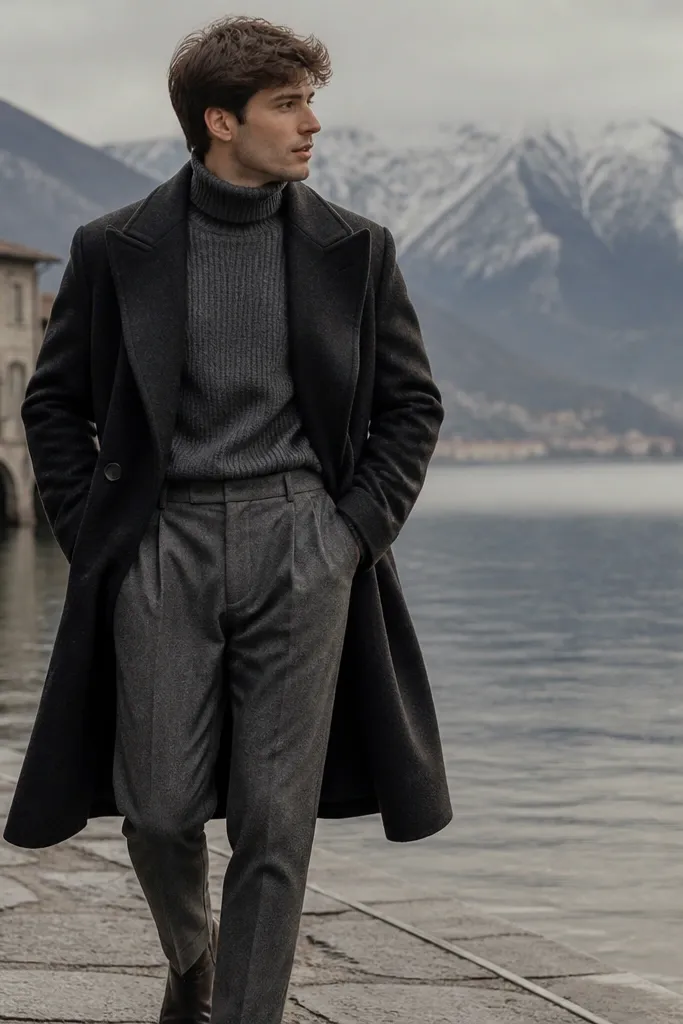
1. Charcoal Puffer + Black Jeans for Weekend Errands
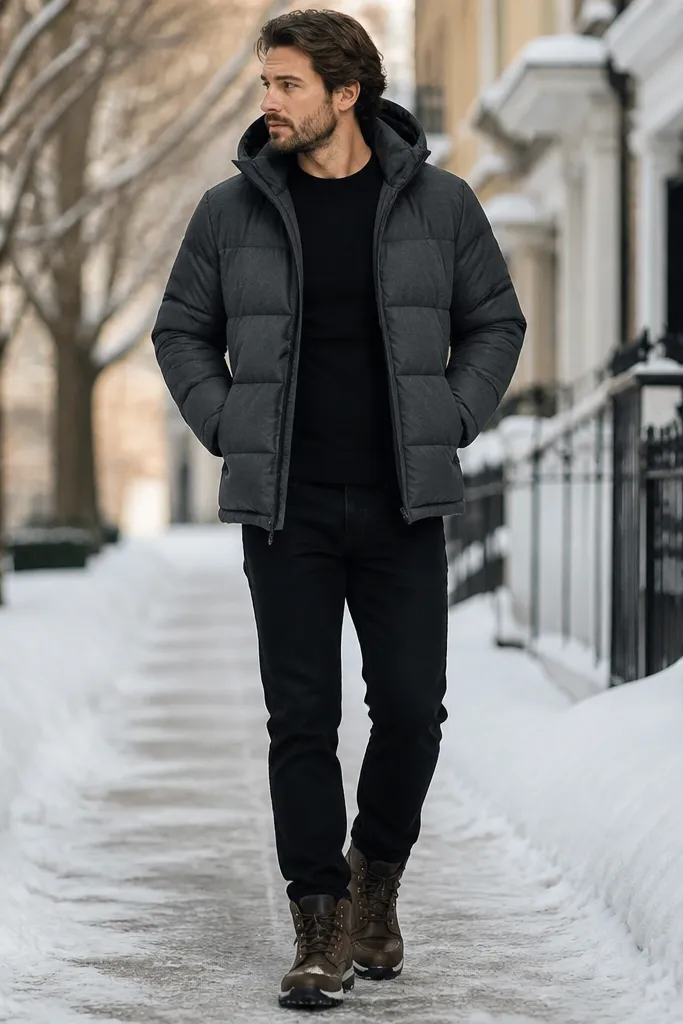
This combo works because the puffer brings wind-blocking warmth while the sweater keeps the look clean (not bulky). Charcoal + black looks intentional even when you wear simple basics, and dark jeans hide winter grime better than light denim.
Pro tipChoose a puffer with a slightly longer hem (covers your hips) and keep the sweater under it fitted to avoid a “pillowy” silhouette.
2. Navy Overcoat + Gray Flannel Shirt + Chinos
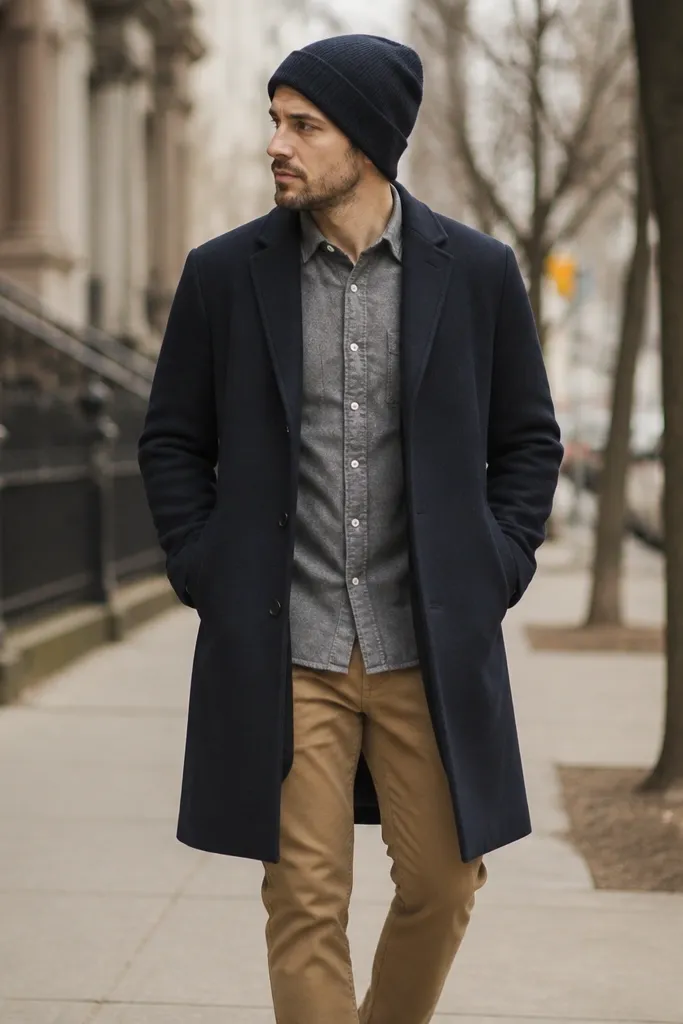
An overcoat instantly levels up beginner outfits for dinners, meetings, and dates. Flannel adds thickness without feeling heavy, and camel chinos soften the navy so the outfit doesn’t look too dark.
Pro tipIf you’re new to coats, start with navy or camel because they’re forgiving and pair easily with gray, cream, and denim.
3. Olive Parka + Thermal Henley + Straight-Leg Denim
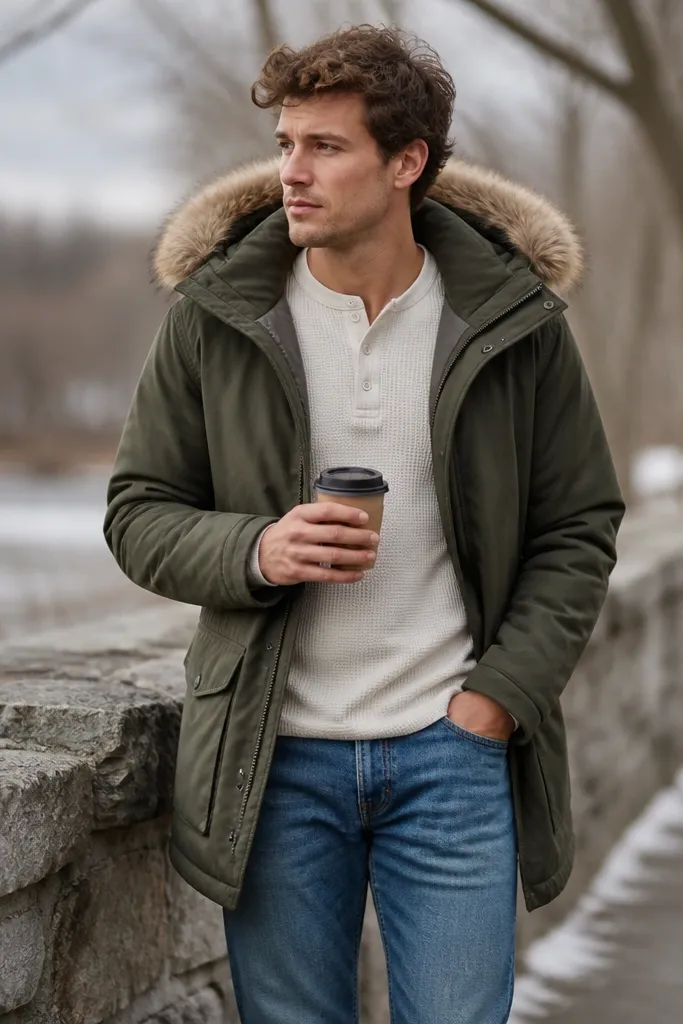
Parka + thermal is a real winter formula because it traps heat near your body and blocks wind at the outer layer. Olive also looks great with cream and denim, so you can repeat the same base colors across multiple outfits.
Pro tipPick a thermal henley in cream or oatmeal to brighten the whole look and reduce the “all-dark” effect.
4. Camel Car Coat + White Turtleneck + Dark Trousers
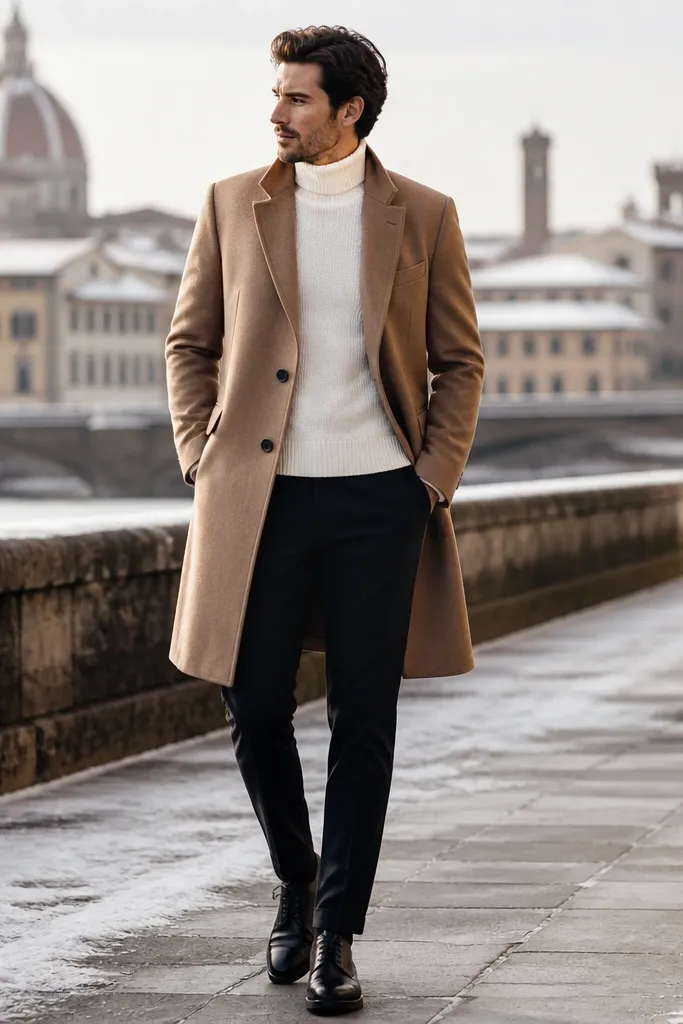
A car coat gives you that structured, polished vibe without needing a suit. The white turtleneck adds contrast and warmth, while dark trousers keep it sleek for evenings.
Pro tipAim for a turtleneck thickness that feels snug but not bulky — you should be able to slide two fingers between fabric and neck.
5. Black Bomber + Sweatshirt + Jogger-Cut Pants
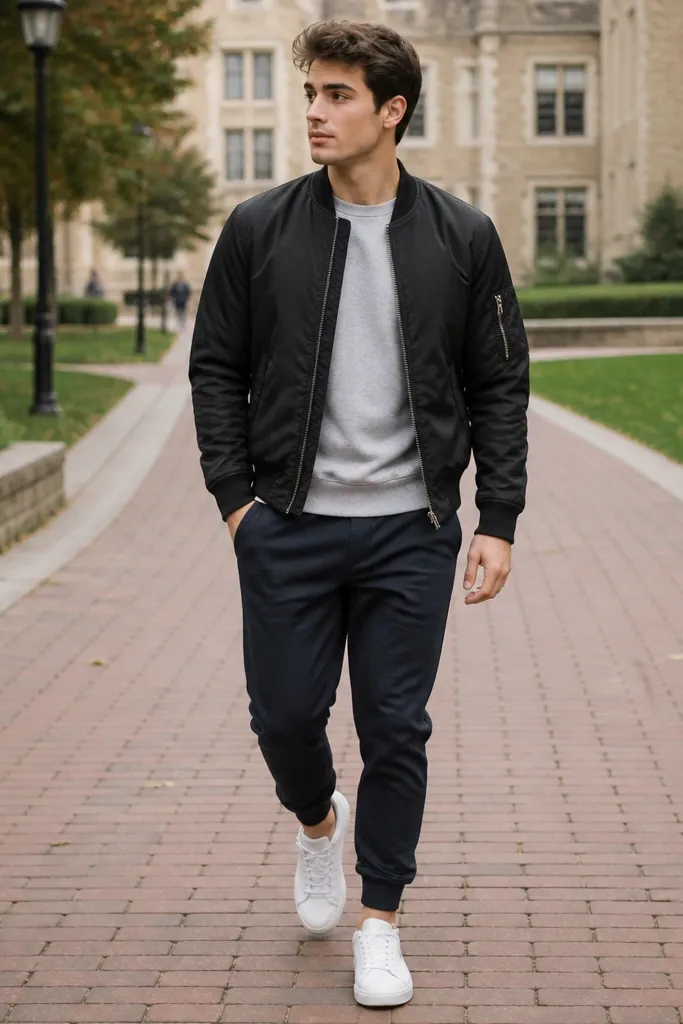
Bomber jackets are beginner-friendly because they’re casual and forgiving in fit. Pairing a sweatshirt with jogger-cut pants keeps the proportions balanced — you get comfort without looking sloppy.
Pro tipChoose jogger-cut pants with a tapered ankle so the outfit doesn’t bunch around your shoes.
6. Plaid Wool Scarf + Wool Beanie + Denim Jacket Over Hoodie
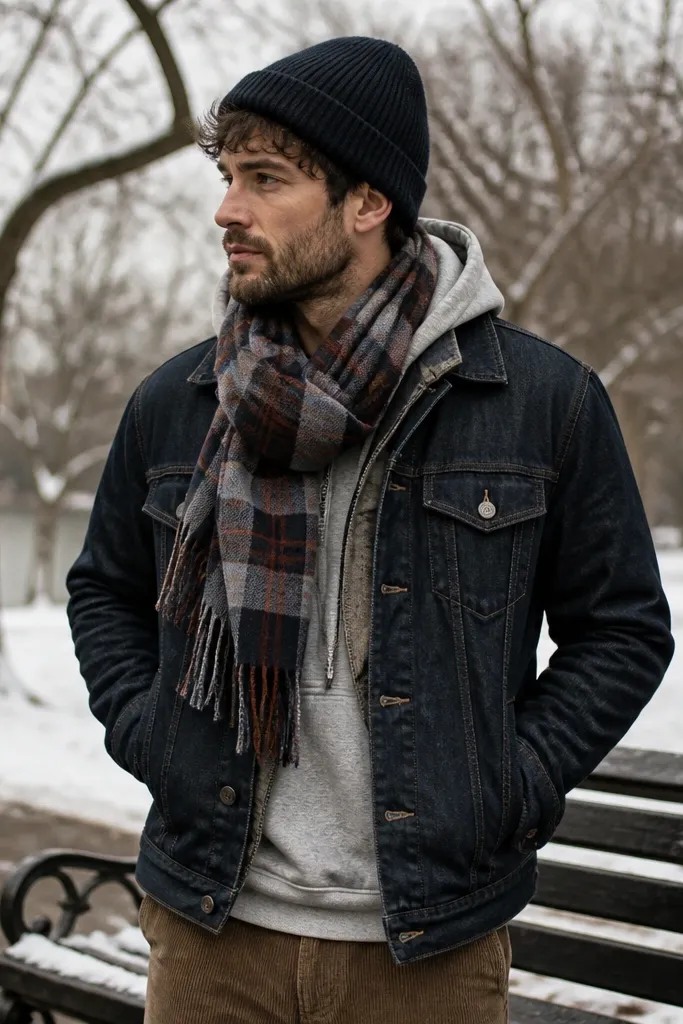
This is a low-effort way to look styled when you don’t want a heavy coat every day. The scarf and beanie add texture and color, while the hoodie provides warmth under a lighter layer.
Pro tipUse one accessory pattern max — plaid scarf OR stripes, not both — so the look stays clean.
7. Zip-Up Fleece + Quilted Vest + Thermal Base Layer
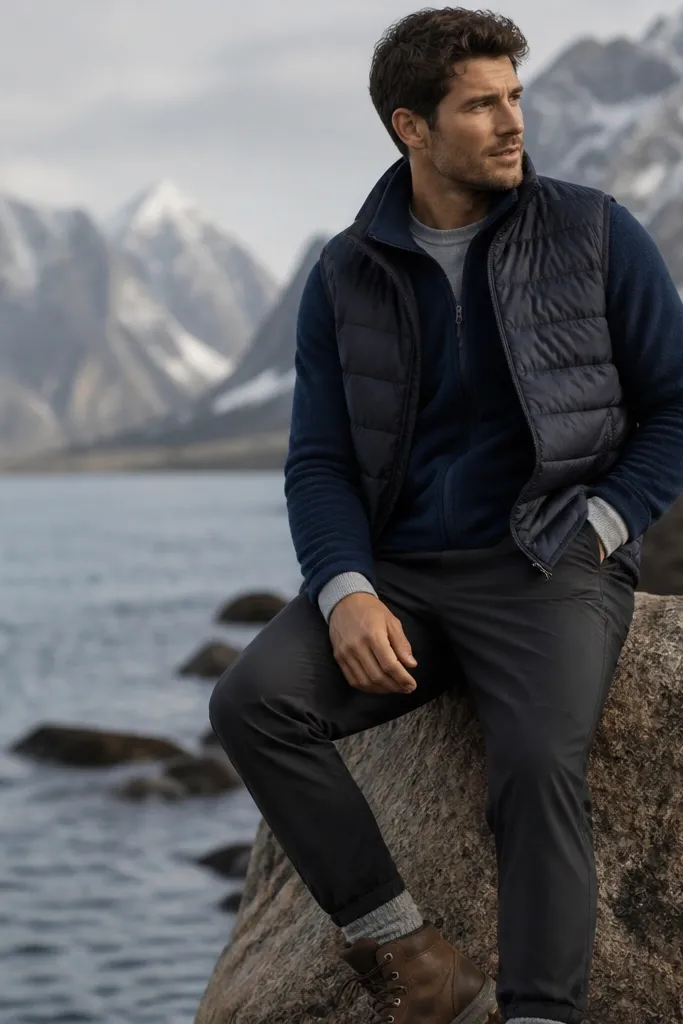
Layering beats guessing. Fleece traps heat, a vest adds wind protection, and the thermal base keeps you warm without overpacking bulk. This setup works for beginners because each piece has a clear job.
Pro tipWhen layering, keep the base smooth (thermal) and choose fabrics that don’t cling together — that reduces “static” and bunching.
8. Light Gray Sweater + Navy Overcoat + Brown Chukka Boots
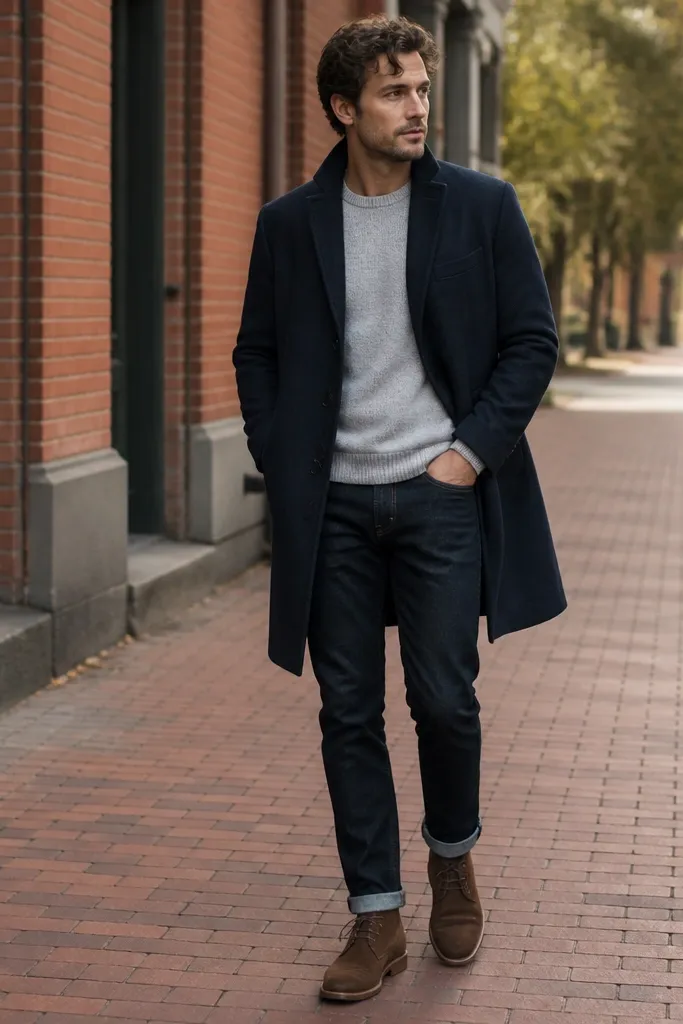
This outfit is a capsule hero because it bridges casual and dressy. Gray + navy is a reliable color pair, and brown boots add warmth so the outfit doesn’t look icy.
Pro tipMatch your belt to your boots — even if you’re wearing jeans, it makes the look feel intentional.
9. Ribbed Knit Crew + Puffer Vest + Dark Corduroy Pants
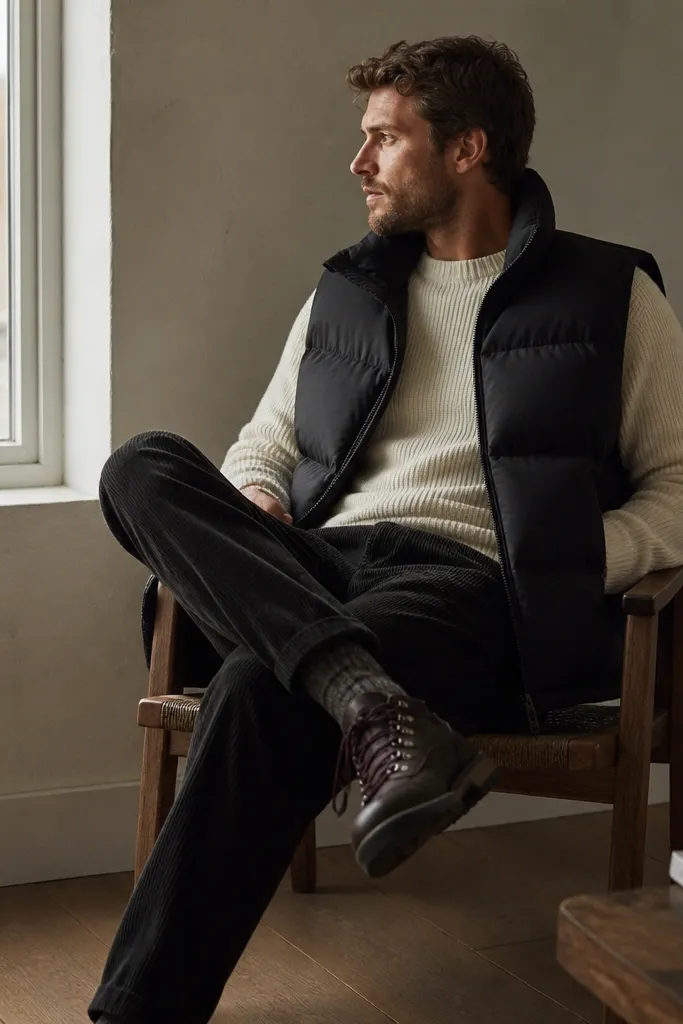
Corduroy looks warmer than regular denim and adds a subtle texture that makes beginner outfits feel elevated. The ribbed knit gives shape, and the vest keeps warmth without swallowing your frame.
Pro tipIf your vest is bulky, keep the knit slimmer and tuck slightly at the front for cleaner lines.
10. Black Hoodie Under Wool Overcoat for Smart-Casual
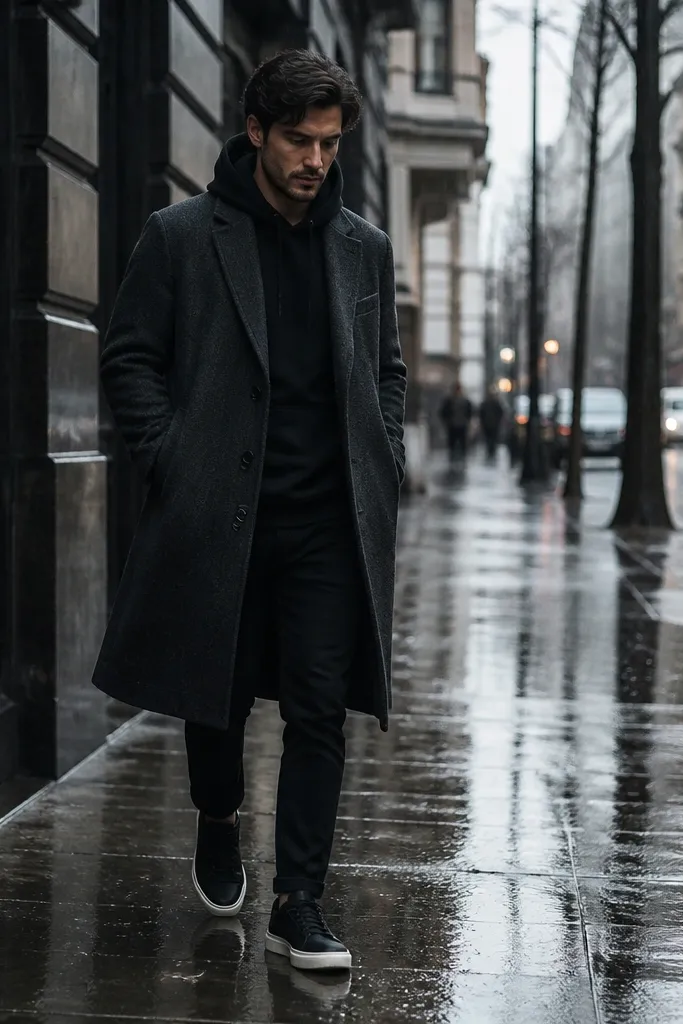
This is a beginner shortcut to smart-casual: you get the polish of a wool coat with the comfort of a hoodie. Dark-on-dark hides rain stains, and the hoodie keeps you warm when the weather swings.
Pick a wool coat with a clean lapel and wear a hoodie that sits flat (no oversized hood bulge).
11. Cream Cable Sweater + Olive Trousers + Chelsea Boots
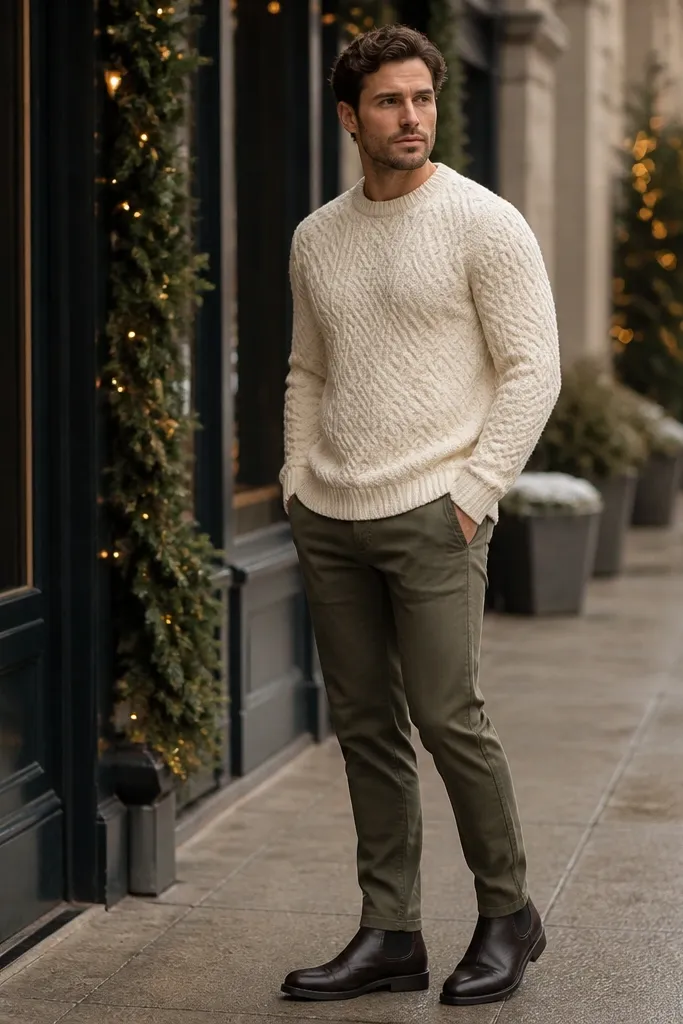
Cable knit adds visible texture, which makes basic outfits look expensive. Cream + olive is naturally balanced, and Chelsea boots keep the outfit sleek even if you’re not wearing a belt.
Go for mid-weight cable — thick enough to show texture, not so thick it makes your shoulders look wider.
12. Red Beanie + Navy Parka + Black Leggings-Style Thermal Base
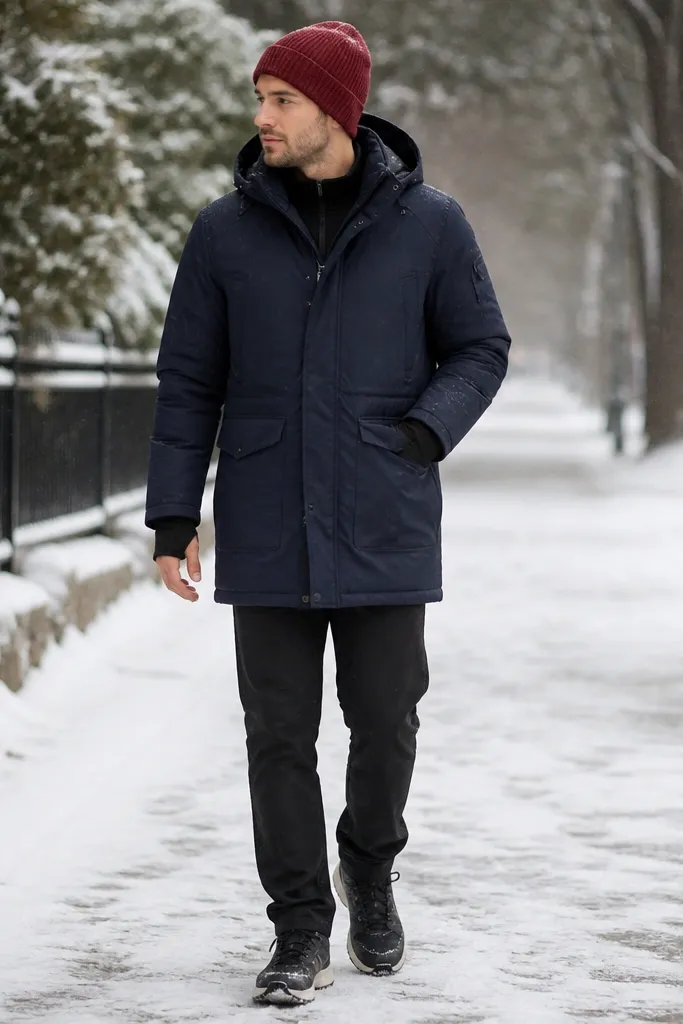
Thermal base layers are the secret to staying warm without adding bulk. A bold beanie color (like red) gives you a focal point so the outfit looks styled even when you’re bundled up.
If you wear thermal leggings, choose pants that cover the seams and keep the base layers from riding up.