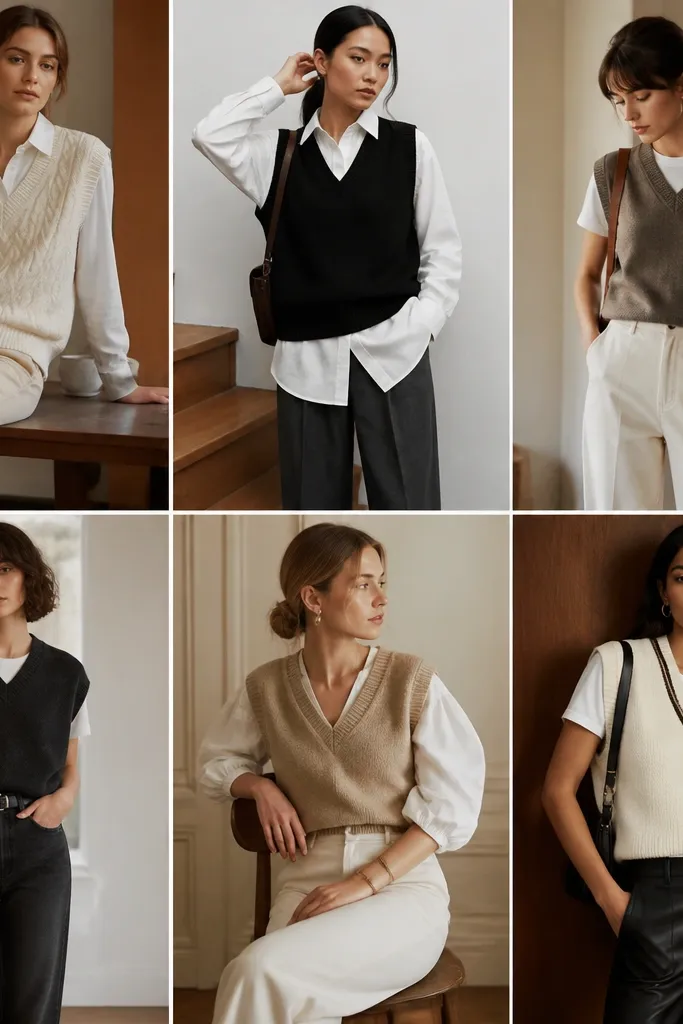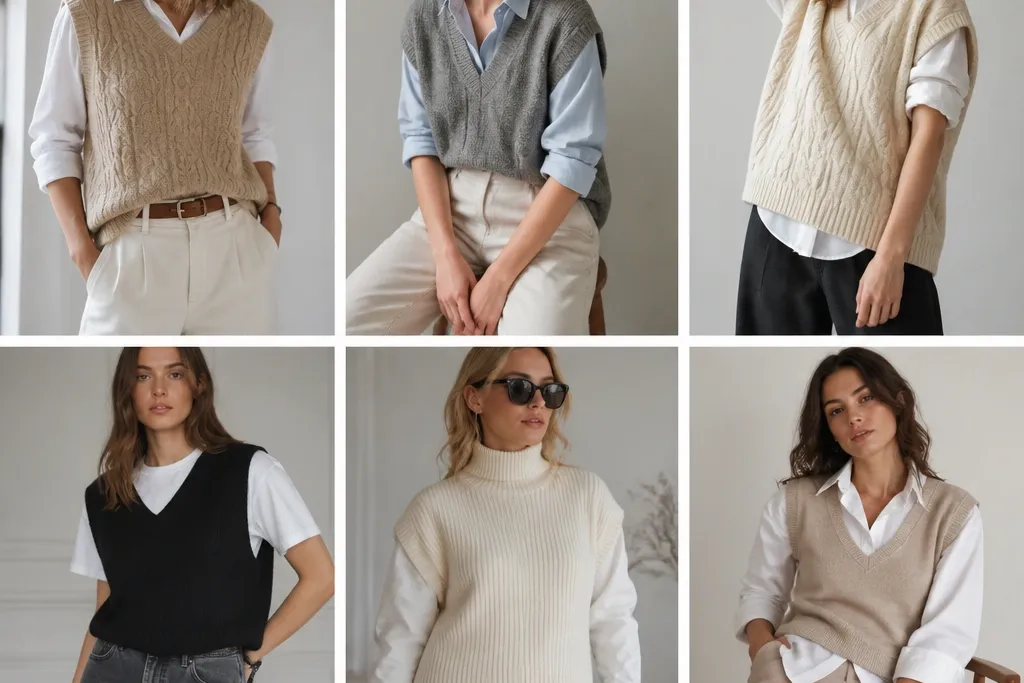
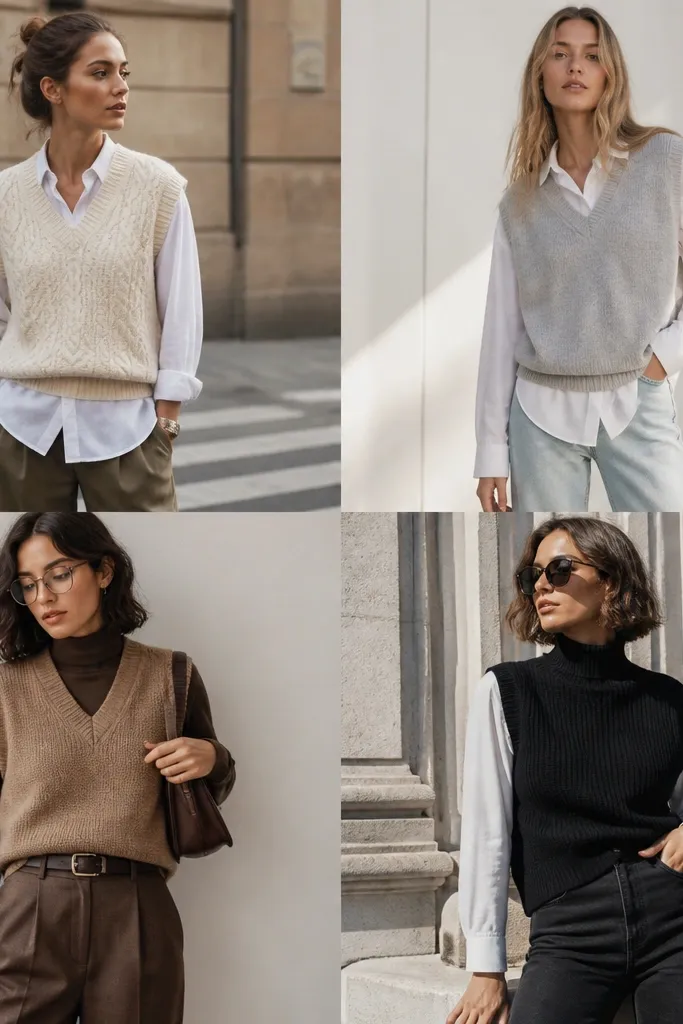
1. Neckline clash: turtleneck too high under a V-vest
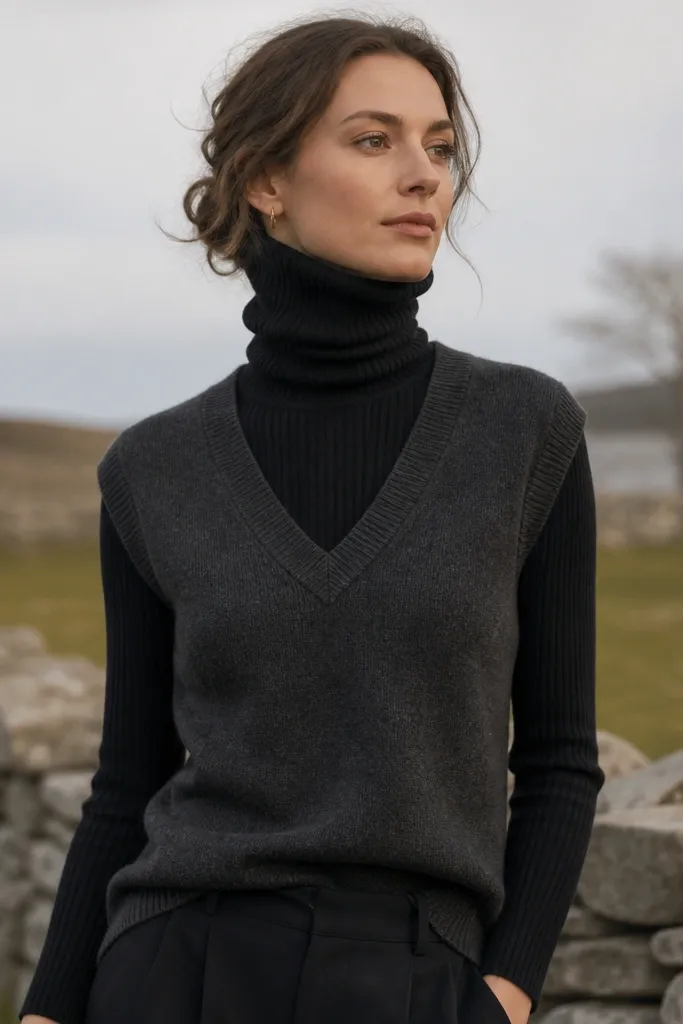
The issue is vertical overlap. A thick turtleneck collar can crowd the V opening, making the neckline look shorter and heavier. Ribbed knits work best when the collar sits cleanly without stuffing the vest’s V shape.
Choose a thinner turtleneck or fold the collar once so it sits lower; aim for a smooth reveal of the V.
2. Armhole gaping: the vest rides up when you lift your arms
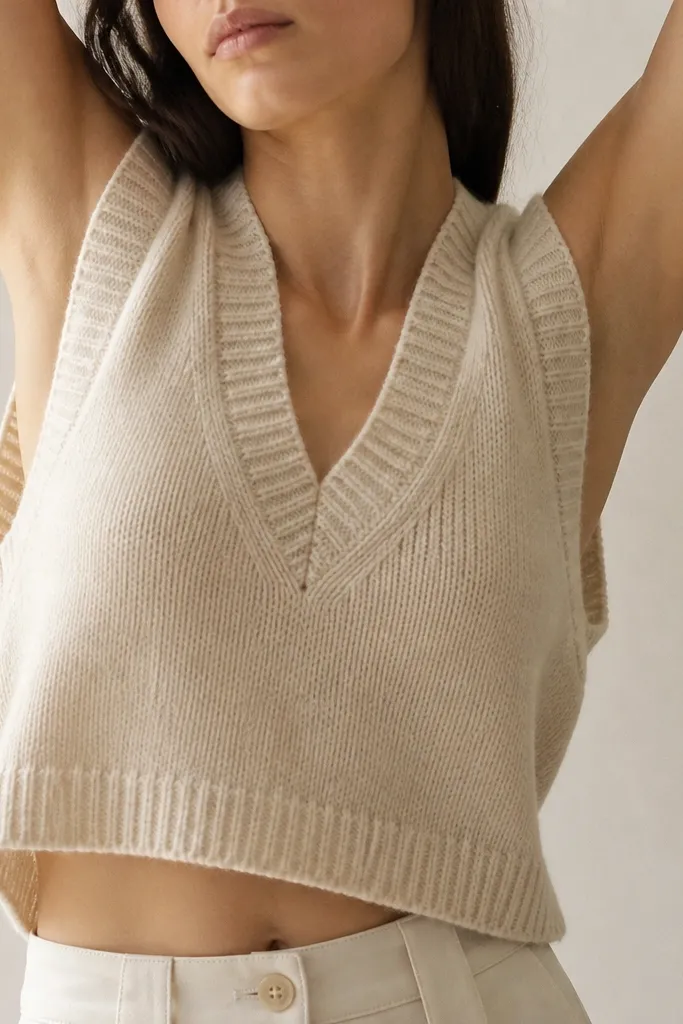
Armhole placement determines whether a vest looks tailored or like it’s “wearing you.” If armholes are too wide, you’ll see gaps under your shirt and the vest can ride up, especially with thicker tees. This is one of the fastest sweater vest outfit mistakes to spot in motion.
Pro tipTry the vest with the exact top you plan to wear and raise your arms — if you see underarm gaps, size down or look for a more structured armhole.
3. Wrong length: vest ends at the widest part of your hips
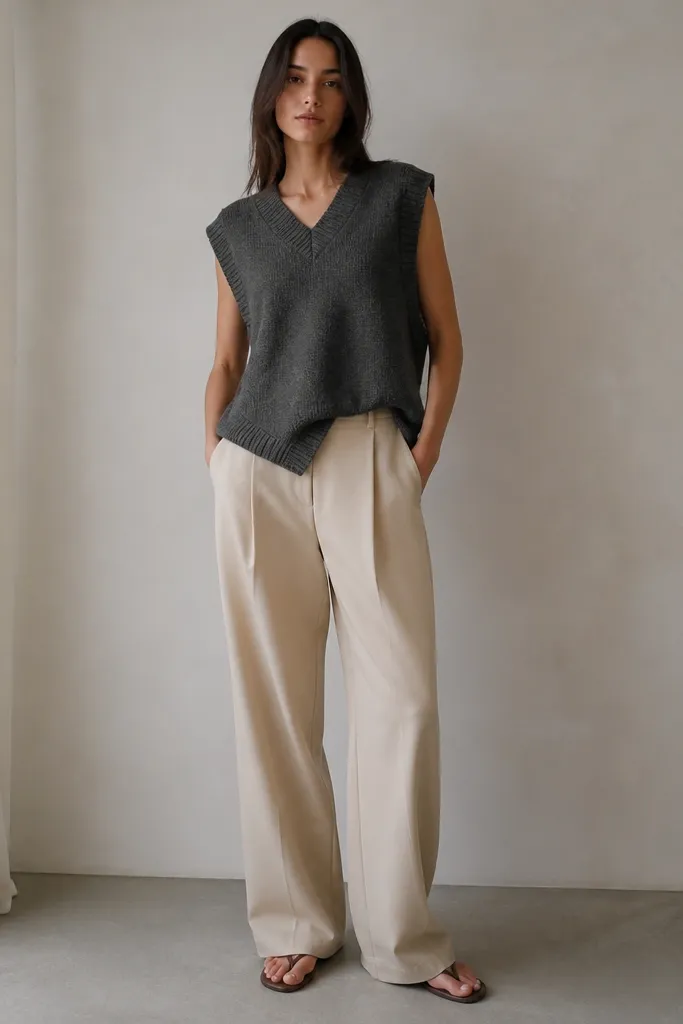
Length changes the visual line of your torso. When the hem lands at the widest point, it can cut you into sections and make your hips look larger. A vest that hits slightly above the hip or closer to the high-hip area usually looks cleaner and more flattering.
Use a mirror test: stand sideways and check where the hem hits. If it lands on the widest curve, switch to a longer or slightly cropped vest.
4. Bunched button placket: button-down too thick for the vest opening
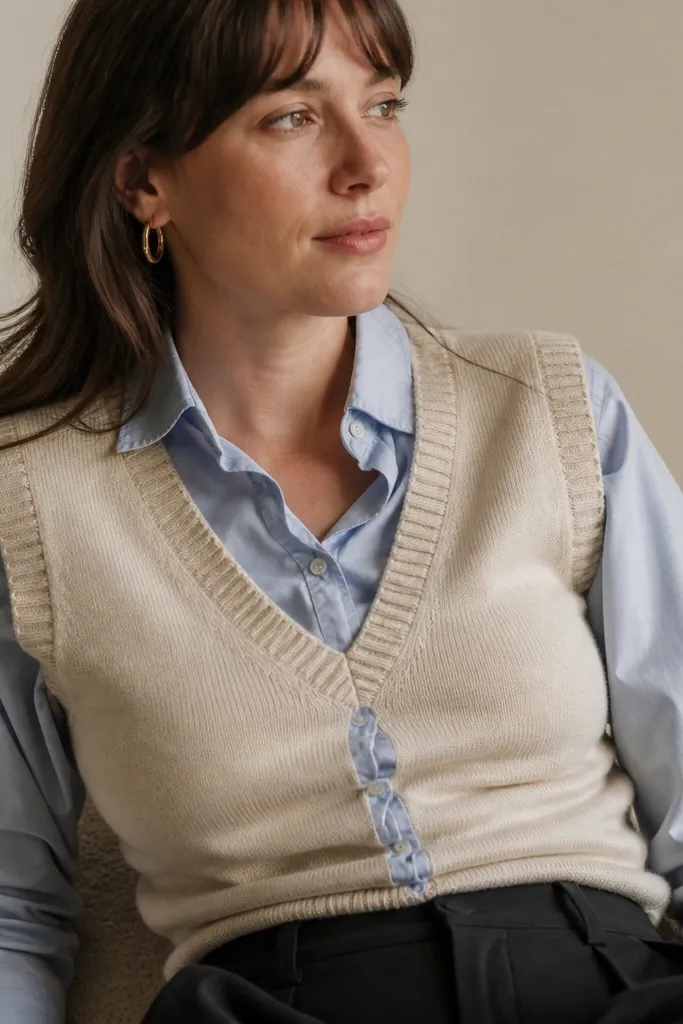
Some button-downs are too stiff or bulky, so the front panel doesn’t lie flat under the sweater. The result is a bumpy placket that shows through and makes the vest look ill-fitting. A smoother poplin or thin oxford sits flatter and keeps the vest’s shape crisp.
Pro tipPick a lightweight button-down (thin oxford or poplin) and press the shirt before styling.
5. Color overload: loud vest + loud top = messy contrast
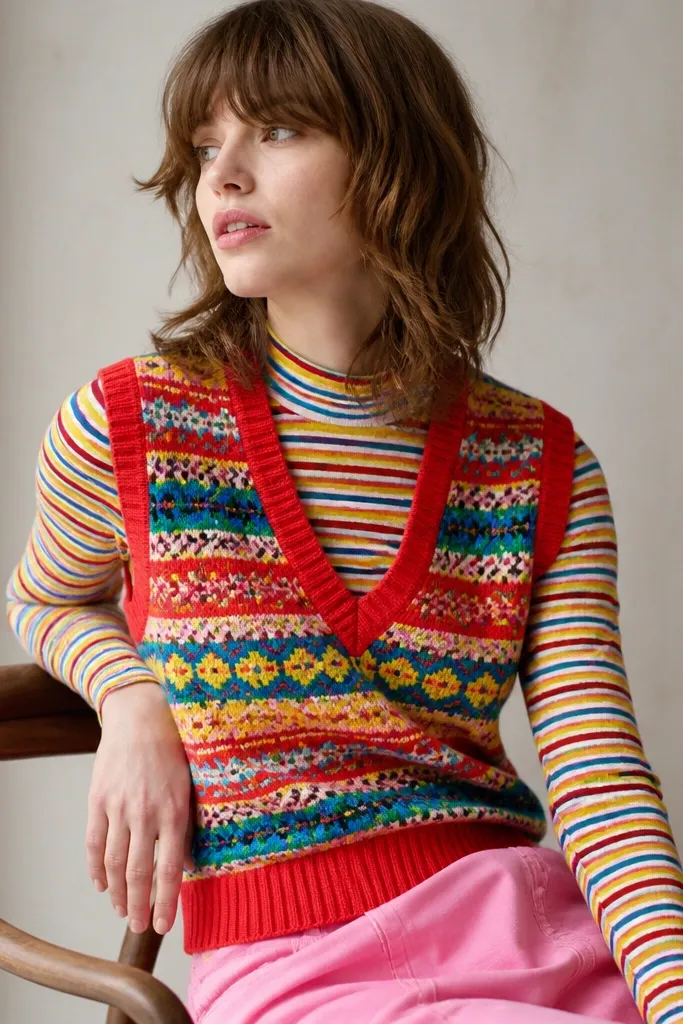
When both pieces are high-contrast or busy, your eye can’t land on one focal point. Sweater vests already add texture, so pairing them with another bold pattern often creates sweater vest outfit mistakes like visual clutter. One solid piece + one subtle piece usually looks more expensive.
Pro tipChoose one “hero” texture: either a patterned vest with a plain shirt or a solid vest with a small-scale print.
6. Texture mismatch: fuzzy vest over smooth satin-like tops
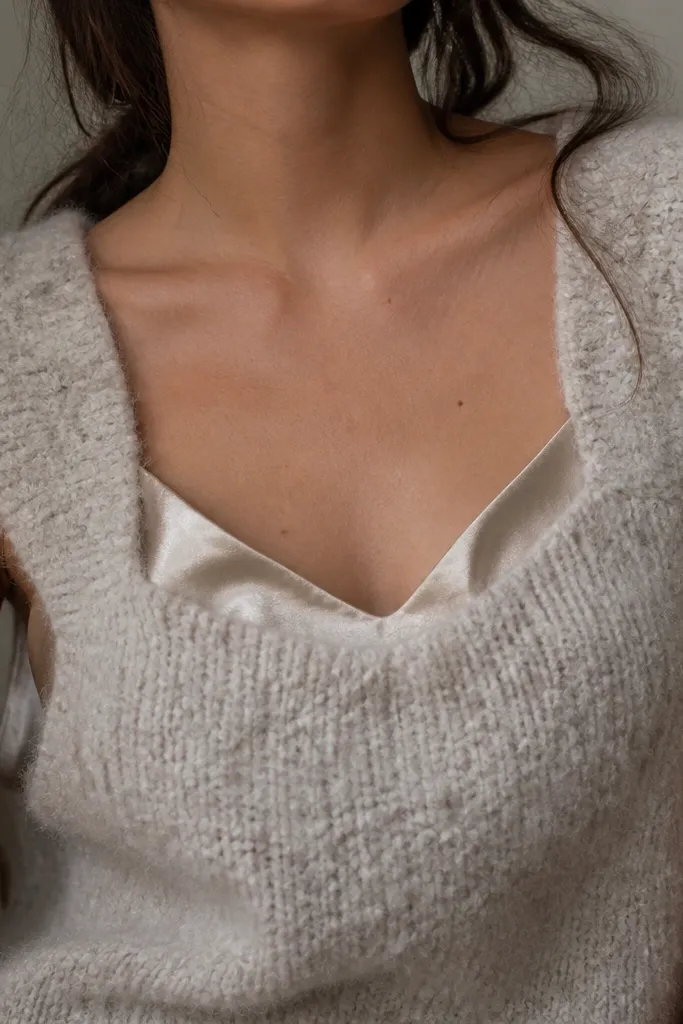
Texture contrast can be cute, but only when the silhouettes and fabric weights match. A fuzzy vest over a shiny, slippery top can look unfinished because the top doesn’t cling or sit smoothly. The seams may slide, creating gaps and uneven layering.
Swap to a cotton knit tee or ribbed tank under a fuzzy vest for smoother layering.
7. Too much bulk: layering a chunky vest over a heavy hoodie
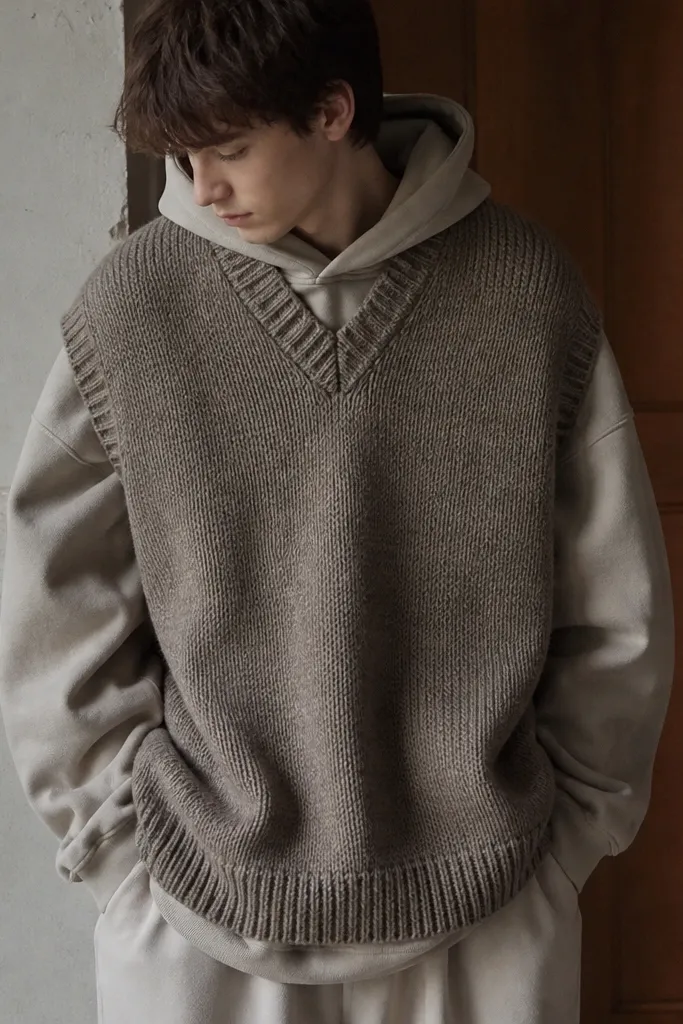
Chunky knits plus thick hoodies can overwhelm your proportions. Instead of a clean vest shape, you get a big block of fabric that hides your waist and makes the outfit feel “early winter” even in mild weather. Lighter vests over hoodies can work, but thick-on-thick is where people stumble.
Pro tipIf you wear a hoodie, choose a thinner cotton or sweatshirt and keep the vest knit lighter (fine gauge or tighter weave).
8. Sleeve peek problem: shirt sleeves bunch under the vest
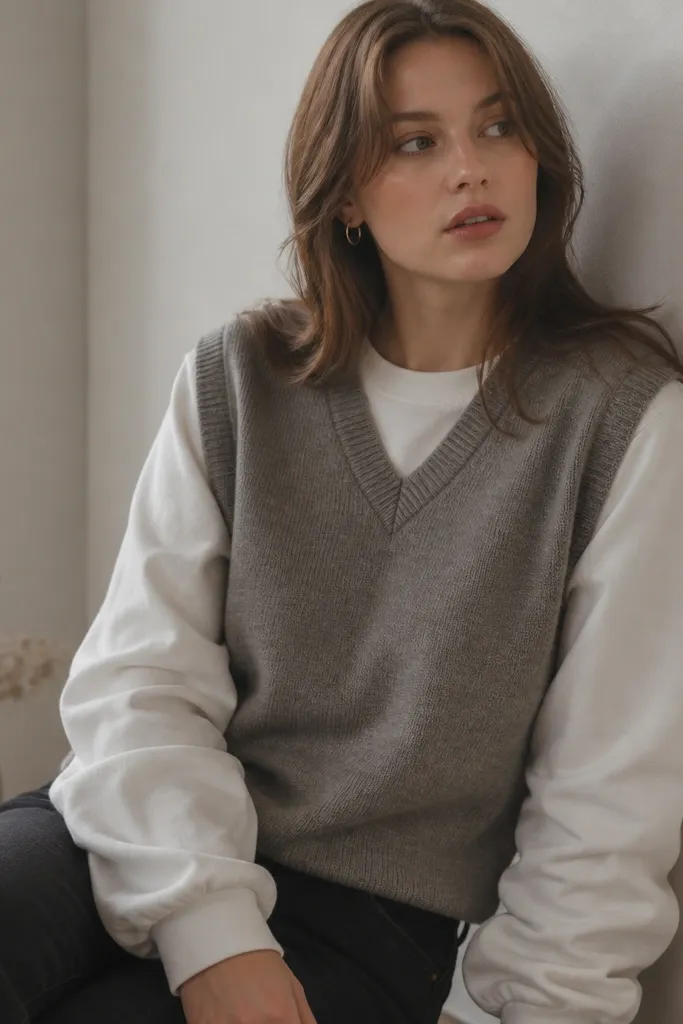
Your vest’s armholes act like a frame. If the shirt sleeve is too long or too gathered, it bunches and makes the arm area look wider than it is. This is especially common with oversized shirts that you didn’t taper or cuff.
Pro tipCuff the sleeves once or roll them to a consistent height so the sleeve line stays sleek.
9. Wrong collar shape: crewneck top under a high-neck vest
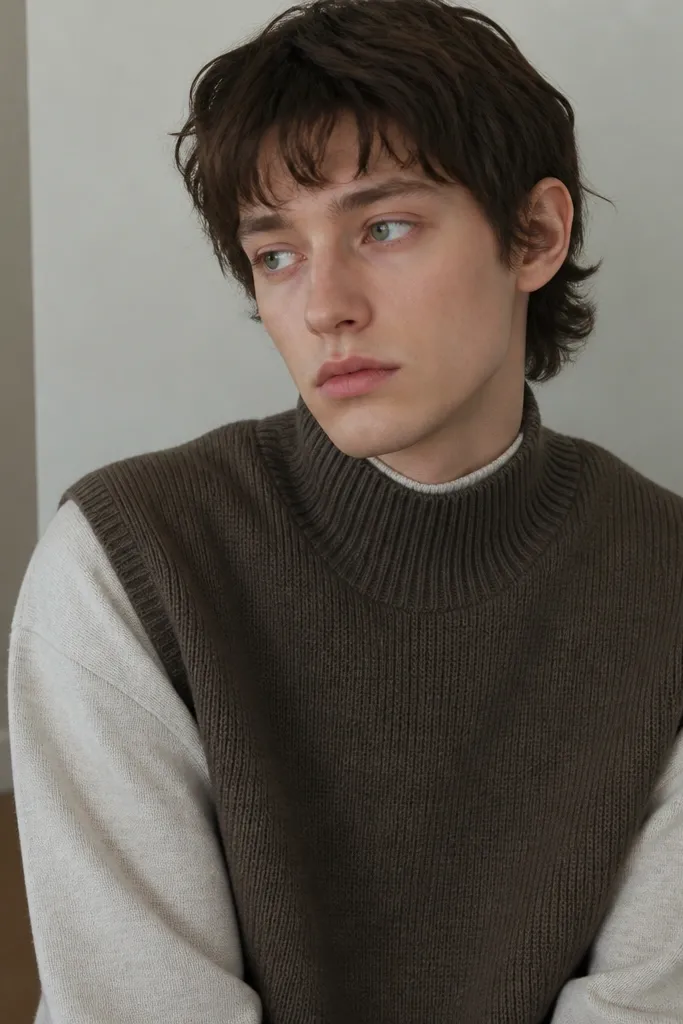
A high-neck sweater vest needs a top that either sits lower or is cut cleanly. If the underlayer collar is too close to the throat, the neckline becomes a thick band. That band can make your face look more boxed-in and the outfit less flattering.
Pro tipChoose a V-neck tee, a lower crew, or a shirt with a structured collar that sits flatter.
10. Clashing proportions: long vest with cropped jacket-length top
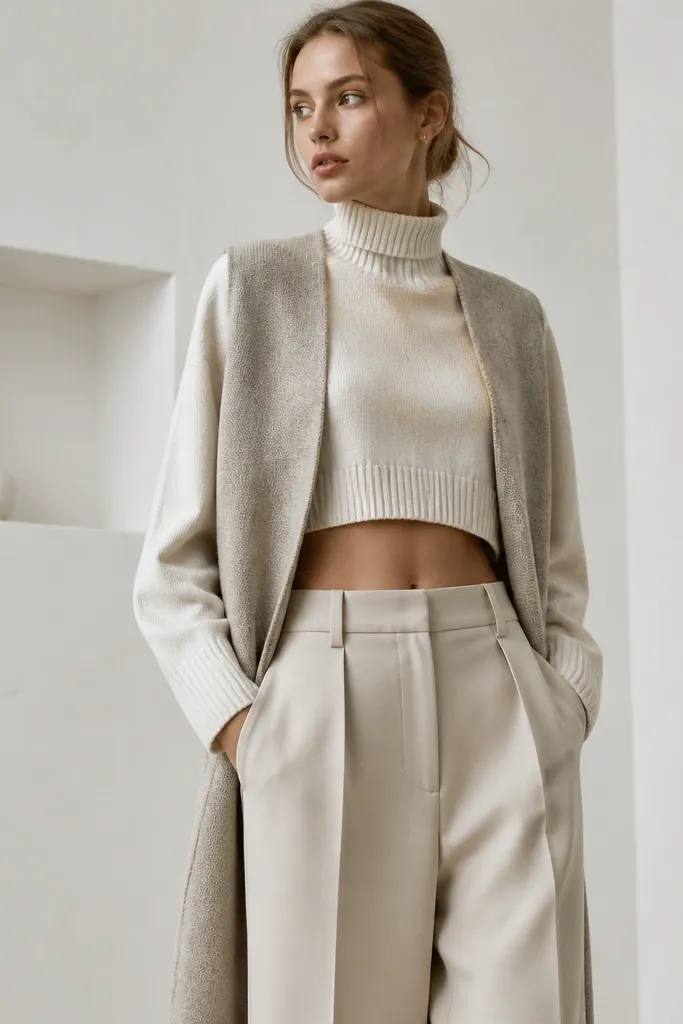
Sweater vests create a horizontal line at the hem. If your top is too cropped while the vest is long, you get competing “start-stop” points. The eye jumps between lengths and can make your middle look wider or shorter.
Pro tipMatch the top length to the vest: either both slightly cropped or both mid-hip so the torso reads as one smooth column.
11. Pattern direction mistake: plaid vest + plaid shirt that don’t match scale
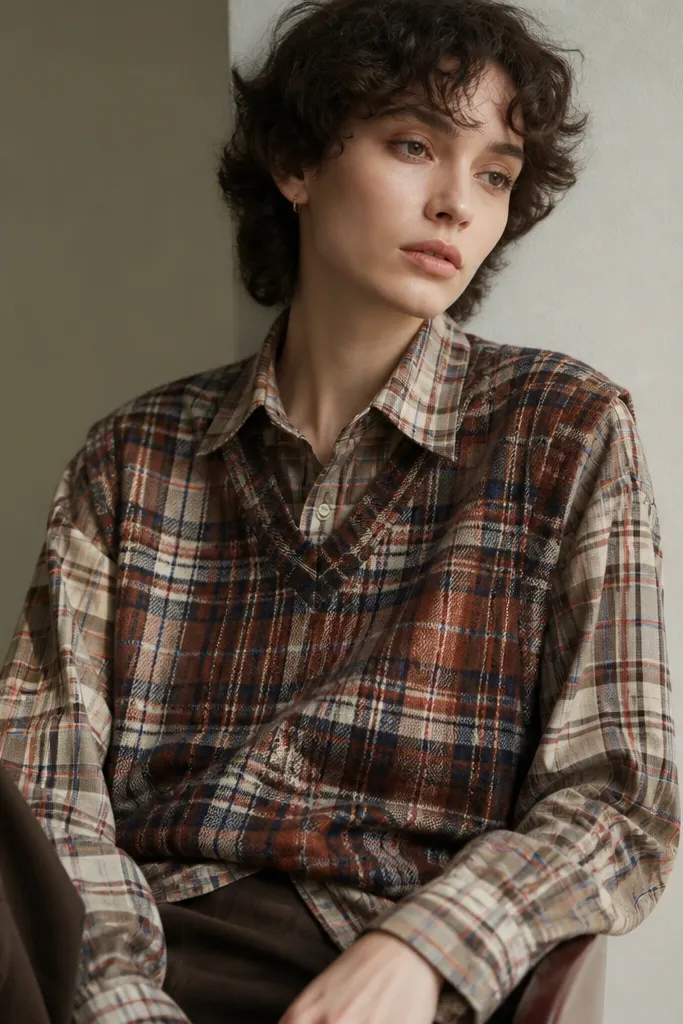
Pattern mixing works when scale and spacing are intentional. If both plaids are the same size or the colors are too loud, the overlap becomes visually noisy. The vest’s knit texture adds another layer of complexity, so the second pattern should be calm and smaller scale.
Pro tipWhen mixing plaids, keep one pattern large and the other subtle — or stick to a solid shirt.
12. Black-on-black flatness: no contrast in the neckline
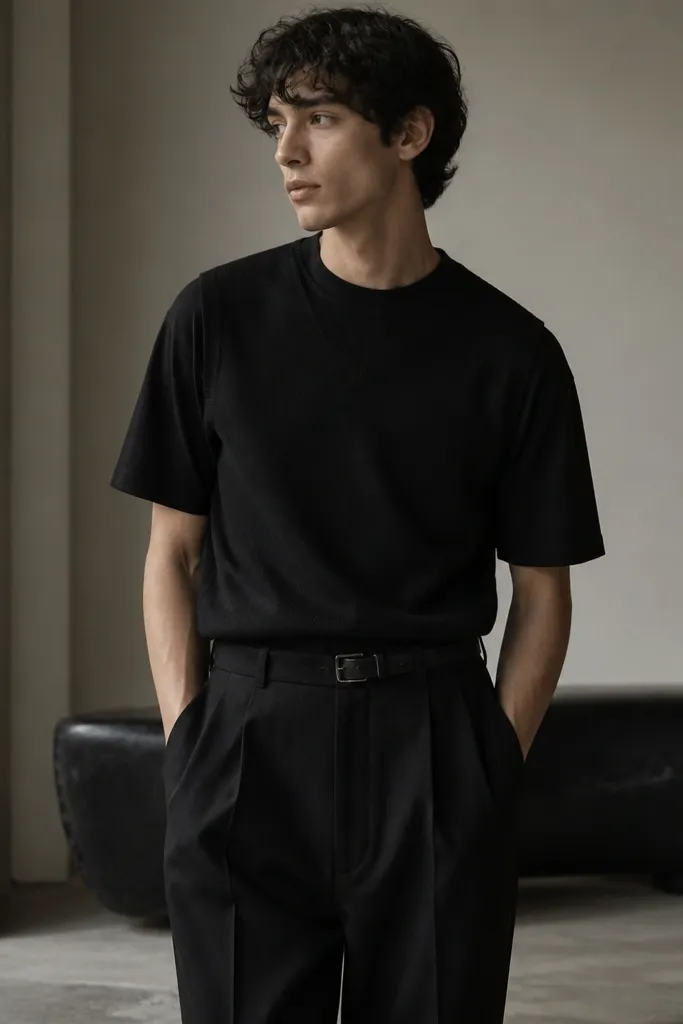
All-black can look sleek, but sweater vests need a little contrast to show their shape. If the underlayer and vest are the same tone and similar depth, the neckline definition disappears and the outfit reads flat. Slight contrast in shade or neckline cut brings the vest forward.
Pro tipUse a black vest with a charcoal, washed-black, or lighter underlayer — or choose a V-neck tee to create separation.