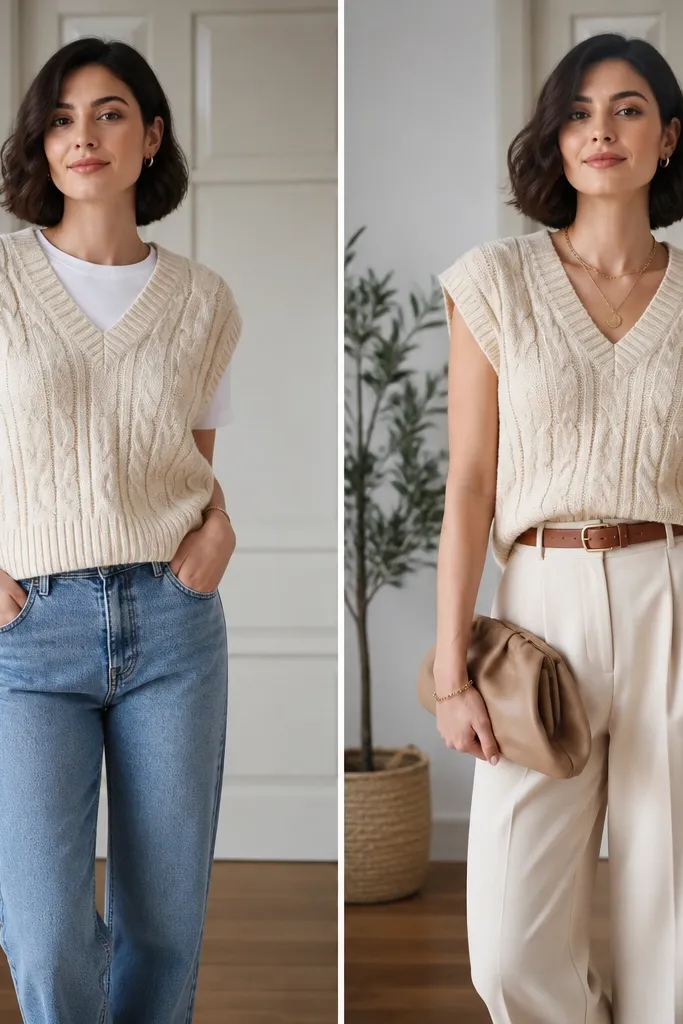
1. T-Shirt to Crisp Shirt: The Clean Collar Before-After
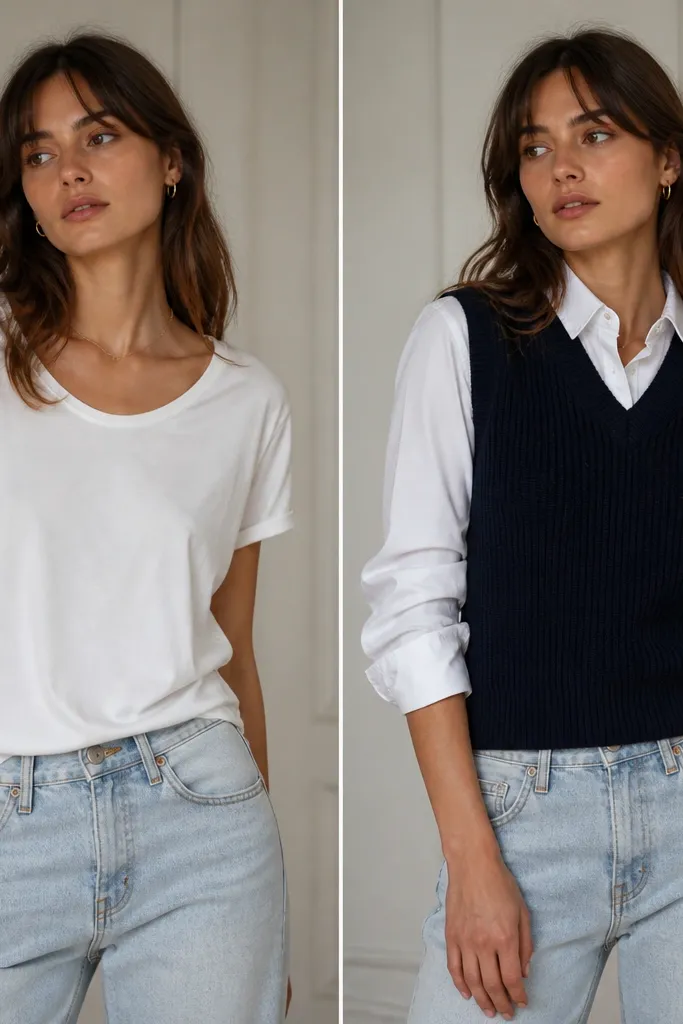
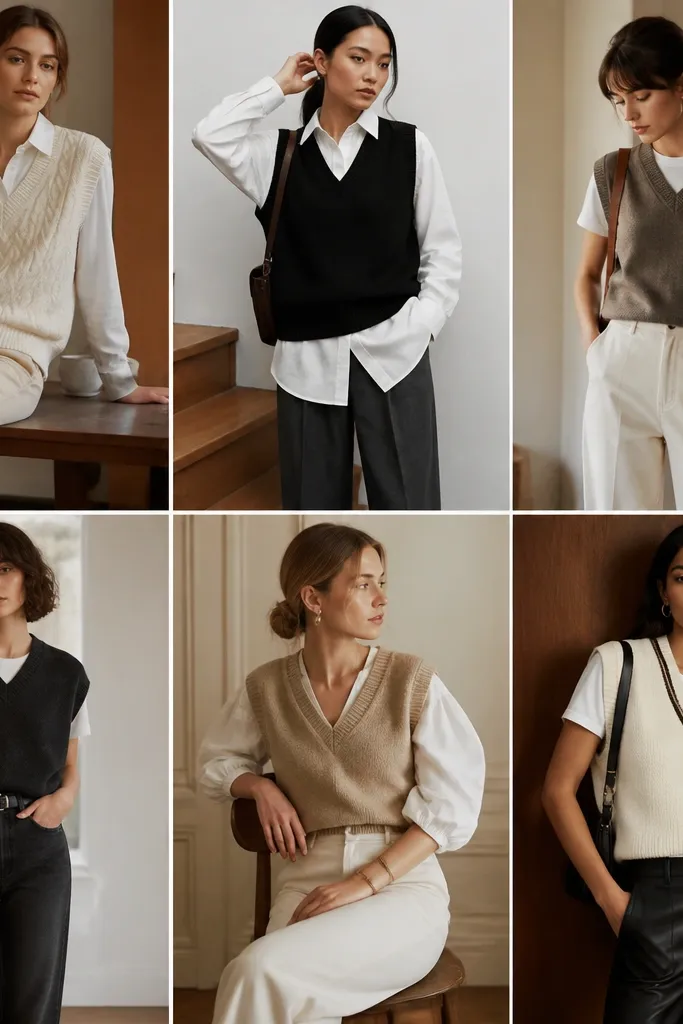
The key upgrade is collar control. A fitted button-down under a sweater vest makes the neckline look intentional, and the ribbed vest texture adds structure against smooth denim. Choose a vest in a darker solid (navy, charcoal, forest) so the shirt collar reads clearly in photos.
Button the shirt one notch higher than you normally would, then pull the vest down so it sits at your natural waist.
2. Wobbly Fit to Tailored Lines: High-Waist + Vest Placement
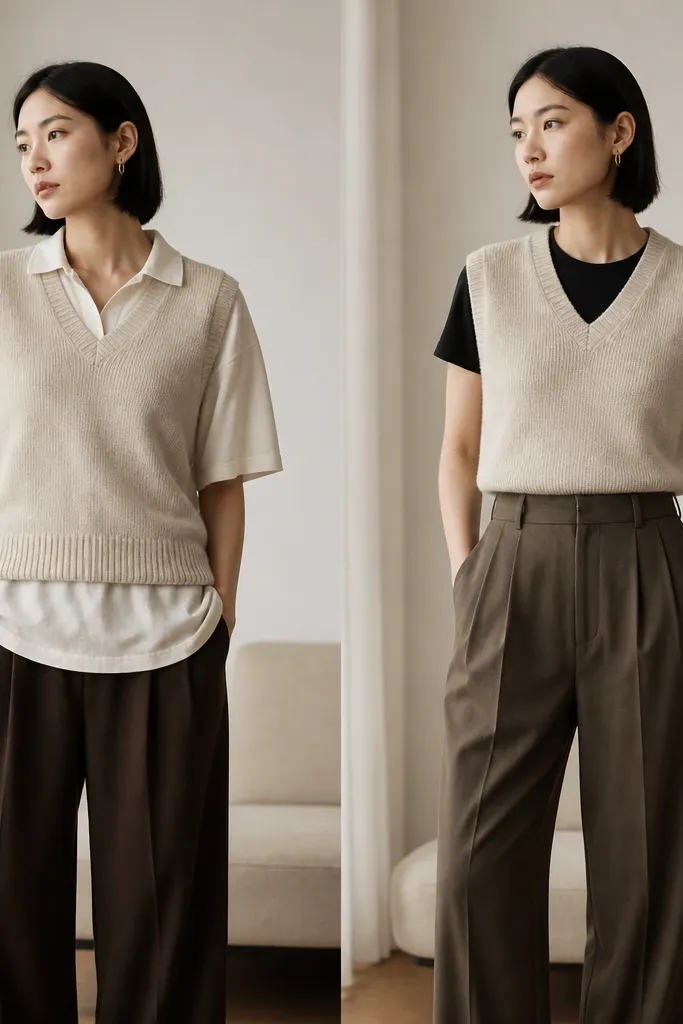
Sweater vests change your whole shape when the hem hits the right spot. When the vest ends above the widest part of your hips, your torso looks longer and your waist looks defined. High-waist bottoms also help the vest look less bulky because the proportions balance.
Pro tipIf your vest hem falls below your waistband, try a smaller size or wear it with higher-rise bottoms.
3. Monochrome to Contrast: Cream Vest Over Charcoal Basics
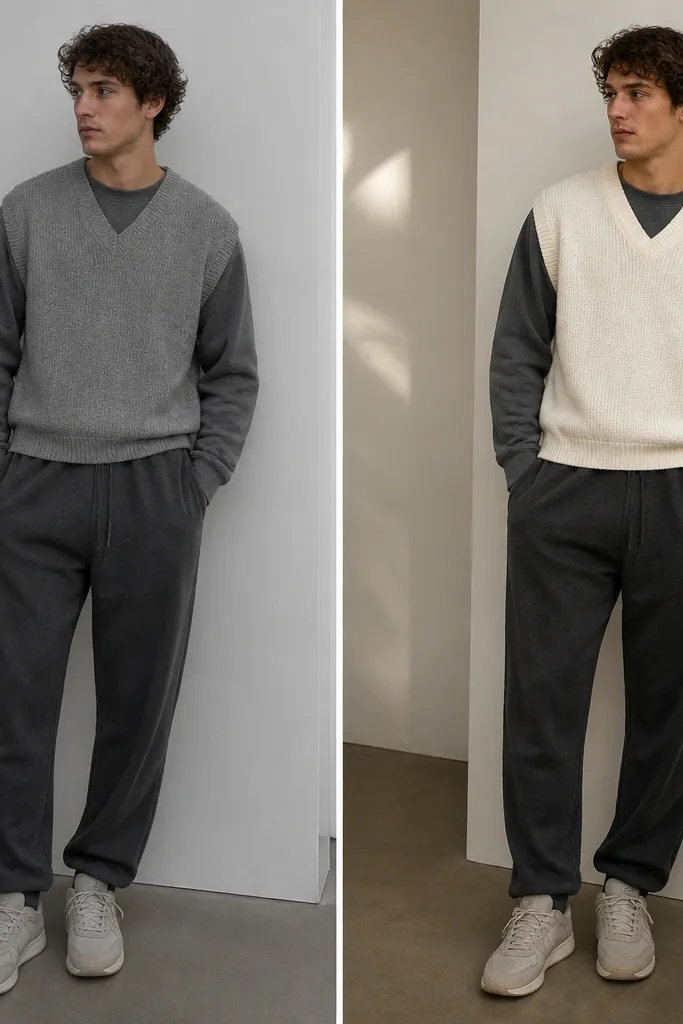
Monochrome can look flat because the textures blend into one block. Switching to a cream or oatmeal vest creates instant contrast while keeping the outfit grounded. Cream vests also photograph better because they reflect more light than gray-on-gray.
Pro tipPick one “light” piece (vest or shirt) and keep everything else dark for a fast contrast transformation.
4. Bulky Over Layers to Sleek Under Layers: The Fabric Swap
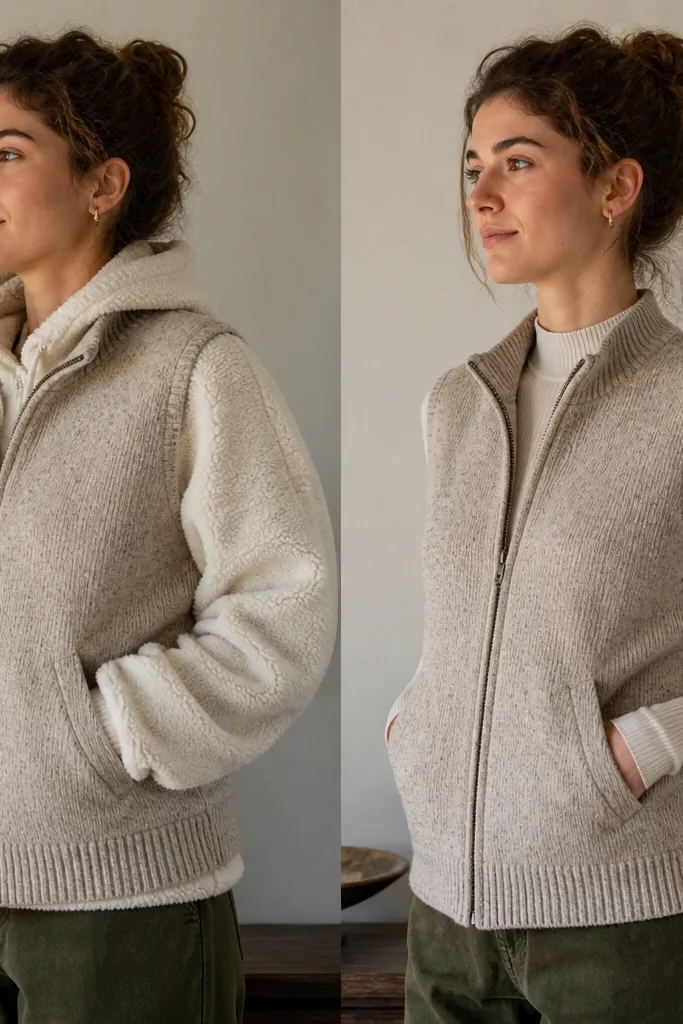
Chunky outer knits need slimmer underlayers to avoid a “stacked” look. A thin ribbed mock neck lets the vest drape and keeps your shoulder line clean. This is a huge transformation because it changes how the vest sits, not just the color.
If your underlayer is more than midweight, switch to ribbed cotton or a thin merino blend so the vest can lay flat.
5. Game-Day to City: Sweatpants to Chinos Shoe Upgrade
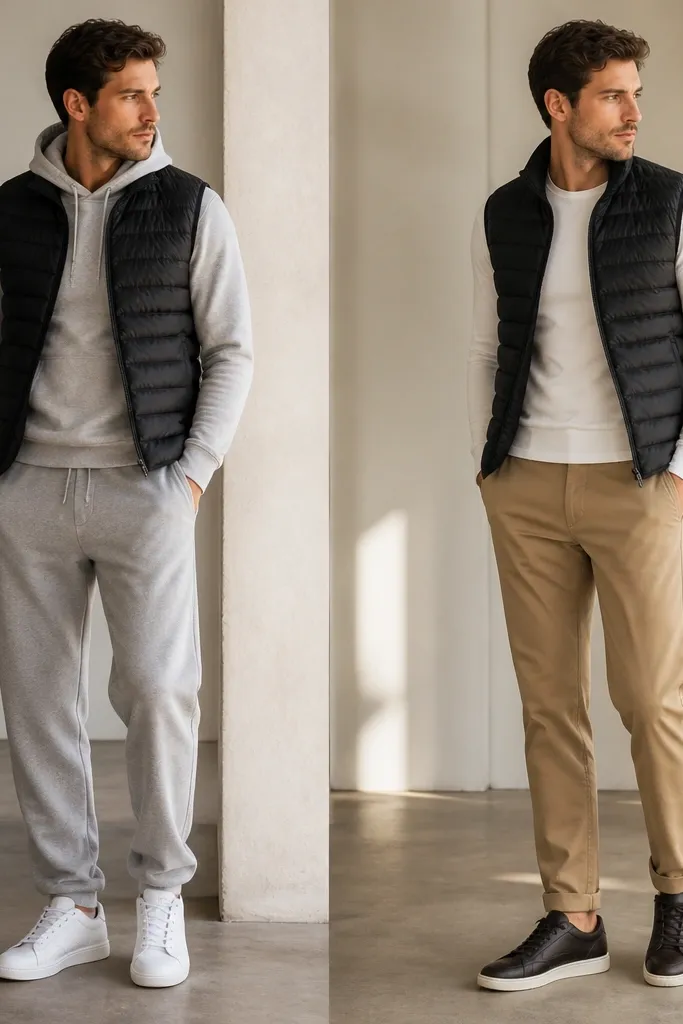
Sweater vests instantly look more “grown” when you pair them with structured pants. Chinos create a sharper crease line, and leather-like shoes add cohesion with the vest’s knit texture. Keep the vest neutral (black, camel, charcoal) and let the pants do the color work.
Pro tipAim for one structured bottom: chinos or tailored trousers. If you only change one thing, change shoes.
6. Buttoned-Up Confidence: One-Button Styling Rule
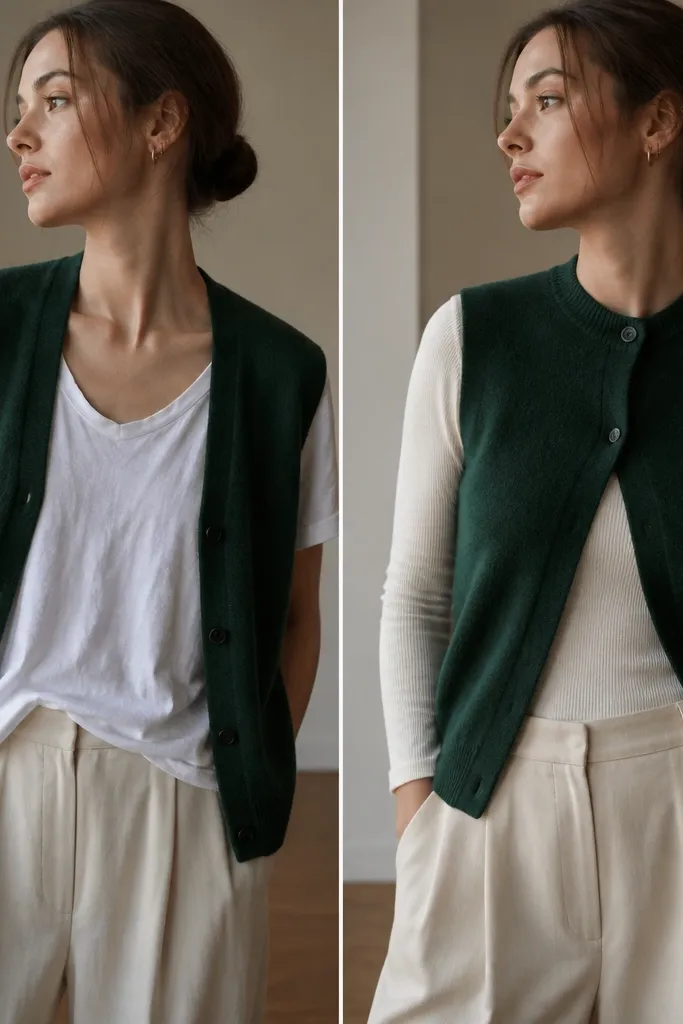
How you button a vest changes the face framing. Buttoning the top button pulls the fabric into a clean vertical line that makes you look more confident. A smoother base layer reduces bunching, especially in knit vests with ribbing.
Try the “top-button lift” — button the first button, then tug the base layer flat at the shoulders.
7. Dress Shirt + Tie Energy: Subtle Formal Without Overdoing
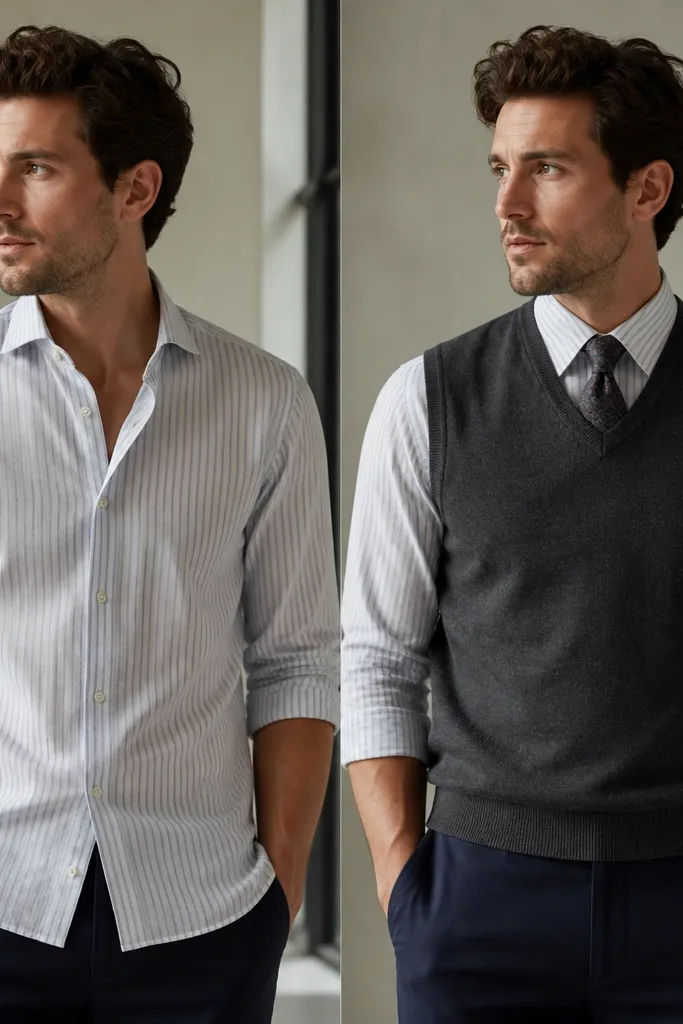
This transformation works because the vest adds a tailored mid-layer that bridges casual and formal. A knit tie or slim tie keeps the outfit from feeling too stiff. Use small-scale patterns (micro-stripes or subtle dots) so the vest texture stays the star.
Roll sleeves to reveal just 1/2 inch of cuff, then tuck the tie so it doesn’t bunch over the vest.
8. Denim Jacket Replacement: Vest as the Outer Layer
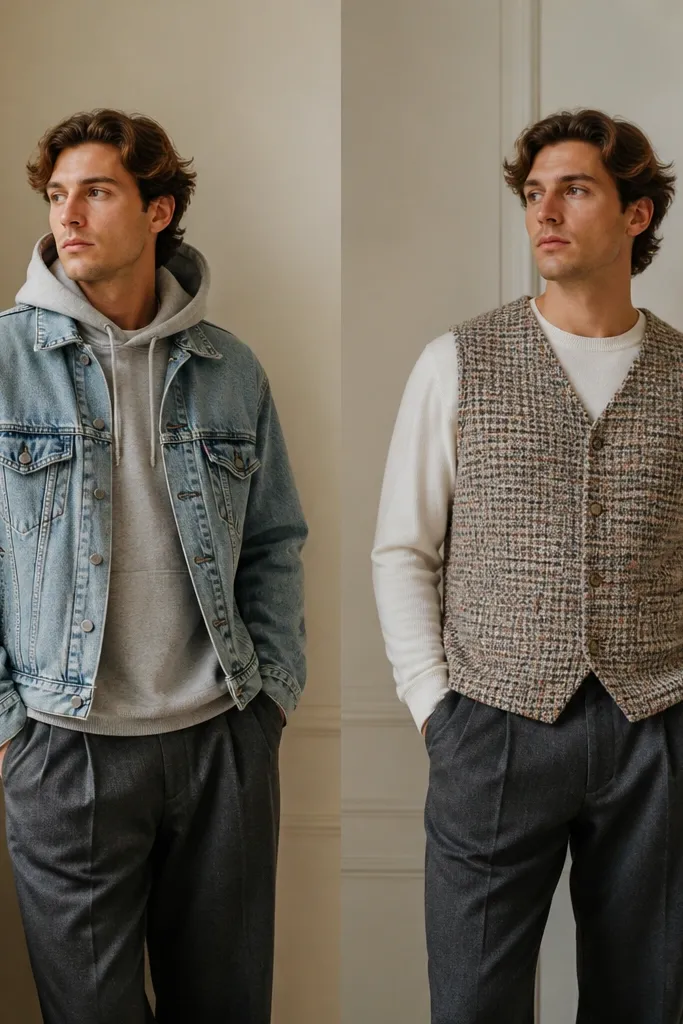
A sweater vest can replace a jacket vibe when you choose the right texture. Tweed or bouclé-style vests add visual interest without the bulk of a denim jacket. Layer with a thin crew or tee so the vest doesn’t fight thick layers.
If you’re replacing a jacket, pick a vest with visible texture (tweed, herringbone, or bouclé) so it still reads “outerwear.”
9. Skirt Proportions: Mini + Vest for a Clean Waist Line
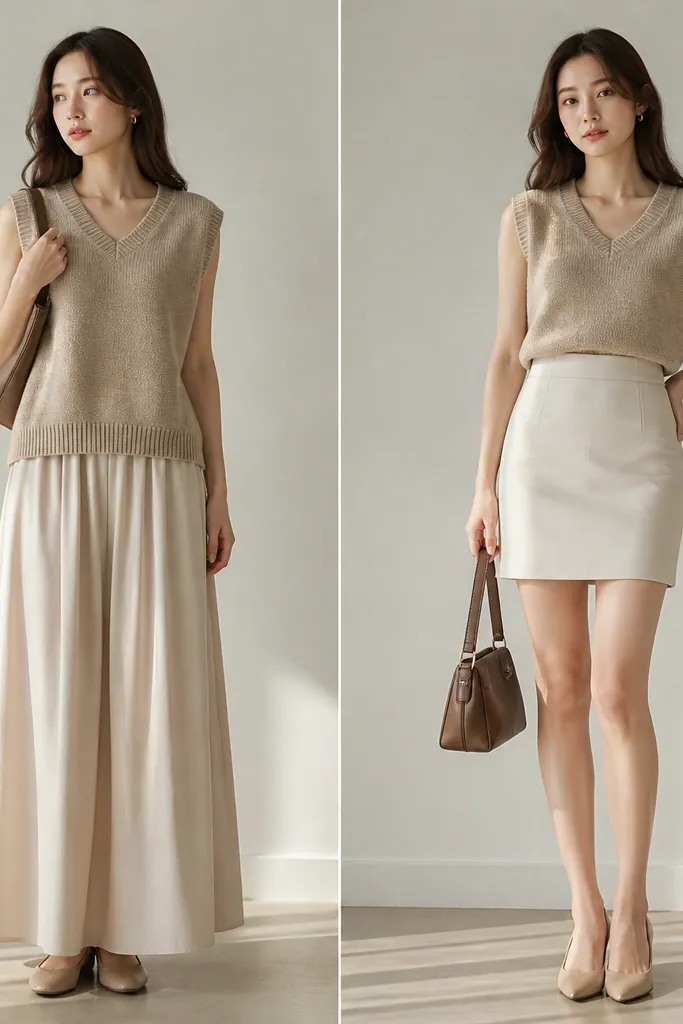
With skirts, vest length is everything. A high-waisted mini or fitted midi prevents the vest from visually cutting you at the wrong point. Pick a vest that’s slightly cropped or wear a belt-like tuck (if it’s buttoned) to define your waist.
Pro tipUse the waistband test: if your vest hem lands below mid-butt, switch to higher-rise bottoms or a shorter vest.
10. Ribbed Turtleneck + Vest: Cozy but Still Sharp
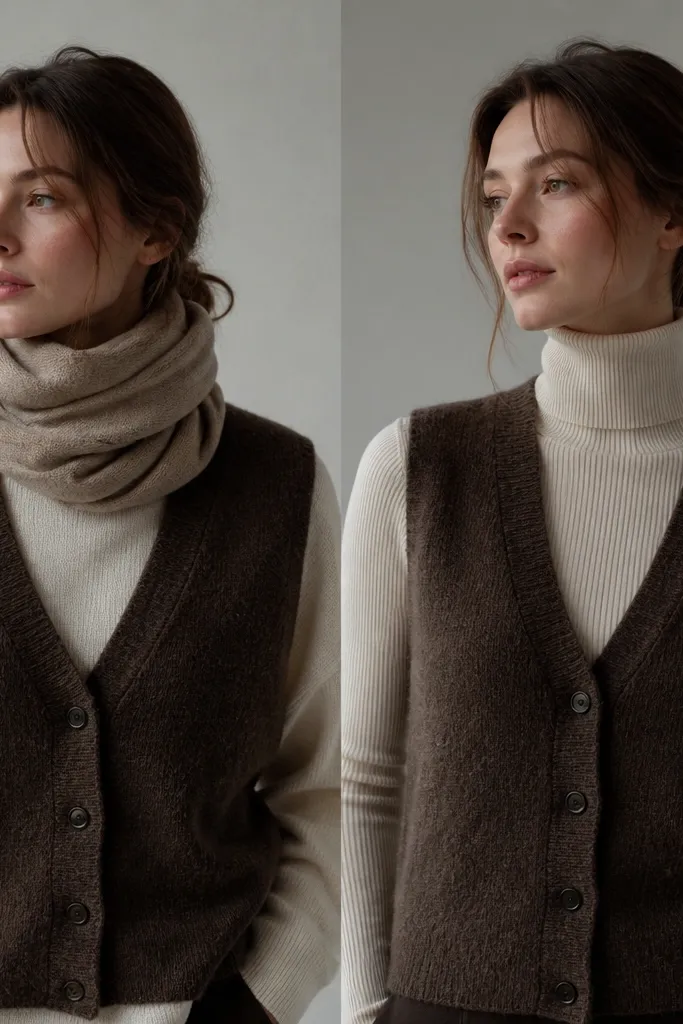
A ribbed turtleneck makes the vest feel intentional instead of random. The vertical rib texture works with the vest’s knit pattern, creating a cohesive, “designed” look. Choose a turtleneck that’s fitted at the neck so it doesn’t add extra volume.
Look for a turtleneck that hugs the collar without wrinkling. If it bunches, size down or switch to a thinner knit.
11. Plus-Size Friendly: Stretchy Vest + Vertical Stripe Trick
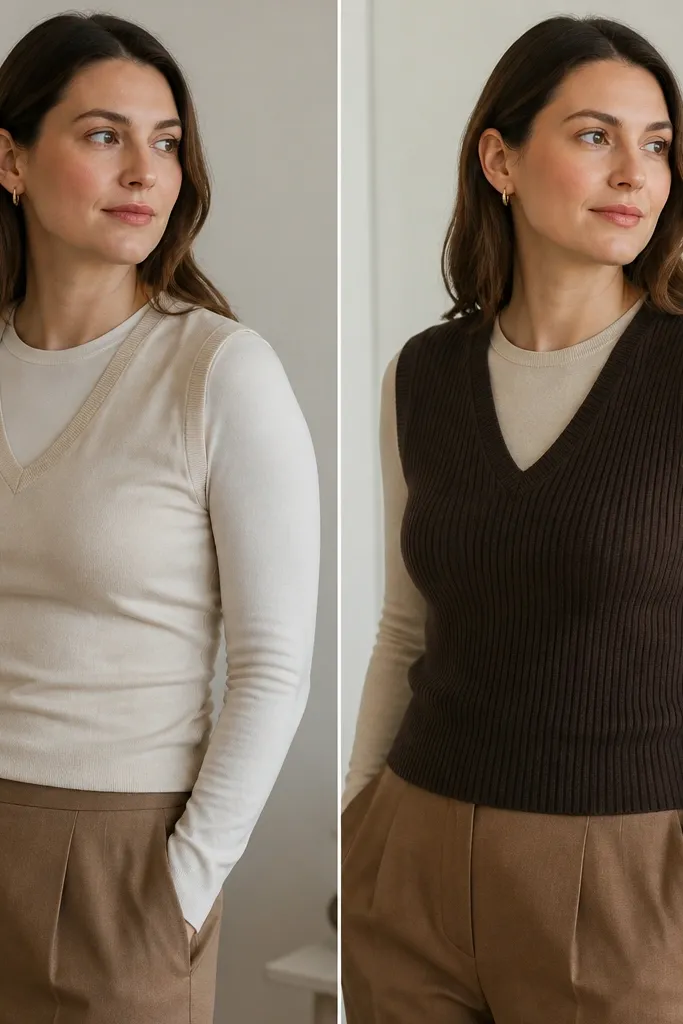
Non-stretch vests can wrinkle and create horizontal pull lines. A ribbed or stretch-blend vest smooths the torso and holds shape better during movement. If you want extra slimming visuals, pair with a subtle vertical stripe shirt or longline base layer.
Pro tipWhen trying on vests, do the “reach test” — lift your arms slightly. If it pulls or wrinkles across the chest, size up or choose stretch rib.
12. Color Pop Layer: Red Vest Over Neutral Layers
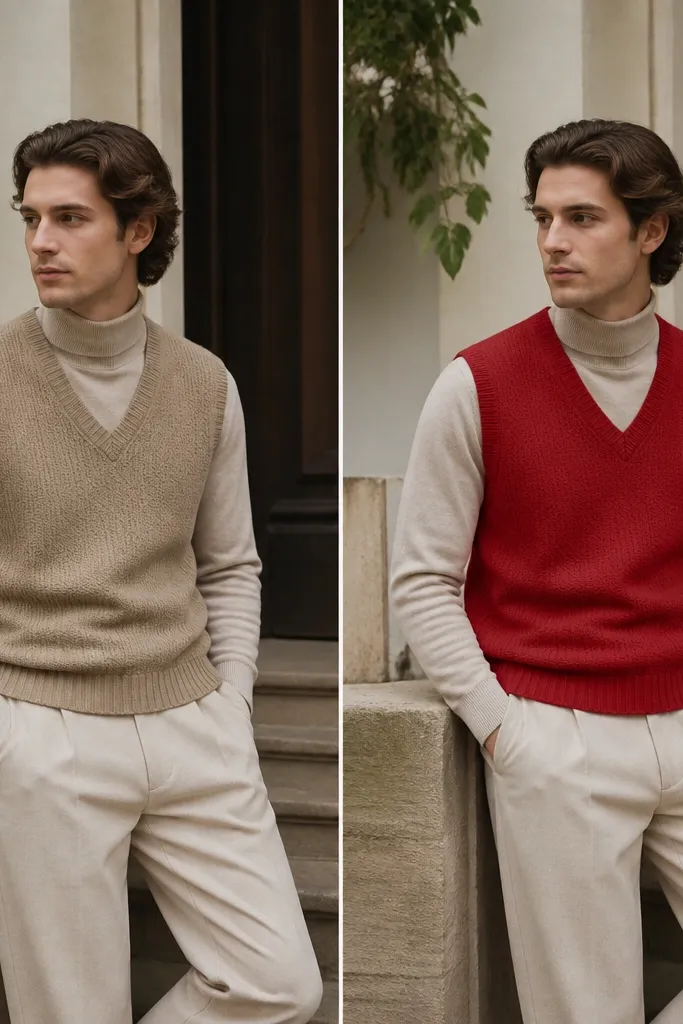
A bold vest color works best when your base is neutral. Red (brick, wine, or tomato) pops against cream, camel, gray, and black. Keep the rest simple so the vest knit texture and color do the heavy lifting.
Pick one accent color (the vest) and limit everything else to two neutrals max.